Editor’s note: This column is part of an ongoing series, The 30 Different Plants Per Week Challenge, Retail Edition.
When I first started the 30 Different Plants Per Week Challenge, I thought I was just doing it for the diversity and benefits to my gut health. But a few weeks in, I noticed that while I was hitting my fruit and vegetable goals, I was also experiencing more satiety and fullness with meals. After diving into the nutritional science, I realized I hadn’t just changed my fiber intake; I had inadvertently been biohacking my GLP-1 levels.
The Science: Beyond Just ‘Roughage’
We’ve all heard of GLP-1 thanks to the rise of metabolic medications, but your body actually manufactures this hormone naturally in your gut’s L-cells. The secret to triggering it? Fermentable prebiotic fibers, specifically inulin and oligofructose.
Recent clinical reviews show that when our gut bacteria ferment these specific fibers, they produce metabolites that act as a direct green light for our bodies to release GLP-1 naturally.
When you eat plants rich in these fibers, they pass through your stomach undigested and land in the colon. There, your gut microbes have a feast. As they ferment these fibers, they produce short-chain fatty acids. These SCFAs act like a finger pressing a start button on your L-cells, signaling them to release GLP-1 into your bloodstream. This slows down gastric emptying and tells your brain, “Hey, we’re actually full.”
For a closer look at how these specific plant compounds — like intact grains and greens — interact with our gut’s ileal brake, check out this breakdown by NutritionFacts.org. It effectively illustrates how feeding your microbiome is the most direct way to signal the brain that you’re genuinely satisfied.
To maximize this natural hormone hit, consumers can look for these items on their next grocery run:
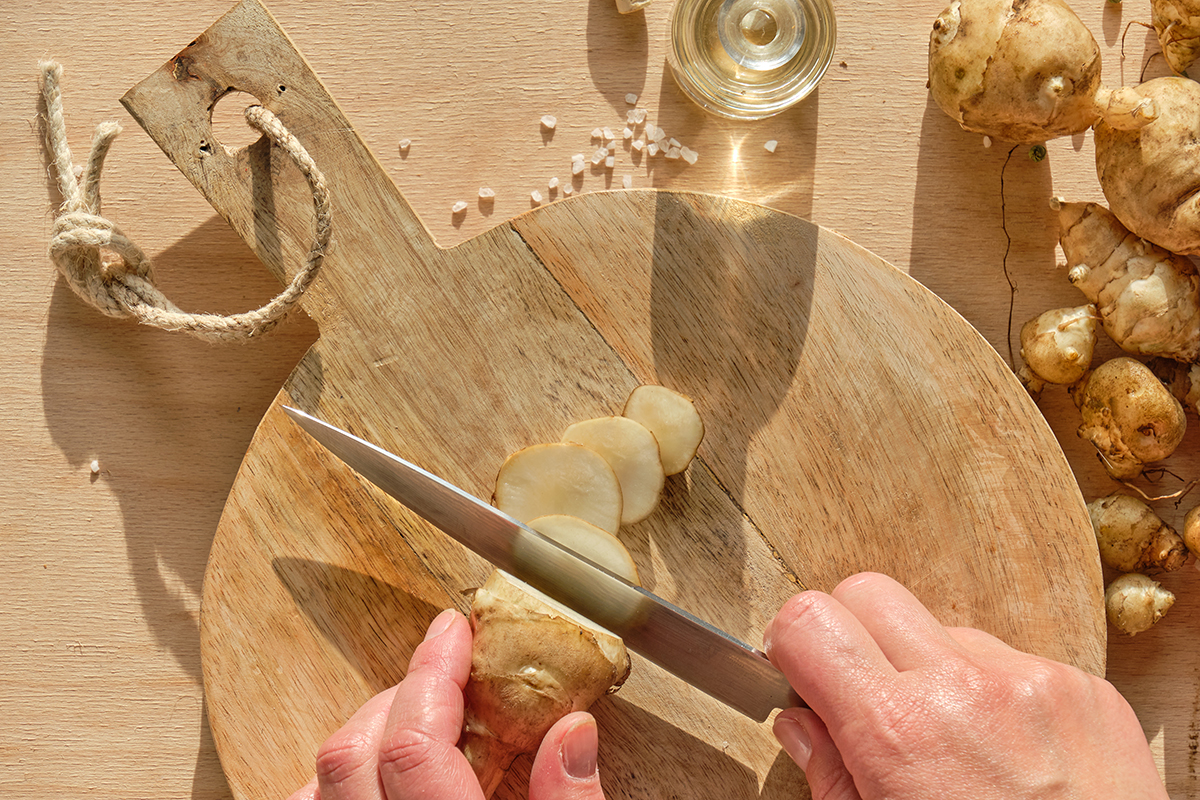
- Jerusalem artichokes (sunchokes) — These are the undisputed kings of inulin. Roasted, they taste like a nutty potato, but they pack a massive prebiotic punch.
- Chicory and radicchio — That bitter crunch in a salad mix is doing more than adding color. Chicory root is one of the most concentrated sources of GLP-1-triggering fiber.
- Asparagus — A fantastic source of fructooligosaccharides. Aim for the tender green spears to keep your gut bacteria happy.
- Underripe bananas — Bananas with a slightly greenish peel contain resistant starch, which functions similarly to inulin in the fermentation process.
Your Next Read: