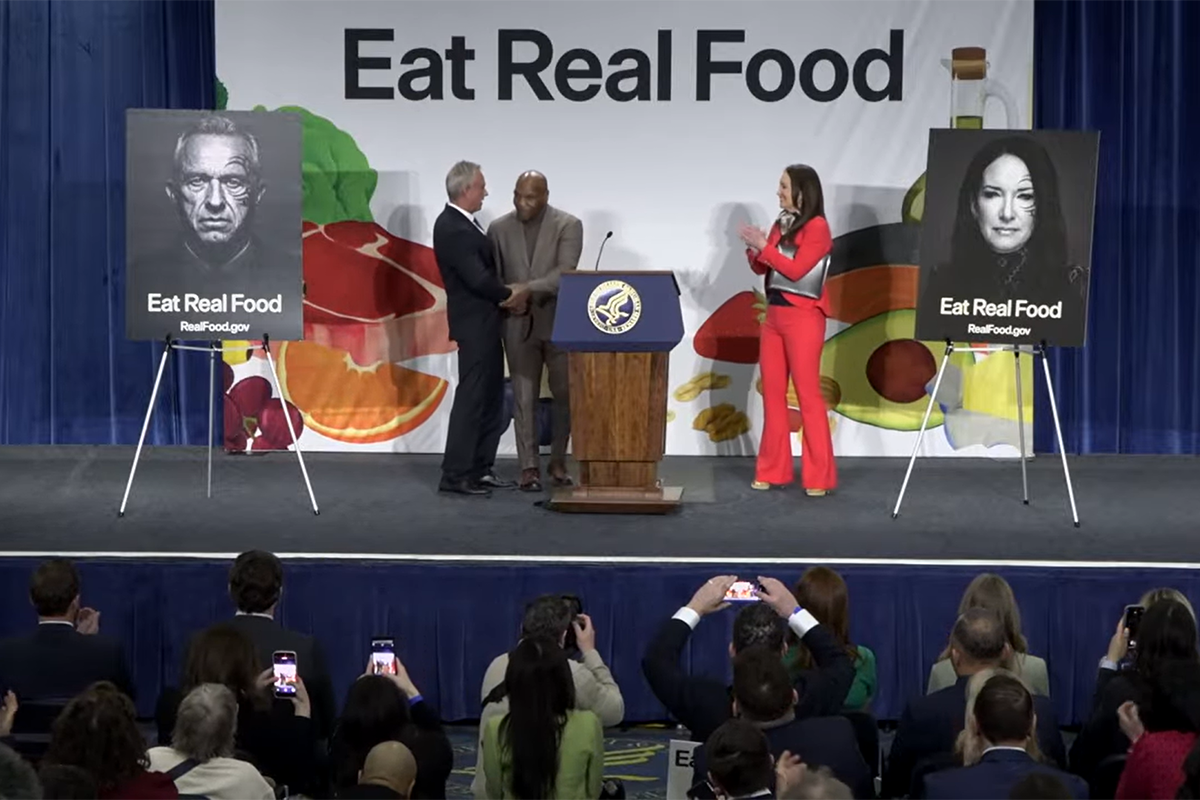
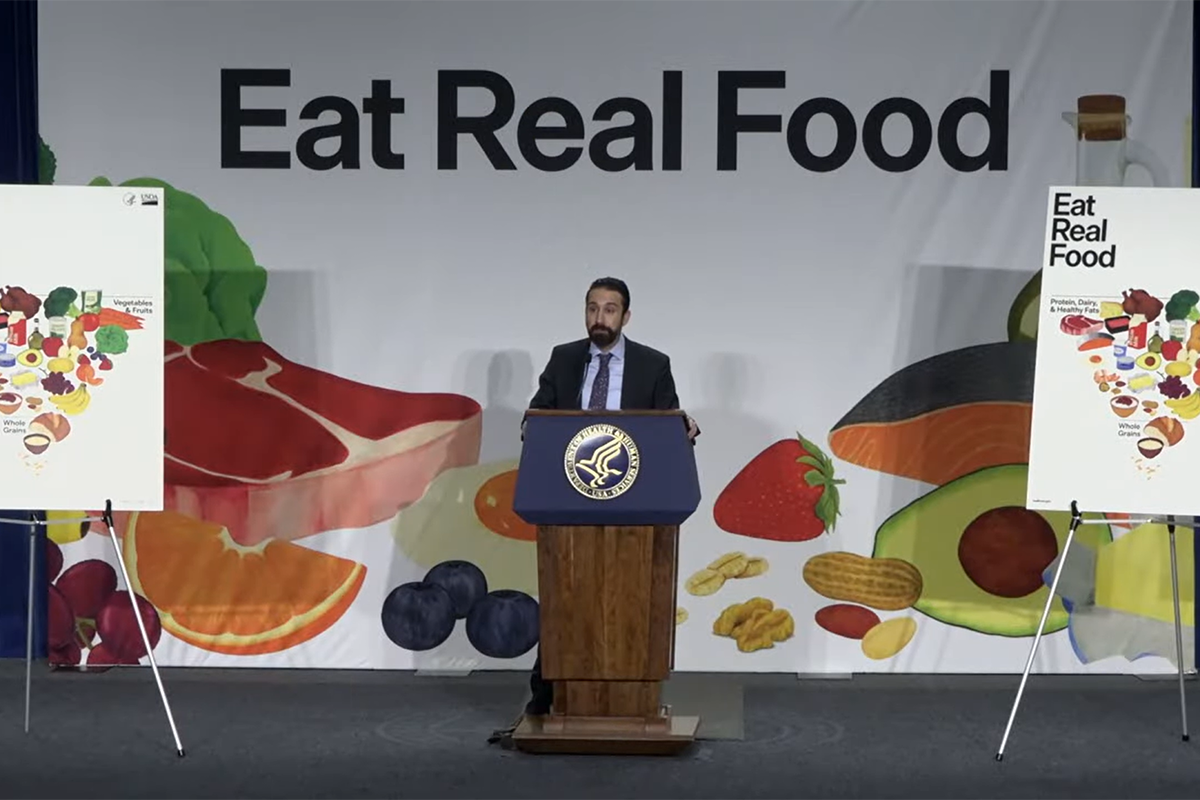
At a Feb. 11 press conference about the implementation of the 2025-2030 Dietary Guidelines for Americans, Health and Human Services Secretary Robert F. Kennedy Jr. and Agriculture Secretary Brooke Rollins framed the new guidance around a simple directive: Eat real food.
With speakers ranging from physicians and chefs to military leaders, prison officials and former heavyweight boxing champion Mike Tyson, the event positions fresh, minimally processed foods — including fruits, vegetables, seafood and whole proteins — as central to reversing what Kennedy calls “the defining health crisis of our time.”
A Shift Toward Whole Foods
Calley Means, a senior adviser to Kennedy, opened the event by criticizing decades of federal policy that he says steered dollars toward highly processed foods through programs such as the Supplemental Nutrition Assistance Program and school meals.
“We must get to whole food,” he says, arguing that chronic disease and rising health care costs are tied to the modern American diet.
Joe Gebbia, U.S. chief design officer, says the new food pyramid flips the script, placing “high-quality protein, dairy, healthy fats, vibrant vegetables and fruits” at the forefront, with whole grains as the foundation and “highly processed junk” clearly identified.
That message was echoed repeatedly: Nutrient-dense, minimally processed foods, such as fresh produce, are no longer peripheral recommendations but rather are central to federal guidance.
‘Food Is Medicine'
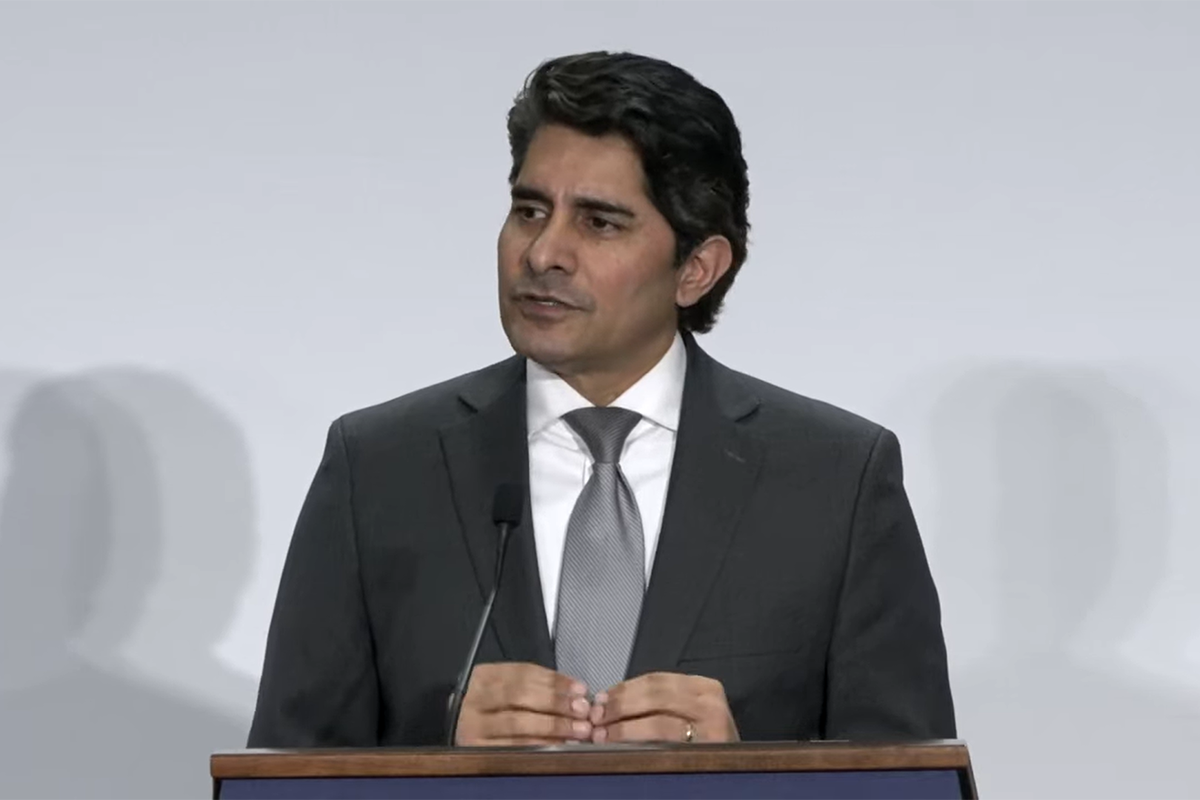
American Medical Association President Bobby Mukkamala connects the new guidelines directly to prevention.
“Choosing protein-rich whole foods while limiting heavily processed foods that are high in sodium and added sugar can help slow or reverse our nation's growing chronic disease burden,” he says.
He calls the guidelines “a conversation starter and a call to action” and emphasizes the growing movement within medicine to recognize that “food is medicine.”
For the produce industry, the remarks reinforce an expanding role for fruits and vegetables not just in dietary advice but also in clinical conversations, public health strategy and federal procurement.
Chefs Champion Accessibility and American Agriculture
Chef Andrew Gruel underscored that real food is not only healthier but also affordable and widely available. He described a full day of meals built around eggs, fruit, vegetables, seafood and whole cuts of meat that he says could be prepared for $15 to $20 per day.
“Real food is wholesome food. Food is nutritious food. It's also sustainable food,” he says, adding that the U.S. food supply chain — including produce, ranching and seafood — is “the best of any other country in the world.”
His comments place farmers, ranchers and produce providers at the center of the health conversation.
Boxing Legend's Personal Testimony
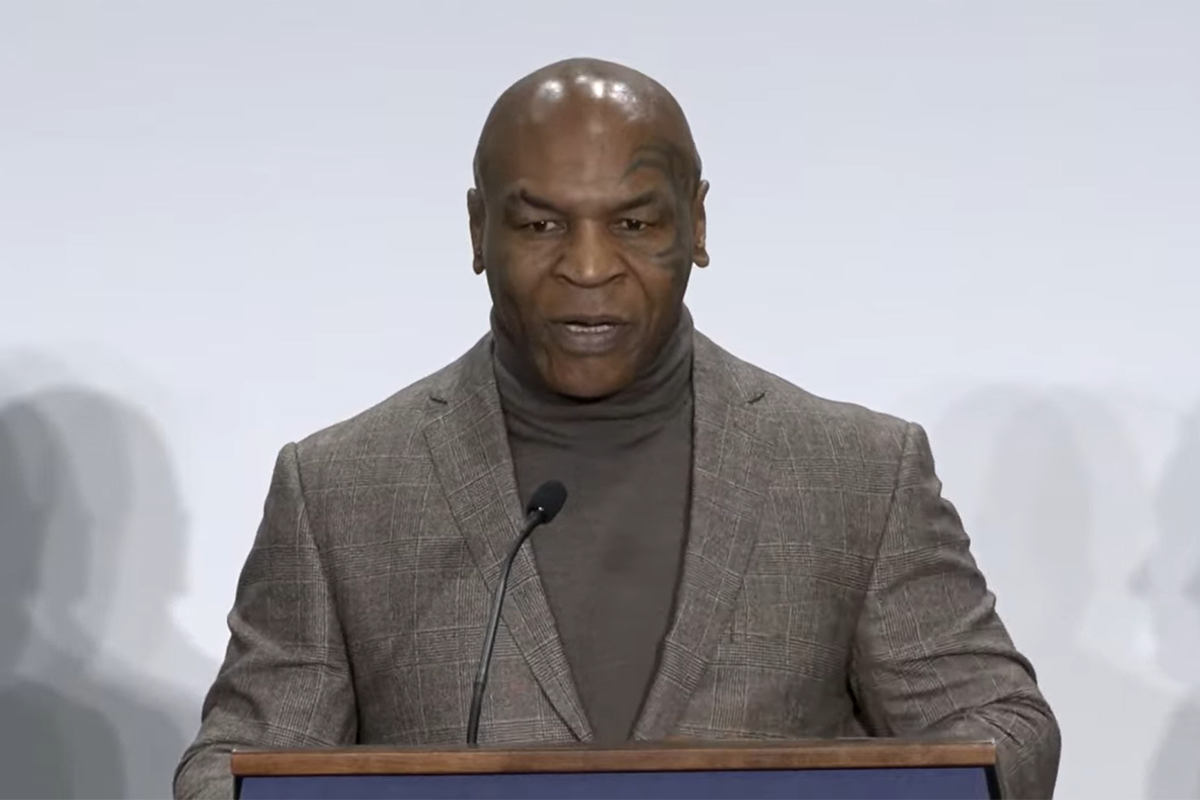
Tyson provided one of the event's most emotional moments, speaking candidly about his past struggles with obesity and self-image.
“I was so fat and nasty, I would eat anything. I was like 345 pounds — a quart of ice cream every hour. I had so much self-hate when I was like that, I just wanted to kill myself,” he says.
Tyson connects his transformation to dietary change and sharply criticizes the role of processed foods in the U.S. food system.
“We're the most powerful country in the world, and we have the most obese, fudgy people,” he says. “Something has to be done about processed food in this country.”
Tyson's appearance, along with a campaign that aired during the Super Bowl, “Processed food kills. Eat Real Food,” was positioned as a cultural push to normalize fresh, whole ingredients over packaged, ultraprocessed products.
Federal Procurement as a Market Driver
Rollins emphasizes that USDA's scale gives it leverage to shift demand.
“Every day, the U.S. Department of Agriculture spends almost $400 million on our 16 nutrition programs,” she says, calling that spending “a market mover.”
She points to 18 approved state SNAP waivers removing soda and junk food from eligibility and says updated stocking standards will require retailers accepting SNAP benefits to expand healthy offerings.
Rollins also announced new guidance encouraging child nutrition program leaders to incorporate the updated dietary recommendations, with a proposed school meals rule expected this spring.
Kennedy says the administration is “redirecting government procurement dollars toward American farmers and not junk food manufacturers,” adding that the guidelines will influence food served in schools, the military, prisons and other federal institutions.
Beyond Schools: Military and Prisons
Military and correctional facility leaders shared how nutrition changes are already underway.
Army Undersecretary Mike Obadal says the military branch is increasing access to “lean proteins and complex carbohydrates” and streamlining procurement of “local unprocessed foods” and “fresh American seafoods and produce.”
Bureau of Prisons Director William Marshall says dietary reform aligns with safety and rehabilitation goals, citing research linking improved diet quality to reductions in aggression and disciplinary infractions.
For produce suppliers, these institutional shifts represent potential long-term demand growth across large-volume federal channels.
Cultural Reset
Kennedy frames the guidelines as a turning point.
“For the first time in our nation's history, the federal government put real food at the center of the American diet and protein in the center of the American plate,” he says.
Rollins distills the message further: “Eat real food.”
For the fresh produce industry, the rollout signals more than a revised pyramid. It suggests an alignment of federal policy, medical advocacy, cultural messaging and procurement dollars around whole fruits, vegetables and minimally processed foods — positioning fresh as foundational to national health strategy through 2030 and beyond.