Editor’s note: This column is part of an ongoing series, “The 30 Different Plants Per Week Challenge, Retail Edition.”
In the ever-changing landscape of wellness, the “30 Plants Per Week” challenge has shifted from a niche dietary habit to a mainstream movement. As consumers look for tangible ways to hit this variety goal, heart health remains the primary driver of their purchasing decisions. The timing couldn’t be better: The American Heart Association’s newly released 2026 Dietary Guidance to Improve Cardiovascular Health has provided a clear roadmap for the modern shopper.
The directive is about a strategic “smart fat swap,” with AHA urging a prioritized shift toward unsaturated fats as part of a plant-rich dietary pattern. For retailers, this represents an opportunity to market fresh avocados not just as a produce staple but rather as a clinically backed tool for cardiovascular vitality.
Bridging the Gap Between Science and the Shopping Cart
AHA’s updated guidance emphasizes replacing saturated fats such as butter and processed spreads with nutrient-dense unsaturated fats. This is where the avocado shines as an intersection of science and everyday behavior. By positioning avocados as an easy, accessible swap, retailers can help consumers improve vascular function and resilience without the fatigue of a restrictive diet. It is a small, realistic shift that yields measurable results, making it the perfect focal point for displays centered on heart health and longevity.
The logic behind this smart fat swap is anchored in rigorous data. The American Journal of Clinical Nutrition recently published a 2026 peer-reviewed randomized, double-blind, controlled feeding trial that examined the effects of replacing solid fats and added sugars with one avocado per day in adults with elevated cardiometabolic risk. The results were definitive: Participants saw significant reductions in non-HDL cholesterol and triglycerides — two critical markers of cardiovascular risk. By highlighting this peer-reviewed research, retailers can build trust with an increasingly health-literate consumer base that demands evidence-backed wellness solutions.
Expert Insights: Q&A With the Hass Avocado Board
To further explore how the latest AHA guidance and recent clinical research impact the consumer journey, The Packer sat down with Amanda Izquierdo, public relations and advertising manager for the Hass Avocado Board.
The Packer: 2026 AHA Guidance emphasizes a dietary pattern rich in fruits, vegetables and whole grains. For those of us taking the “30 Plants Per Week Challenge,” how does prioritizing a nutrient-dense fruit like the avocado help us meet both AHA’s heart-health goals and our weekly plant-count targets?
Izquierdo: All fresh fruits and vegetables, including fresh avocados, are heart-healthy. The American Heart Association recommends eating a variety of nutritious foods from all food groups. Eating a variety of fruits and vegetables may help people control their weight, cholesterol and blood pressure. Avocados are a healthy, nutrient-dense fruit that can help boost fruit intake. In addition, the American Heart Association recommends replacing saturated fats with unsaturated fats for heart health. Avocados are low in saturated fat and provide 6 grams of unsaturated fat per serving (one-third of a medium avocado). And since avocados are virtually the only fruit with good fats, they make for a great pairing with other plants to help increase the absorption of fat-soluble vitamins A, D, E and K. Here are some tasty combos to help boost nutrient intake:
- Avocado Turkey Chili Stuffed Sweetpotatoes — Avocados can help absorb the vitamin A in sweetpotatoes.
- Potassium Power Smoothie — Avocados can help absorb the vitamin D in soy milk.
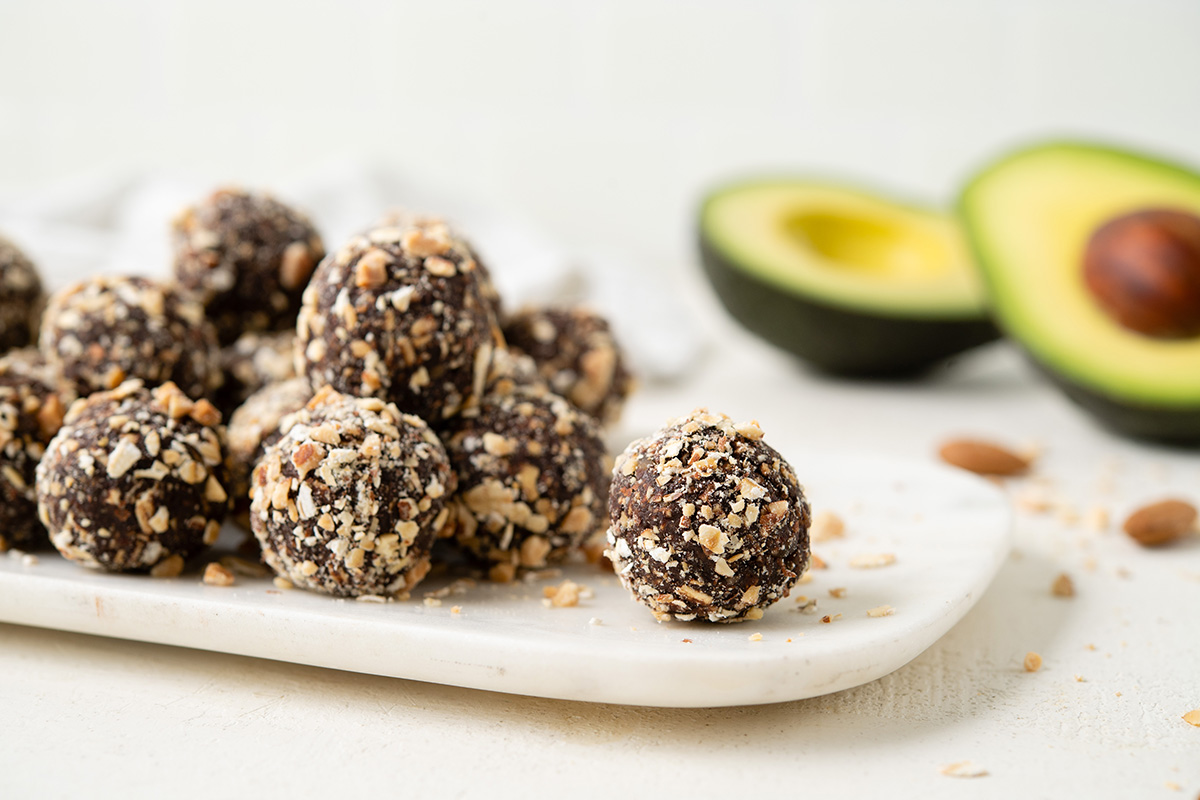
- Chocolate Almond Avocado Oat Bites — Avocados can help absorb the vitamin E in almonds.
- Heart-Healthy Kale Avocado Salad with Roasted Carrots — Avocados can help absorb vitamins A and K in the leafy greens.
One of your key focus areas is the smart fat swap. Can you explain the physiological benefit of swapping saturated fats (like butter) for the unsaturated fats found in avocados? Specifically, how does this swap support vascular vitality and blood vessel function as we age? And please include suggestions for ways to swap the fat.
Avocado is effectively the only fruit that contains monounsaturated fat, which can help reduce LDL (bad) cholesterol levels in your blood that can lower your risk of heart disease and stroke. In fact, in a randomized, double-blind, crossover feeding trial published earlier this year, 42 adults with elevated triglycerides followed two three-week diets: one where a daily hass avocado replaced solid fats and added sugars and another that was a matched control diet. The avocado diet lowered non-HDL (bad) cholesterol, triglycerides and the total-cholesterol-to-HDL ratio. The Avocado Nutrition Center funded the study, and it cannot be generalized to larger, more diverse populations, but the study supports avocados as a heart-healthy choice in everyday meals.
Avocados can be used as a replacement for ingredients high in saturated fat, such as butter or higher-fat cheese, in tacos and burritos. For example:
- Avocado replaces heavy cream in this rich and hearty Heart-Healthy Creamy Avocado Tomato Soup.
- This Avocados Eggs Benedict with Avocado “Butter” Sauce is a better-for-you twist on eggs Benedict using fresh avocado instead of butter to make a rich and creamy hollandaise sauce.
- You can even bake with avocados. These Soft Bakery-Style Avocado Chocolate Chip Cookies are made with creamy avocado instead of butter. Because of their neutral flavor and soft texture, avocados are the perfect fat replacement in many baking recipes.
While avocados are famous for their healthy fats, the “30 Plants” challenge is often about fiber (of which avocados are notorious) and micronutrient variety. What other specific nutrients do avocados bring to the table that support the AHA’s new recommendations for limiting sodium and ultra-processed foods?
As a whole food, fresh avocados are unprocessed and naturally nutritious, making them a great option for those wanting to prioritize whole, minimally processed foods. Avocados also are cholesterol-, sugar- and sodium-free.
How can retailers feature this trend in the produce aisle?
Pairing produce together and highlighting ways to use produce — like placing avocados, lime, garlic and tomatoes together for a quick guacamole or group avocados, mango, papaya and bell peppers nearby for a Mango, Papaya and Avocado Salsa. Retailers can also bring this trend to life by providing a simple recipe inspiration and health messaging on bags or signage. Messages such as “good source of fiber,” “heart-healthy,” “cholesterol-free” and “sodium-free” can help reinforce the health and nutrition benefits that drive avocado purchases. They can also use the mark, Avocados — Love One Today, on bags or other point-of-sale materials, which is a complimentary licensing program to promote fresh avocados. In addition, our website is a leading source for nutrition information and usage ideas for fresh avocados, giving retailers helpful resources to support these displays.
Your Next Read: