Well before the new year officially rings in, consumers begin turning to Google to look for ways to reset their eating habits, leading to searches related to healthier diets, gut health and high fiber foods. Rather than limitations and restrictive eating, consumers are seeking ways to add to their health and wellness, whether through adding more plants or consuming more fiber.
Google Trends data shows interest building through December and spiking in January, indicating naturally fiber-filled produce as a connection to the resolution season.
Data over the past five years shows a reliable spike every January for topics tied to healthier eating. Terms such as “plant-based recipes,” “gut health diet” and “Veganuary” all rise coming out of the holidays. Still, it's “high fiber foods” that consistently earns the strongest interest.
Beyond the classic “foods high in fiber” query, consumers are asking more nuanced questions:
- “How much fiber do I need a day?”
- “Are grapes high in fiber?”
- “Are potatoes high in fiber?”
- “High fiber, high protein foods.”
- “Chia seed pudding.”
- “Anti-inflammatory foods.”
The January produce rush used to be defined by restriction. Whether it was a rigid juice cleanse or the annual surge of “Veganuary,” the consumer goal was traditionally about what shoppers were taking off their plates. But as we head into the 2026 resolution season, Google search data reveals a fundamental shift. Consumers aren't looking to cut back; they are looking to “max out.”
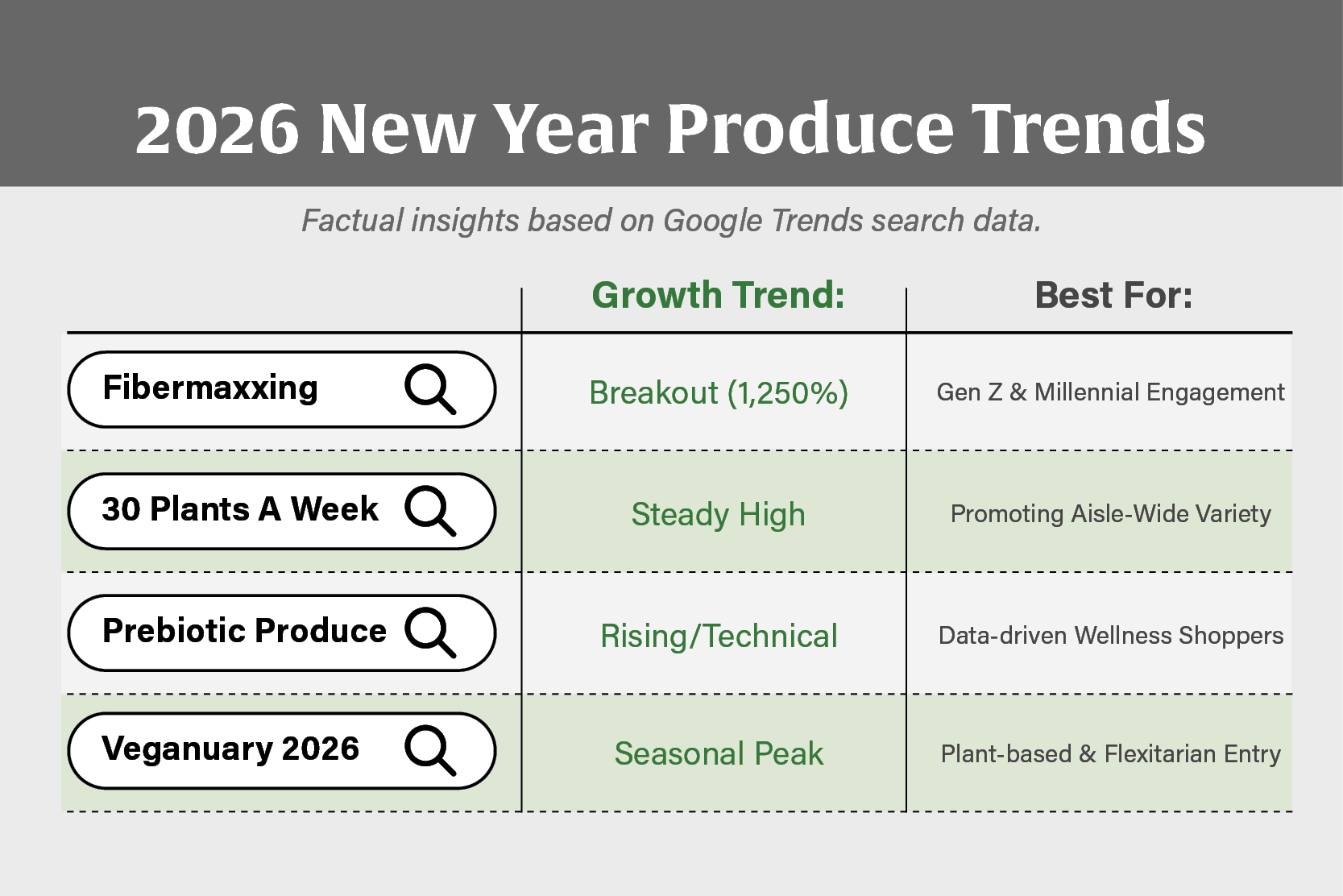
According to recent Google Trends data, search interest in “High Fiber Foods” has reached a five-year high, consistently outperforming traditional seasonal keywords like “Veganuary” and “Plant-Based Recipes.” This shift is being driven by a new, addition-based wellness narrative that retailers can capitalize on directly in the produce aisle.
Produce Sits at the Center of Resolution-Driven Searching
While packaged foods still dominate some diet trends, fiber-forward searches point directly to the produce department. The uptick aligns with broader interest in:
- Gut health — prebiotics such as onions and garlic, fermented produce and plant diversity.
- Plant-based cooking — recipes that emphasize vegetables, legumes and whole grains.
- Simple swaps — adding fresh fruit, vegetables and salads to everyday meals.
Google Trends shows that these interests move in parallel, especially in the first four to six weeks of the year — a window where retailers, dietitians and brands have a strong opportunity to connect education and merchandising.
The Convenience Catalyst: Value-Added Growth
While the desire for health is high, time remains the primary barrier. Recent industry data shows that value-added produce (pre-cut, pre-washed and ready to cook) is no longer a luxury and is a necessity for the “gut-health” shopper.
Shoppers participating in the viral “30 Plants a Week” challenge are increasingly seeking variety without the waste of buying 30 whole vegetables. Retailers are seeing success by offering:
- Cruciferous “slaw” blends — mixing kale, shredded broccoli stalks and cabbage provides three to four “plant points” in a single bag.
- Pre-peeled “forgotten” veggies — items like kohlrabi, celeriac and parsnips are trending (+150% search growth), but their tough skins are a deterrent. Pre-cubed or spiralized versions of these high-fiber roots are seeing breakout sales.
- Fiber-forward snack packs — combining berries, sliced jicama and snap peas into a single grab-and-go container.
The Breakout Produce Stars
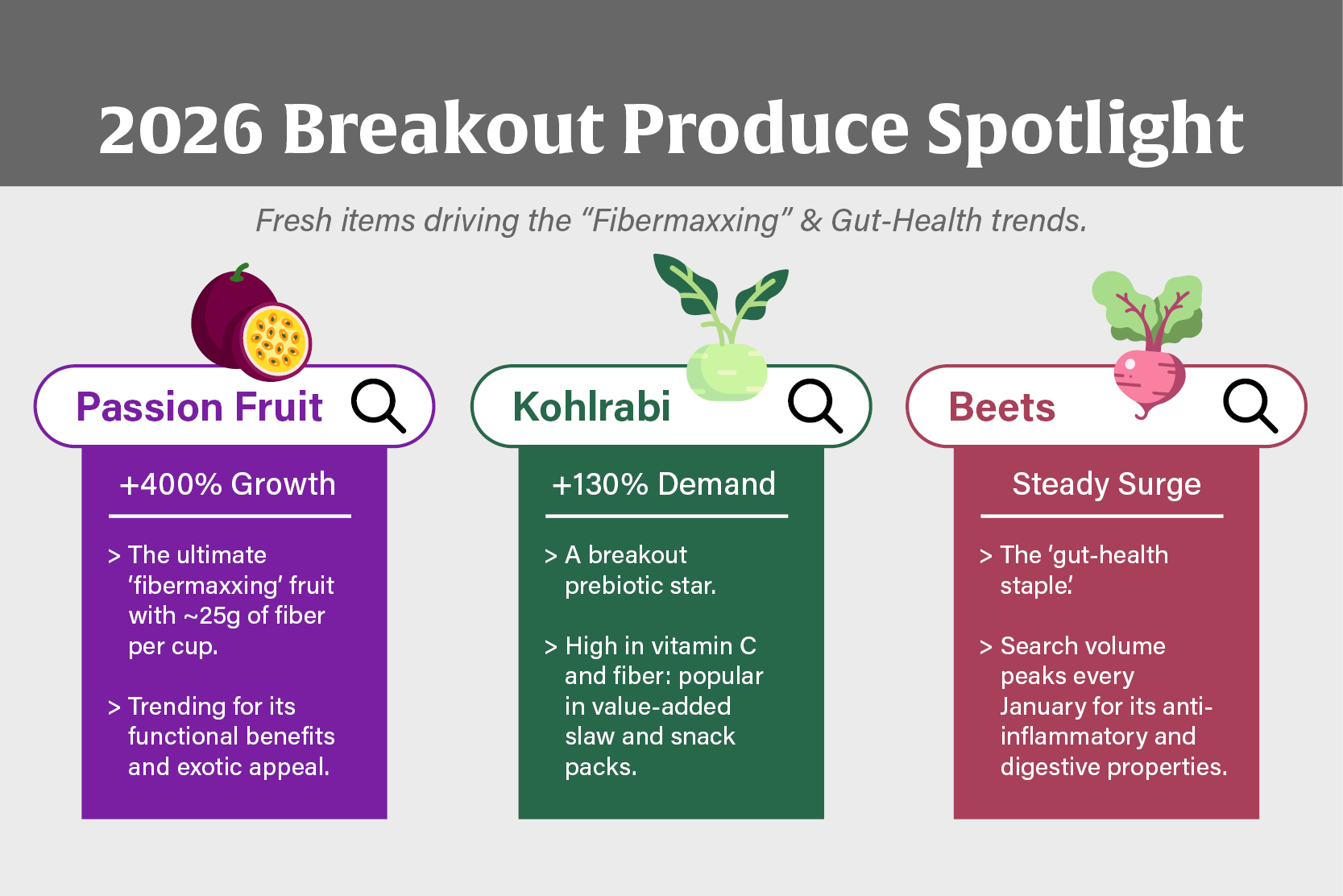
Google search data identifies specific fresh items that are seeing breakout status this season. Incorporating these into endcaps or promotional flyers is a high-yield strategy:
- Passion fruit (+400%) — one of the highest-fiber fruits; ideal hero for fibermaxxing displays.
- Dates (high consistency) — trending as a natural “sugar-free” sweetener for high-fiber overnight oats.
- Kohlrabi (+130%) — a forgotten friend making a comeback in the value-added sector.
- Fermented slaws (+140%) — prepackaged krauts and kimchis featuring fresh produce are essential gut-health anchors.
The GLP-1 Opportunity
The rapid adoption of GLP-1 weight-loss medications is also reshaping the aisle. As these patients focus on nutrient density to manage satiety and digestive side effects, high-fiber produce is their primary tool. Experts predict that “GLP-1 Friendly” signage highlighting high-fiber, high-protein produce like artichokes, raspberries and avocados will be an effective retail marketing tool of 2026.
The data shows a massive +1,250% breakout in searches for “high-fiber foods charts,” signaling that shoppers are entering stores looking for information. They aren't just looking for vegetables; they are looking for specific, data-backed fiber winners.
Concurrent with the fiber trend is the mainstreaming of the “30 Plants a Week” challenge. Based on research from the American Gut Project, this trend encourages consumers to eat 30 different species of plants every seven days to diversify their microbiome.
What this Means for Retailers and Suppliers
- Lead with education, not restriction: Consumers are asking how much fiber they need and which foods count. Clear signage, quick-hit tips, and recipe cards can translate curiosity into cart adds.
- Make fiber easy to find: Call-outs on displays (“Good Source of Fiber,” “Prebiotic Produce” or “High-Fiber Meal Ideas”) help shoppers connect benefits to real-world items.
- Pair produce with meal solutions: Rising searches like “high fiber high protein foods” and “chia seed pudding” suggest shoppers want balance, not just vegetables. Cross-merchandising with beans, whole grains, nuts and seeds can help.
- Connect fiber to trending health conversations: Gut health and anti-inflammatory eating continue to resonate. Highlight how everyday produce supports both.
Though interest peaks at the start of the year, fiber searches remain elevated compared to pre-pandemic baselines. That signals a lasting shift: Consumers are becoming more label- and benefit-aware, and produce plays an important role.