Following up on her preview of NielsenIQ's (NIQ) 2027 Consumer Outlook Report presented at Groceryshop in Las Vegas last week, Nicole Collida, senior vice president and managing director of U.S. retail for NIQ, sat down with The Packer to unpack how macroeconomic headwinds are altering retail grocery dynamics.
While top consumer concerns remain centered on basic living expenses — such as increasing food prices (34%), utility bills (20%) and housing costs (15%) — shoppers are no longer reacting in panic. Instead, they are taking control of their household budgets with unprecedented intentionality.
“For years we've been talking about a consumer that's been very cautious,” Collida says, tracing a six-year trajectory from initial concern to cautious saving, then to intentional spending, and now to an adaptive strategy.
“In today's world ... I say consumers are in the driver's seat because they are setting the course for how they'll fill their baskets” — meaning shoppers, rather than retailers or brands, now dictate what earns a spot in the shopping cart.”
This shift in consumer posture comes at a juncture for retail grocers and fresh produce suppliers. While inflationary surges have leveled off across the fast-moving consumer goods ecosystem, shelf prices have not returned to pre-pandemic baselines.
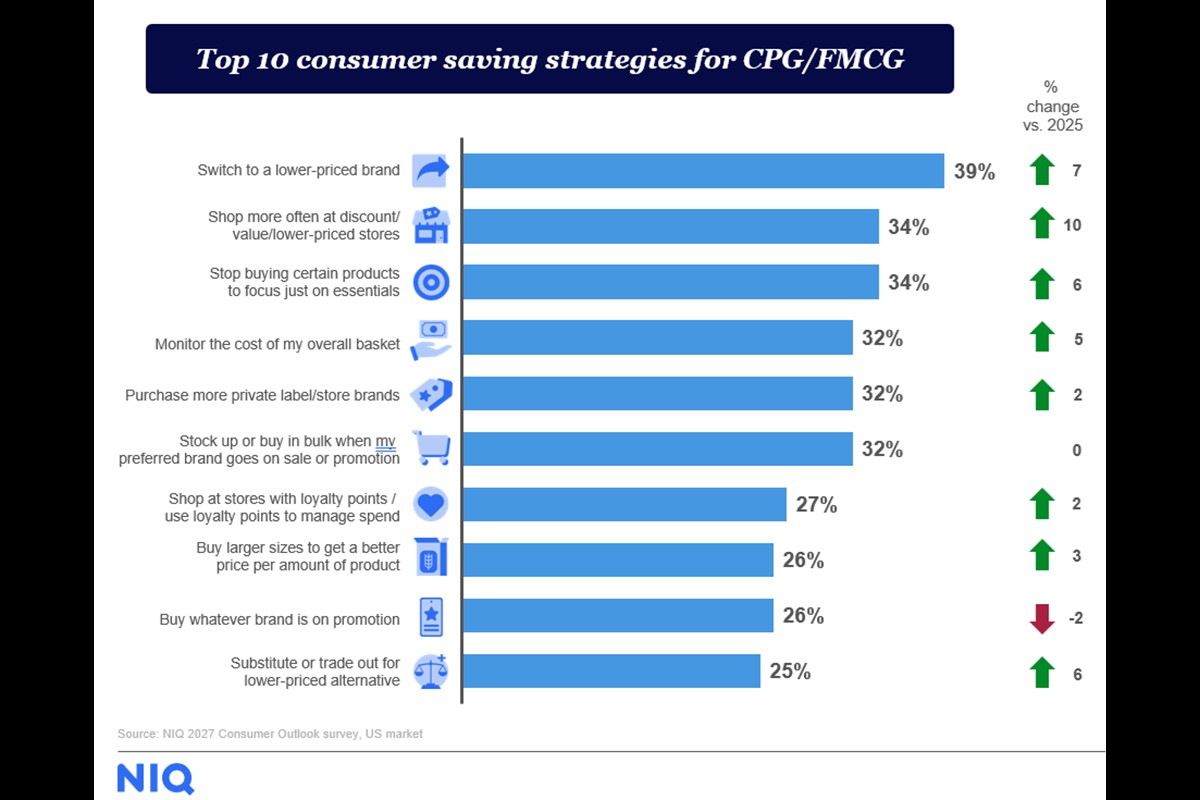
“While inflation cooled, price has not reset,” Collida says. As a result, shoppers are no longer operating on autopilot or relying strictly on traditional retail promotions. Instead, they are actively “assembling a deal” across channels and categories, forcing the industry to rethink its foundational value proposition.
The Multi-Dimensional Definition of Value
Central to this new consumer mindset is the evolution in how value is perceived in the grocery store. Value is no longer a simple equation driven exclusively by discount pricing.
“I always love to say that value for many years was one-dimensional; it equaled price,” Collida says. “Now value is multi-threaded and multi-dimensional. It can equal price — and often does — but it can also equal quality, health benefits or nutrition. Brands, retailers and growers need to meet consumers where they are in their value-seeking behavior, which I like to think about in terms of specific occasions or need states.”
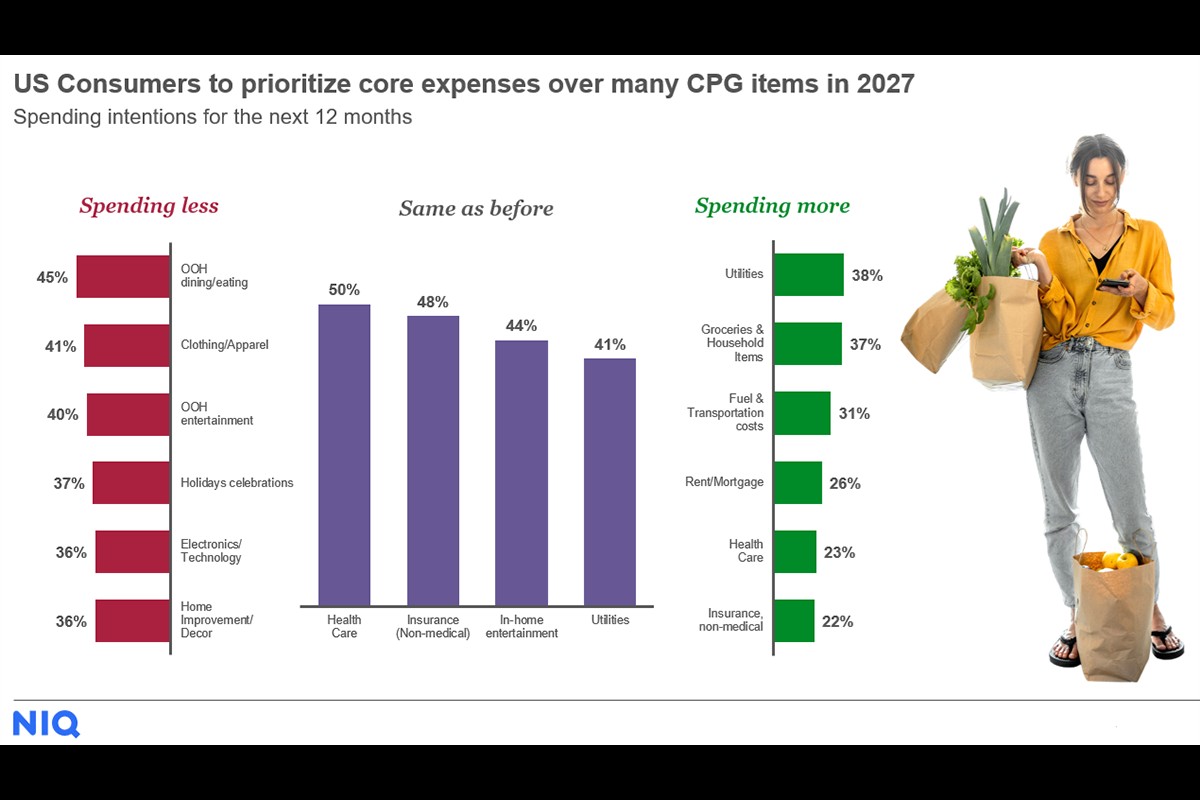
This multidimensional search for value works strongly in favor of perishable departments, particularly fresh produce. In NIQ's 2027 spending intentions data, consumer spending on non-negotiable household items remains protected. While consumers plan to trim discretionary expenses like dining out (-30% net spending intent), entertainment (-28%) and clothing (-25%), core essentials remain resilient. Groceries and household items reflect a +13% net spending growth expectation, with fresh produce standing out among fresh departments with a +8% net intent to spend more — outpacing pet products (+2%), fresh meat (0%), dairy (-2%) and snacks (-17%).
‘Better For' Adoption Across Income Groups
A key driver behind the resilience of health-focused categories like fresh produce is the rapid mainstreaming of health and wellness. NIQ data presented at Groceryshop shows that products meeting “Better For” criteria (across personal health, societal and environmental claims) have consistently outpaced total food and beverage growth over a multi-year trendline — even through broader economic pressures.
Addressing how this trend intersects with the growing economic divide in America, where 31% of consumers categorize themselves as financial “Strugglers” while 12% hold steady as “Rebounders,” Collida highlights a surprising shift in demographic purchasing behavior.
“‘Better For' is actually growing at a faster rate among our lowest- and middle-income households,” Collida says. “While growth is still important in higher-income households, it has stabilized compared to the extreme growth we saw previously ... Part of this comes down to preventative health measures. For lower-income households, dealing with an illness can mean lost wages or high care costs, so the adoption of ‘Better For' has really surged across all income levels.”
This underlying prioritization of preventative health reinforces that value is increasingly measured in long-term wellness benefits, giving fresh produce a natural competitive edge if communicated effectively.
Channel Shifts and Winning the Basket
As consumers construct their shopping routines around specific need states, channel dynamics across the retail landscape are shifting dramatically. According to NIQ retail measurement data, mass and club channels have continuously gained ground. Trips per buyer over a three-year view surged by +17.0 trips in mass and +0.9 in club, while traditional grocery (-0.8 trips) and dollar formats (-0.9 trips) faced foot-traffic challenges.
Furthermore, “online is winning with fresh produce” and other perishable items as convenience continues to reshape grocery spend. Online grocery value share reached 10.6% in 2026, up from 6.2% in 2023, outpacing unit share growth as consumers consolidate larger, planned trips online.
Despite these channel headwinds for traditional grocers, Collida stresses that market share is far from locked. Regional and independent grocers who define a distinct store identity — particularly around perimeter freshness — can effectively defend their customer base.
“Grocers have to stand for something to win in today's ecosystem,” Collida says. “I think there's a big opportunity for grocers to be winning on fresh, to really be differentiating themselves from often larger entities that have a much more challenging time delivering on that commitment to freshness ... Grocers can own that space, and the data show that when you can stand for something and own something, you can often win the basket.”
Moving Beyond Default Buying
Ultimately, winning the consumer of 2027 requires moving past historical merchandising playbooks. NIQ data shows that promotional effectiveness is waning, with promotional unit lift across total store down -15.7% compared to historical baselines. Because shoppers are no longer buying by default, suppliers and retailers must actively earn every placement in the shopping cart.
“Consumers just aren't buying by default,” Collida says. “We were coining the idea that consumers are ‘spending by exception,' meaning there's no guarantee that your item will make it into a consumer's basket any longer ... A lot of it is actually a recreation of how brands, growers, retailers, everyone in the ecosystem should be showing up in service of the consumer to really earn their dollar.”