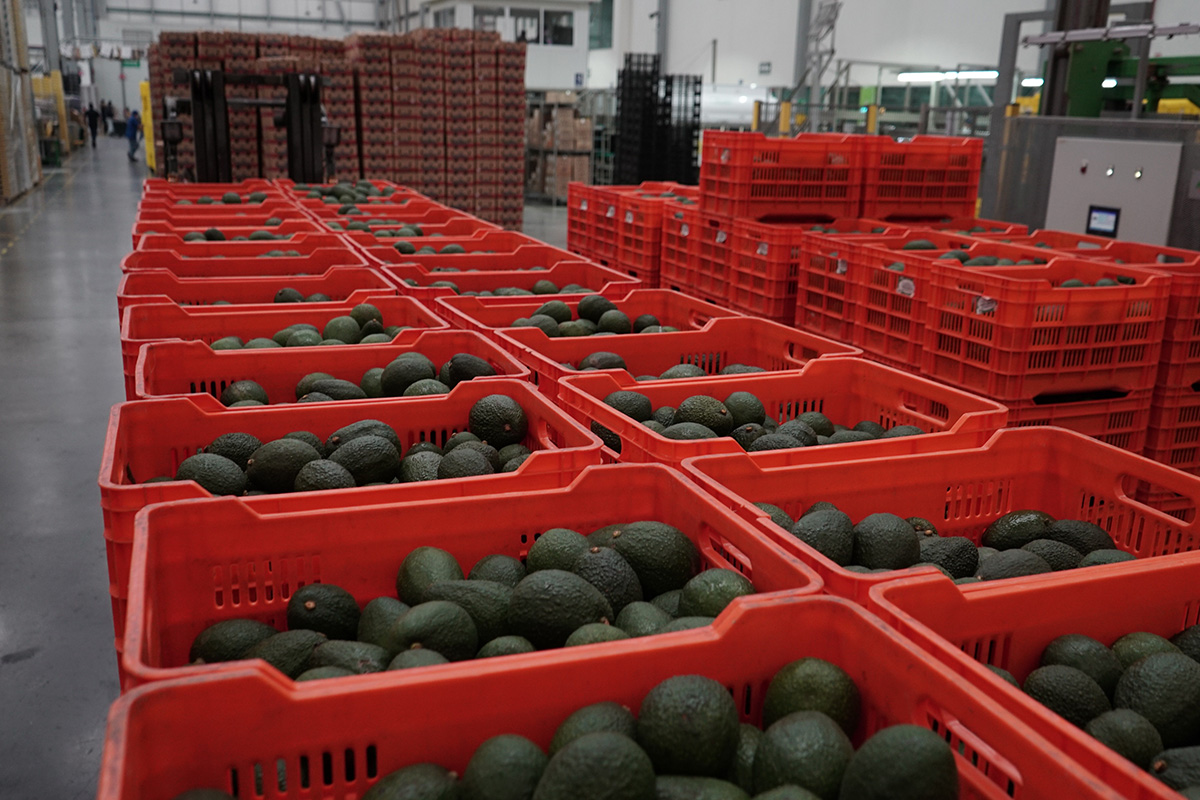
Over the past three decades, the avocado has transformed from a seasonal produce item into a daily American staple, supported by a deeply integrated North American trade network that generates billions of dollars in economic activity across both sides of the border.
Yet, beneath the steady growth of this category lies a complex and delicate ecosystem — one vulnerable to sudden field-level disruptions, shifting consumer expectations and market volatility. As recent supply freezes in the Mexican state of Michoacán illustrate, maintaining a reliable farm-to-table pipeline requires constant balancing among rigorous quality inspections, fluctuating prices and sustainable farm practices.
At the same time, the challenge of meeting record year-round demand relies on strict cold-chain logistics, multi-facility redundancy and agronomic innovation. Examining the cross-border supply chain and the operational realities of unexpected harvest stoppages reveals how growers, distributors and buyers are securing the future of one of the world's most popular fruits.
A $13 Billion Powerhouse: The Scale, Scope and Stakes of North American Trade
The North American avocado supply chain has evolved into a vital economic engine driving billions of dollars in output and supporting tens of thousands of jobs across both sides of the border.
Mexican hass avocado imports generated an estimated $7.1 billion in U.S. economic output and supported more than 37,000 American jobs during fiscal year 2025 to 2026, according to a new study from Texas A&M University commissioned by the Mexican Hass Avocado Importers Association (MHAIA) and the Association of Avocado Exporting Producers and Packers of Mexico (APEAM A.C.). The analysis reveals that $3.2 billion in avocado imports contributed $4.4 billion to U.S. gross domestic product, $2.4 billion in labor income and $1 billion in federal, state and local taxes, establishing that “for every $1 of Mexican Hass avocado imports, $2.21 in economic output was generated across the U.S. economy,” according to a news release.
The economic footprint of this cross-border trade extends across the entire nation, moving well beyond border and producing states. While California and Texas accounted for $968.2 million and $428.9 million in state economic output, respectively, together they represent only 19% to 22% of the total U.S. economic impact. This means approximately 80% of the activity occurs across the rest of the country.
Addressing how promotional strategies reflect these geographic patterns, Ana Ambrosi, senior director of corporate communication and PR for Avocados From Mexico (AFM), clarifies that economic output calculations rely on supply chain multipliers rather than volume share.
“The Midwestern and East Coast region represents approximately 48% of our current volume share,” Ambrosi says, noting that AFM is also aggressively “investing in growing regions, especially in the South Atlantic, as the population in this region is poised to grow by 29% from 2026 to 2030.”
This expanding distribution aligns with a historic 666% surge in U.S. avocado consumption since the late 1990s, reaching 3.25 billion pounds in 2024 to 2025, alongside record Mexican imports of 2.76 billion pounds in 2026. A key factor in maintaining this momentum is the year-round availability provided by Mexican producers.
AFM President and CEO Alvaro Luque emphasizes that “with the updated U.S. dietary guidelines placing greater emphasis on whole foods and healthy fats like those found in avocados, Mexico's proximity, scale and year-round availability make it the only origin that can meet America's growing appetite for fresh, high-quality avocados year-round.”

Ambrosi echoes this shift, sharing that avocados “check all the boxes” of the new food pyramid by prioritizing whole, nutrient-dense foods with zero sugar and over 20 vitamins and minerals, bringing annual U.S. consumption close to 10 pounds per capita.
Optimizing Year-Round Supply and Quality Control
To sustain reliable year-round delivery, key players rely on advanced production models and tight supply chain management.
Giovanni Cavaletto, president of GLC Cerritos, highlights how its operational strategy utilizes an elevation blend between 4,000 and 6,500 feet to smooth out seasonal transitions.
“We begin harvesting our earliest groves at 23% dry matter in mid-May, complementing the old-crop ‘hass' coming from higher-altitude groves,” Cavaletto says, explaining that they pick early-setting Mendez Hass from May through October before transitioning to higher-altitude regular hass from November through April. To optimize fruit quality, GLC Cerritos avoids fixed harvesting schedules, operating a vertically integrated pick-to-order system based on the principle that the shorter the time between harvest and consumption, the higher the eating quality.
“Hass avocados store better on the tree than they do in a cold storage,” Cavaletto says.
For on-spot business, this workflow maintains a four- to five-day lead time spanning harvest, packing, cooling and border transit.
Beyond farm-level management, maintaining quality requires strict oversight throughout distribution and processing.
“U.S. consumers want assurance from farm to table, and the fact that we are processing, packing, shipping, importing and distributing our own fruit goes a long way toward meeting that need for farm-to-table integrity,” says Pedro Somarriba, president of Avoworks.
Avoworks operates three packinghouses across different geographies to build redundancy into its sourcing. Temperature control remains central to its shipping logistics. Somarriba says that Avoworks places specialized monitoring equipment inside trucks and measures incoming shipments at its warehouses to ensure the fruit stays within specifications, adding that “our company is five years old now, and I have to say that we have not had a single load return for temperature issues during that time.”
He says all fruit handled by Avoworks is dedicated exclusively to fresh store sales, with smaller, non-commercially viable sizes diverted by orchards to guacamole or avocado oil processing.
Sustainable packaging and farm-level innovations are also shaping the category's evolution.
Avoworks has championed eco-friendly packaging through compostable Ursack bags made from wood-derived cellulose. Somarriba shares that while retail adoption has been gradual, the bags perform identically to standard options on bagging lines with only minor label-clip adjustments, and Avoworks is currently offering them at equal cost to encourage adoption.
On the agricultural front, GLC Cerritos reports yields up to three times higher than the national average due to high-density planting, fertigation and biological controls from its in-house lab.
“Healthy trees are more resistant not only to weather, but also to pest and disease pressures,” Cavaletto says, adding that future category growth will rely on higher yields passed along as consumer efficiencies. Furthermore, social standards like fair trade add less than 2 cents per avocado, which recently funded a dental clinic for farmworkers in collaboration with the University of Guadalajara.
Looking toward the broader industry landscape, consumer education and structural shifts will determine long-term growth. Combined economic analyses from Texas A&M and economist Manuel Molano show that the integrated U.S.-Mexico avocado trade generates over $13 billion in total output and supports 115,000 jobs across both nations, including 78,000 jobs within Mexico.
Somarriba says educating consumers on nutritional benefits remains essential for deepening market penetration. Pointing toward future structural trends, he concludes that “even though it's a very large industry, it's highly fragmented, and we're starting to see signs of consolidation,” citing recent major cross-border investments and acquisitions as a defining narrative for the industry's future.
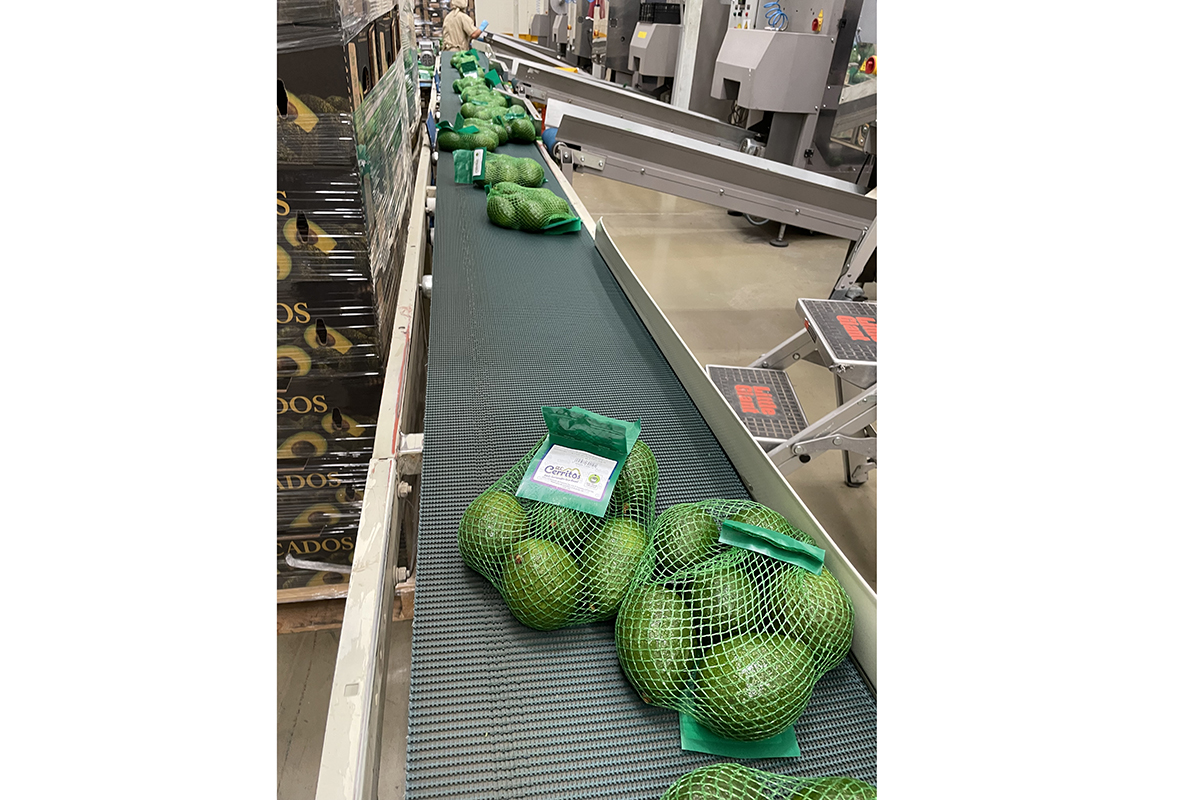
Avocado Harvest Set to Resume in Michoacán Following Extended Supply Disruption and Pest Concerns
Avocado harvesting and export operations in Michoacán were scheduled to resume approvals Nov. 5, ending a multiweek shutdown that severely curtailed U.S. avocado inventories and drove sourcing costs past pre-stoppage levels, according to reporting by the International Business Times.
The harvest disruption originated amid industry reports that Mexican authorities and growers had destroyed over 50 tons of avocados following seed weevil detections. However, industry executives have urged perspective regarding market speculation during the shutdown.
“First of all, what I would like to say is there's a lot of rumors,” Somarriba says. “I mean, while that's what's been out there, I'm not sure that that's exactly what happened. So, have to take everything with a grain of salt.”
Somarriba says the prolonged harvest freeze also intersected with economic pressures among producers.
“We've not been allowed to harvest any fruit, and there's a concerted effort by growers to drive up pricing,” Somarriba says. “They've been complaining that pricing has not been enough to be able to cover the cost.”
Addressing the biological characteristics of the pest, Somarriba says the seed weevil is in its larva stage during late fall, allowing field crews to spot issues before the insect fully matures into a worm in January and February. Because the pest “gets carried from orchard to orchard,” Avoworks maintains a rigorous screening workflow starting in the groves.
“Our first line of defense is, of course, the people that are out there harvesting the fruit that go to visit the farms, and we ask them to inspect the farm as well as they can to make sure that this is identified,” Somarriba says.
When shipments reach processing facilities, mandatory testing provides a second layer of defense.
“The fruit is actually cut up to make sure not only that it is not in the fruit itself, in the meat part of it, but also in the bone,” Somarriba says, describing the random sampling protocol used to safeguard product quality.
Somarriba emphasizes that multifacility infrastructure is vital when isolated pest issues arise at individual facilities.
“Let's say that one packinghouse identifies the worm, and that immediately means that it gets shut down probably for a one-week period,” Somarriba says. “If we only have one packinghouse, that means we're out of business for that week. The fact that we have three of them means that we have redundancy. ... We don't stop. The only thing that can stop us is what's happened the last two weeks, where no one is allowed to cut fruit from the field.”
Despite field testing protocols, the total industrywide freeze on orchard picking created severe strain across the North American supply chain, driving available avocado inventories past critically low levels. As reported by the International Business Times, Local Plant Health Boards (Sanidad Vegetal) and industry organizations in Michoacán finalized an agreement to restart harvesting approvals and export operations on Nov. 5.
Trade analysts warn that restarting harvest approvals will not instantly resolve retail shortages or elevated prices across U.S. markets. Sourcing costs have more than doubled since the field shutdown began, and fob pricing is expected to remain well above pre-stoppage levels as picking, packing and border transportation gradually recover full capacity.
While individual packers rely on multifacility footprints and field sampling to manage operational risk, official industry leadership emphasizes that the regulated export pipeline to the U.S. remains secure. Addressing the pest reports, AFM's Ambrosi says the reported detections occurred outside the primary export zones.
“We are aware of recent reports of seed weevil detections in Mexico,” she says. “The Mexican Hass Avocado Importers Association (MHAIA) and the Association of Avocado Exporting Producers and Packers of Mexico (APEAM) take phytosanitary compliance and the quality of avocados exported to the United States extremely seriously.
“Mexican agricultural authorities have reinforced phytosanitary inspections, monitoring and controls on the movement of avocados to prevent the spread of pests,” Ambrosi continues. “These measures include enhanced traceability requirements and additional inspections to ensure transparency and accountability throughout the supply chain.
“Importantly, the reported detections involve fruit originating from areas outside the authorized U.S. avocado export program,” Ambrosi says. “Only avocados from approved orchards and municipalities in Michoacán and Jalisco are eligible for export to the United States. These authorized growing areas have not been affected by the reported detections, and avocado export operations to the U.S. remain unaffected.
“For more than two decades, MHAIA and APEAM have worked closely with U.S. and Mexican agricultural authorities, growers and packers to uphold rigorous quality and pest-control standards,” Ambrosi concludes. “Both organizations remain committed to supporting these efforts, protecting the integrity of the U.S. export program and ensuring continued compliance with established phytosanitary requirements.”
Your Next Read: Avocado Harvest Set to Resume in Michoacán Following Extended Supply Disruption and Pest Concerns