As GLP-1 weight-loss medications move into the mainstream, fresh produce is emerging as the single biggest winner in the grocery basket — and the shift appears to stick even after shoppers stop taking the drugs, according to new research from customer data science firm Dunnhumby.
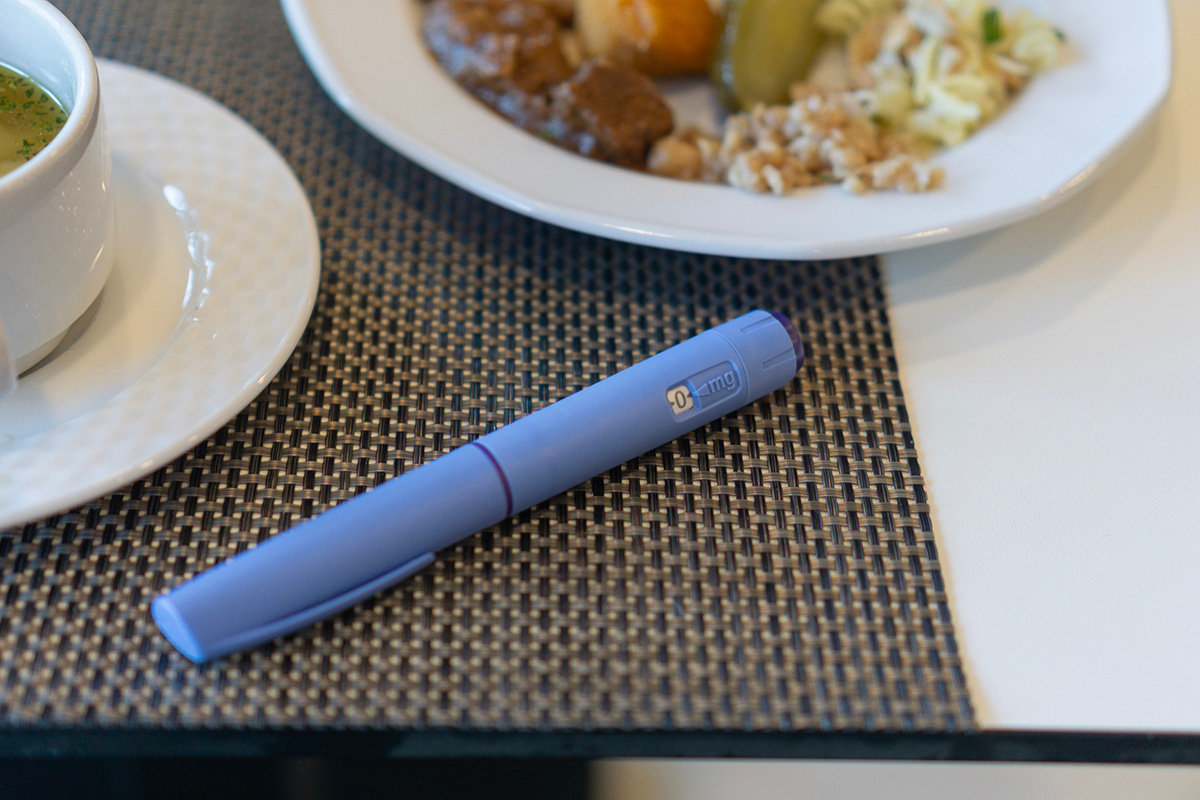
In Wave 13 of its Consumer Trends Tracker, which surveyed 8,500 adults across six markets in the Americas, Dunnhumby found that 16.7% of U.S. adults have used a GLP-1 medication such as Ozempic, Wegovy, Mounjaro or Zepbound, with 10% currently using one. Because each user influences the food and beverage choices of an average of 1.9 people in their U.S. household (including themselves), the medications' dietary impact reaches 31.7% of U.S. adults.
Across the 20 grocery categories evaluated in the Americas, fresh produce recorded the largest net spending gain at +34.1 percentage points (control-adjusted net score), outpacing health care (+19.8), natural/organic/free-from (+19.7) and fresh meat (+15.3). Conversely, center-store and indulgent categories saw steep declines, led by bakery (-38.1), alcoholic beverages (-37.5) and ready-to-eat meals (-31.6).
“GLP-1s have become a mainstream grocery story, and fresh produce is where the spend is moving. One in six U.S. adults has now used one, and because each user changes what their household eats, their influence reaches close to one in three adults,” says Erich Kahner, global director of strategy and insights for Dunnhumby.
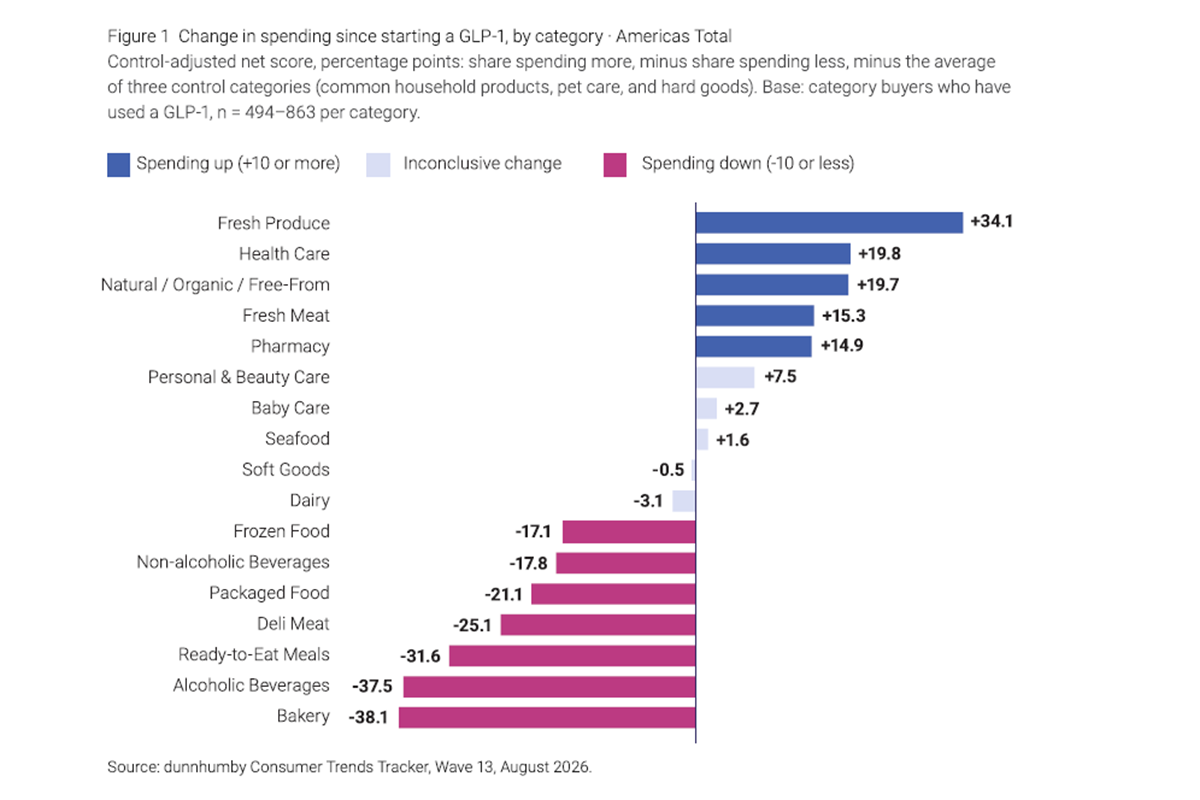
“Across the Americas, fresh produce shows the largest net gain of the 20 categories in our study, while bakery, alcohol and prepared meals lose the most,” Kahner says. “What's striking is what happens after people stop. Nearly half of users have already come off the medication, yet in our U.S. data the shift toward produce largely holds: Former users ease back a little, but fresh produce remains the biggest gain in their basket, while the cuts to alcohol and prepared meals mostly fade.”
According to the report, 45.6% of adults who have used a GLP-1 across the Americas — and 40.2% in the U.S. — have discontinued use, meaning the total pool of shoppers shaped by the medications is roughly double the current user base.
International data in the study suggests there is still significant room for U.S. produce demand to grow as GLP-1 adoption matures. In Brazil, where awareness is 92% and 14.4% of adults have used a GLP-1, basket shifts occur at roughly twice the depth of the U.S., with fresh produce netting a +52.5-point spending gain.
Closer to home, falling medication costs are poised to bring a broader, more price-sensitive demographic into the category. Among adults considering a GLP-1, cost is the top barrier to entry (26.6% overall, and 37% among North Americans earning under $50,000). However, the 2026 launches of lower-cost oral GLP-1 pills starting at $149 per month for cash-paying patients, alongside new Medicare coverage beginning at $50 per month in July, are expected to accelerate adoption among lower- and middle-income shoppers.
For fresh produce suppliers and supermarket operators, the findings point to an enduring structural shift toward the store perimeter — provided merchandising and pricing align with the next wave of consumers.
“For produce growers and retailers, that makes this a lasting habit, not a passing phase,” Kahner says. “The opportunity is to follow that spend to the perimeter with the right assortment for new consumer habits, and to do so with an eye on value, especially as cheaper pills and new coverage bring in less affluent shoppers who will be watching price.”