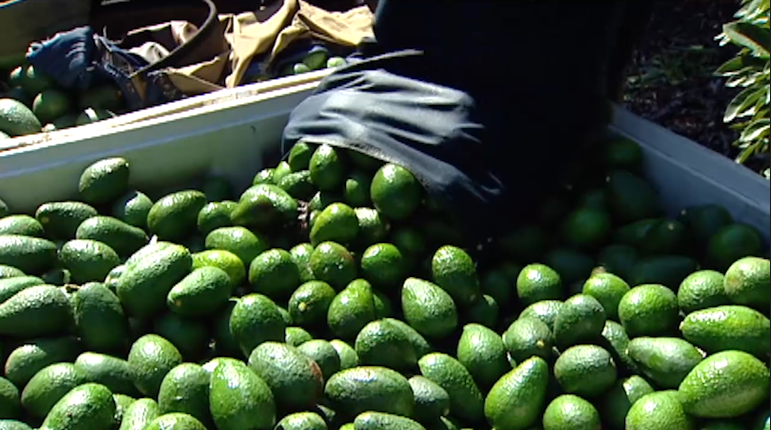
Avocado harvesting and export operations in the Mexican state of Michoacán are scheduled to resume approvals on Thursday, Nov. 5, ending a multiweek shutdown that severely curtailed U.S. avocado inventories and drove sourcing costs past pre-stoppage levels, according to reporting by the International Business Times.
The harvest disruption originated amid industry reports that Mexican authorities and growers had destroyed over 50 tons of avocados following seed weevil detections. However, industry executives have urged perspective regarding market speculation during the shutdown.
“First of all, what I would like to say is there’s a lot of rumors,” says Pedro Somarriba, president of AvoWorks. “I mean, while that’s what’s been out there, I’m not sure that that’s exactly what happened. So, have to take everything with a grain of salt.”
Somarriba points out that the prolonged harvest freeze also intersected with economic pressures among producers.
“We’ve not been allowed to harvest any fruit, and there’s a concerted effort by growers to drive up pricing,” Somarriba says. “They’ve been complaining that pricing has not been enough to be able to cover the cost.”
Addressing the biological characteristics of the pest, Somarriba notes that the seed weevil is in its larva stage during late fall, allowing field crews to spot issues before the insect fully matures into a worm in January and February. Because the pest “gets carried from orchard to orchard,” AvoWorks maintains a rigorous screening workflow starting in the groves.
“Our first line of defense is, of course, the people that are out there harvesting the fruit that go to visit the farms, and we ask them to inspect the farm as well as they can to make sure that this is identified,” Somarriba says.
When shipments reach processing facilities, mandatory testing provides a second layer of defense.
“The fruit is actually cut up to make sure not only that it is not in the fruit itself, in the meat part of it, but also in the bone,” Somarriba says, describing the random sampling protocol used to safeguard product quality.
Somarriba emphasizes that multifacility infrastructure is vital when isolated pest issues arise at individual facilities.
“Let’s say that one packinghouse identifies the worm, and that immediately means that it gets shut down probably for a one-week period,” Somarriba says. “If we only have one packinghouse, that means we’re out of business for that week. The fact that we have three of them means that we have redundancy. ... We don’t stop. The only thing that can stop us is what’s happened the last two weeks, where no one is allowed to cut fruit from the field.”
Despite field testing protocols, the total industrywide freeze on orchard picking created severe strain across the North American supply chain, driving available avocado inventories past critically low levels. As reported by the International Business Times, Local Plant Health Boards (Sanidad Vegetal) and industry organizations in Michoacán finalized an agreement to restart harvesting approvals and export operations on Nov. 5.
Trade analysts warn that restarting harvest approvals will not instantly resolve retail shortages or elevated prices across U.S. markets. Sourcing costs have more than doubled since the field shutdown began, and fob pricing is expected to remain well above pre-stoppage levels as picking, packing and border transportation gradually recover full capacity.
While individual packers rely on multi-facility footprints and field sampling to manage operational risk, official industry leadership emphasizes that the regulated export pipeline to the United States remains secure. Addressing the pest reports, Ana Ambrosi, senior director of corporate communication and PR for Avocados From Mexico (AFM), clarifies that the reported detections occurred outside the primary export zones:
“We are aware of recent reports of seed weevil detections in Mexico. The Mexican Hass Avocado Importers Association (MHAIA) and the Association of Avocado Exporting Producers and Packers of Mexico (APEAM) take phytosanitary compliance and the quality of avocados exported to the United States extremely seriously.
“Mexican agricultural authorities have reinforced phytosanitary inspections, monitoring and controls on the movement of avocados to prevent the spread of pests. These measures include enhanced traceability requirements and additional inspections to ensure transparency and accountability throughout the supply chain.
“Importantly, the reported detections involve fruit originating from areas outside the authorized U.S. avocado export program. Only avocados from approved orchards and municipalities in Michoacán and Jalisco are eligible for export to the United States. These authorized growing areas have not been affected by the reported detections, and avocado export operations to the U.S. remain unaffected.
For more than two decades, MHAIA and APEAM have worked closely with U.S. and Mexican agricultural authorities, growers and packers to uphold rigorous quality and pest-control standards. Both organizations remain committed to supporting these efforts, protecting the integrity of the U.S. export program and ensuring continued compliance with established phytosanitary requirements.”