Apples remain one of the most recognizable and widely purchased items in the produce department, but familiarity alone no longer guarantees growth. As retailers face intensified competition for shopper attention and shippers manage a growing assortment of varieties, apple marketing has become more intentional and data-driven than ever.
Perspectives from Sprouts Farmers Markets, The Save Mart Cos. and Northeast Shared Services, alongside grower-shippers such as Rice Fruit Co. and Chelan Fresh, show how merchandising, promotions and consumer education are aligning with USDA insights to shape the future of apple sales.
Strategic apple marketing throughout the year relies on high-volume variety rotation and competitive packaging to maintain consumer interest, a trend clearly reflected in the late-December USDA National Retail Report for Specialty Crops, which shows apples commanding 19% of all fruit advertisements. While this specific report captures a holiday-driven peak in volume, it highlights the broader retail strategy of using core varieties like granny smith and Honeycrisp to anchor the produce department year-round.
Based on the report, apples were the primary focus of holiday fruit marketing, leading all fruit advertisements, which accounted for 19% of total fruit ads and 10% of all conventional produce advertisements. This prominence is even more pronounced in the organic sector, where apples account for 13% of all organic ads.
Retailers have maintained high volumes of apple features to cater to holiday meal preparation and snacking, keeping them at the top of USDA's “Top 5 Commodities Featured This Week” list.
Several specific varieties and pricing trends from the report include:
- Variety popularity — High-volume varieties include granny smith and Honeycrisp. Granny smith is particularly dominant in conventional ads, with 6,659 ads for per-pound sales at a weighted average price of $1.74, according to the USDA report. Honeycrisp remains a premium favorite, with nearly 5,000 ads for per-pound sales at a weighted average price of $2.06.
- Pricing shifts — While many prices remained stable, some varieties saw notable changes. For instance, Honeycrisp 3-pound bags experienced a significant price drop to a weighted average of $2.44 that week, down from $5.41 the previous week. Conversely, newer varieties like Cosmic Crisp saw price increase to $1.69 per pound, compared to $1.57 the previous week.
- Organic market — In the organic category, gala/royal gala and granny smith are the most advertised varieties, typically sold in 2-pound bags with a weighted average price of approximately $4.99.
Retail View: The Save Mart Cos.
When it comes to promoting in-store strategies for apple sales, Andy Vargas, senior category manager for fruits at The Save Mart Cos., says the most effective approach combines visibility with trial.
“Specialty and club apples perform best when placed at the front of the department or in lobby spillover displays where shoppers encounter them immediately,” Vargas says. “Sampling is especially important for newer varieties, helping customers understand flavor, texture and usage before committing to a purchase.”
Todd Smith, senior category manager of FoodMaxx Produce for The Save Mart Cos., adds: “Strategy varies by variety. Core apples rely on consistent value and everyday pricing, while club apples require education and storytelling. Timing, seasonality and clear communication around flavor and texture are essential. Innovation does not sell itself. It needs context to convert.”
Seasonality drives promotion decisions, Vargas says.
“Apples peak at different times, and some improve after harvest while others are best immediately,” he explains. “Close collaboration with growers allows us to promote each variety at its best flavor window, ensuring a better eating experience for the customer.”
“We plan promotional calendars in advance but stay flexible,” Smith says. “Understanding harvest timing, region and quality allows us to pivot quickly when availability or pricing improves. Local and regional sourcing adds credibility and strengthens customer trust, especially when there is a clear grower story.”
Too much choice can create hesitation, Vargas notes.
“Apples are familiar, but an overload of varieties can overwhelm shoppers,” he says. “The solution is focus through rotation, clear pricing and sampling that guides customers toward confident decisions.”
Serving different household needs within one category is another challenge, Smith adds.
“Some shoppers want large apples for baking; others prefer smaller fruit for kids or snacking,” he says. “Offering a mix of bulk, bagged and by-each options helps remove friction and makes the category accessible to everyone.”
Vargas says the retailer views the grassroots “Eat More Apples” campaign as a great opportunity.
“Apples are a top produce category, and aligning messaging around versatility, health and usage beyond snacking can help drive incremental consumption,” he says.
“Education and inspiration drive engagement,” Smith says. “Apples perform best when shoppers see them as versatile ingredients, not just grab-and-go snacks.”
In feedback received at the store level, Vargas says, shoppers most often ask where the apple is grown and what it tastes like. Flavor profile, sweetness, tartness and texture are key decision drivers that are not visible at first glance. Clear signage and knowledgeable associates help bridge that gap, he explains.
“Customers also ask about seasonality and best uses,” Smith adds. “When we provide guidance at the point of sale, it builds confidence and encourages repeat purchases across the category.”
Pricing starts with market awareness.
“Customers have strong expectations around apple pricing, particularly for core varieties. Promotional pricing on newer or premium apples helps encourage trial without disrupting value perception,” Vargas says.
“Everyday low pricing is critical for core items in a value format,” Smith says. “Club apples benefit from strategic promotional cycles. The key is balancing trial and profitability to protect long-term category health.”
Consumers are expanding their apple usage beyond snacking, Smith notes.
“Baking, cooking and seasonal meal applications are growing, especially around back-to-school and holidays,” he says. “Promoting the right apple for the right occasion keeps the category relevant year-round.”
Apples are such a staple that they can be overlooked in favor of newer fruit options, Vargas adds.
“Innovation keeps the category fresh and draws attention back to apples, even among loyal core buyers,” he says.
Industry Takeaways:
- Apples perform best when confidence replaces confusion. Shoppers want guidance, not just more options, Smith says.
- Innovation drives attention, but execution drives loyalty. A positive trial experience benefits the entire category, Smith says.
- Apples are no longer seasonal-only. With the right storytelling, they remain relevant across the calendar, Vargas says.
- The future of apples is not about assortment expansion; it is about clarity, timing and trust, Vargas says.
Retail View: Sprouts Farmers Markets
Erin Tice, national senior category manager for bananas, cherries, apples and pears at Sprouts Farmers Market says the company focuses on its best-performing varieties and makes it easy for customers to understand flavor, seasonality and usage.
“Sampling is especially effective in helping shoppers navigate similar-looking varieties and discover new favorites,” Tice says. “Larger stores allow us to expand assortment, while smaller formats benefit from a more curated approach.”
Sprouts highlights seasonality and local sourcing whenever possible.
“Clear signage and storytelling around freshness and peak availability help reinforce quality and create a stronger connection with our customers,” she explains.
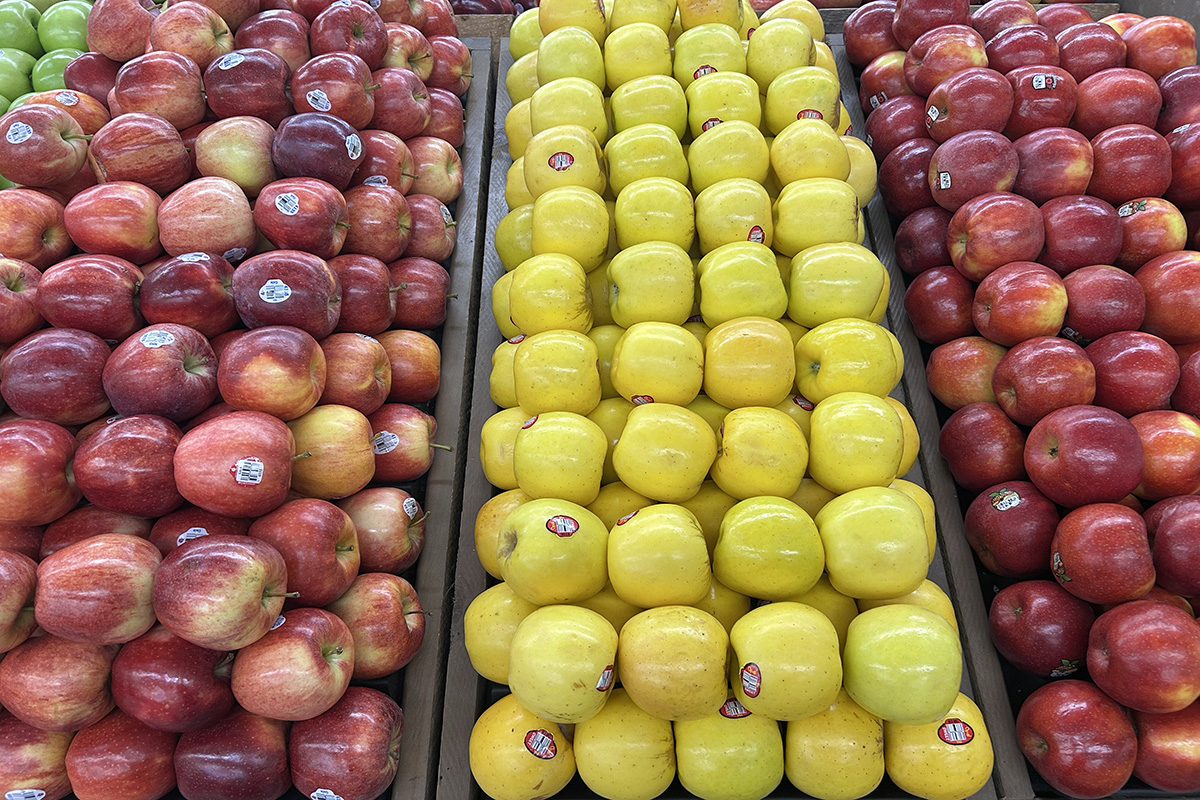
Tice says one of the biggest challenges is helping customers navigate the wide range of varieties, particularly red apples that can look similar.
“We address this with clear flavor descriptors, simplified assortments and sampling to drive trial and confidence,” she says.
Sprouts fully supports the “Eat More Apples” campaign and its mission.
“Through in-store signage, social media and recipe inspiration, we encourage customers to snack more, cook more and try new apple varieties,” Tice says.
Feedback from customers includes curiosity about apple varieties.
“Customers often ask about flavor differences, freshness and when certain varieties are at their peak,” she says. “We're also seeing increased interest in how apples are grown, including sustainability and organic options.”
Promotions are guided by seasonality, availability and what resonates most with Sprouts customers, Tice explains.
“The goal is to offer strong value while encouraging trial and repeat purchases,” she says.
Sprouts is noticing growing interest in apples.
“We're seeing growing interest in unique flavor profiles, clearly branded varieties and sustainably grown apples,” Tice says. “Convenience also matters; apples as healthy, on-the-go snacks are gaining traction, along with increased use in juicing and savory recipes.”
Retail View: Northeast Shared Services
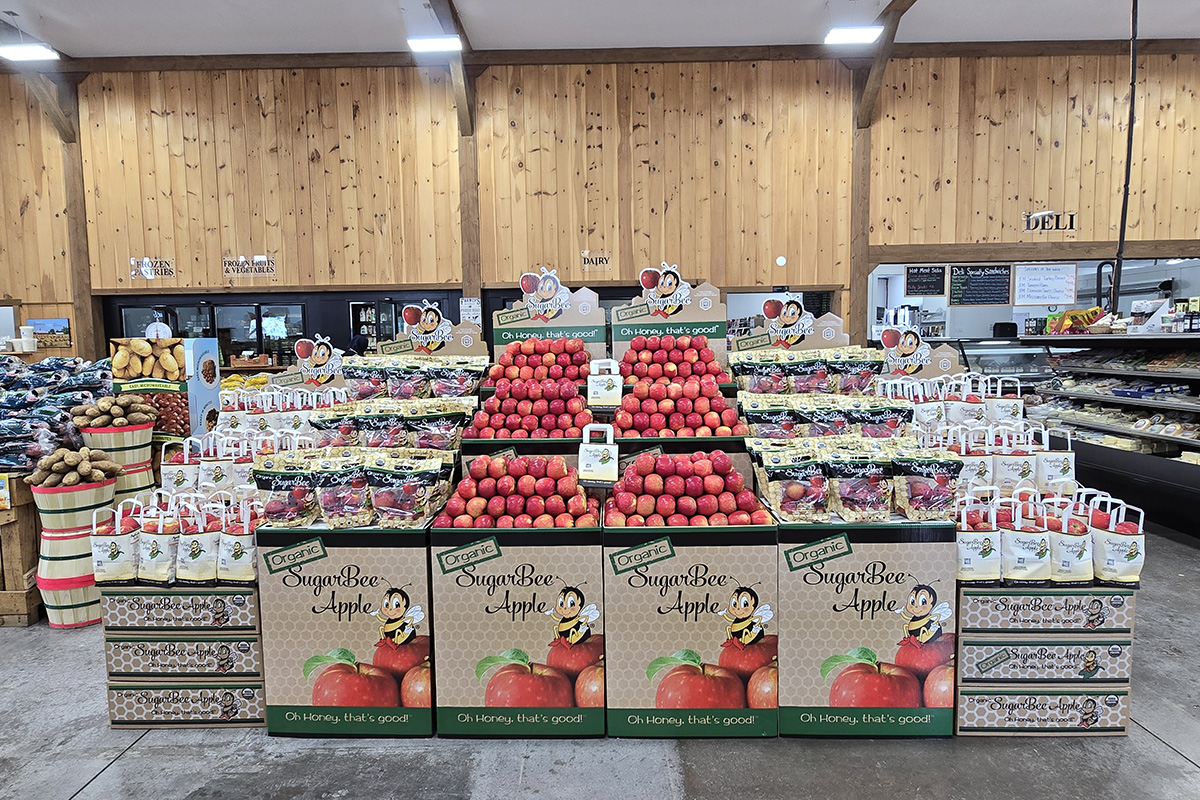
As the central support hub for Price Chopper/Market 32 and Tops Friendly Market, Northeast Shared Services helps promote sales by placing the apple table near the front of the department, says Mathew Blair, produce category business manager for the company.
“As customers enter the store and look down the produce aisle, they are immediately met with a large, colorful apple display positioned front and center, which captures attention and draws them into the department,” he says. “In addition, rotating promotions within the category helps drive sales across all segments, including bagged, bulk and tote apples.”
Blair says the stores promote apples at peak freshness to leverage seasonal availability.
“In the fall season, we feature larger, more prominent displays and use seasonal signage on each variety of apple to call out the specific characteristics of each variety of apple,” he explains.
Regarding the “Eat More Apples” campaign, Blair says the stores use several merchandising strategies that align to increase apple consumption.
“While an apple table naturally encourages simple, fresh snacking, cross-merchandising helps introduce additional usage ideas and inspires customers as they shop the category,” he says. “By placing complementary items such as pie crusts near apple varieties commonly used for baking, or incorporating caramel apple dip into the display, we create a more engaging and solution-oriented shopping experience. These strategies help drive incremental apple sales and ultimately supports increased overall apple consumption.”
Blair says the most common customer question is about which apple is best for a particular use.
“Whether they are looking for a good snacking apple, a variety suited for baking, a softer texture or a crisp, crunchy option, customers frequently seek guidance to make the right selection. To support this, we utilize small variety-level signs that highlight key characteristics, helping customers easily identify the apple that best meets their needs,” he says. “This approach improves the shopping experience and helps ensure customers are satisfied with their purchase and receive exactly what they expect.”
Many factors are considered when developing pricing strategies and promotional offers, Blair says.
“Market conditions and customer demand largely influence cost, and we aim to lean into items when they are at peak season and freshness,” he explains. “Promoting apples at their optimal quality helps deliver the best possible eating experience, which in turn encourages repeat purchases. Poorly timed promotions, on the other hand, can result in a less impactful experience that lacks a ‘wow' factor and may reduce the likelihood of future purchases.”
Blair says grocers are seeing strong interest in new and premium apple varieties, with shoppers becoming increasingly curious and willing to pay a premium for unique flavor profiles and enhanced texture experiences.
“At the same time, traditional mainline varieties such as red delicious, cortland and macoun have experienced a decline in sales over the past several years as customers continue to upgrade their purchasing decisions toward premium apple offerings,” he adds.
Grower-Shipper Strategies: Supporting Retail Success
Rice Fruit Co. leverages seasonal availability and local sourcing to market apples to its customers.
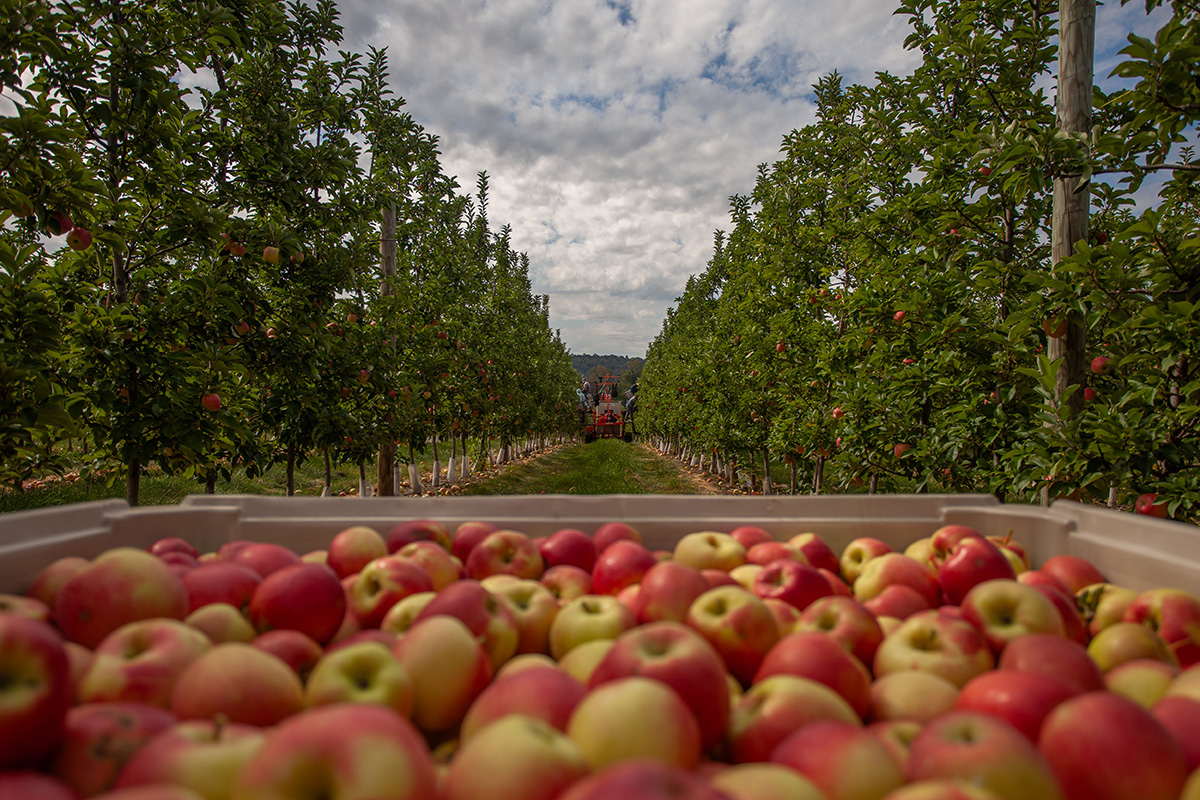
“We focus on community and supporting your local farms,” says Valerie Ramsburg, the company's content marketing manager. “Rice Fruit Co. works with over 40 farm families, concentrated in the mid-Atlantic region of the U.S. With innovative storage technology, we can store apples at their peak freshness in a controlled atmosphere room. When those rooms are opened throughout the season, it continues our availability well into the spring and summer. We like to think that it's always apple season.”
Ramsburg says balancing what consumers love, what grows well and what stores well is always at the top of mind when planning programs.
“Offering plenty of variety is a necessity, along with offering apples that provide color breaks and unique flavors,” she says. “Bright and engaging packaging is extremely helpful for both brand recognition and repeat purchases. Consumers also like to have choices they can feel good about, like supporting their local farming families.”
Of the “Eat More Apples” campaign, Ramsburg says the heart of the campaign focuses on increasing apple consumption for Americans.
“Considerable time and research have been spent on the extensive health benefits of apples. They provide almost 25% of daily fiber (of which nine out of 10 people are short on); they satiate hunger, especially when paired with a protein; and are a natural source of electrolytes,” she says. “Much of this information is either unknown or has been forgotten behind the slogan, ‘An apple a day.' We've said this for decades, and it's become so commonplace that people often forget why they should be eating apples daily. The job of this campaign is to reinforce those health benefits as well as tell the stories of American farmers who work tirelessly to bring these crops to your table.”
Ramsburg says common questions about the company's apples involve how and where they are grown, as well as agricultural practices.
“Consumers are interested in educating themselves and learning about where their food is grown and what steps the farmers are taking to preserve land and ecosystems for future generations,” she says. “They want to know what sets us apart and, quite honestly, we love to tell our story. Rice Fruit Co. will celebrate 113 years in business this year.”
Shoppers crave education on the specific health and wellness benefits of fresh apples and are inspired by creative sampling pairings that showcase a new way to incorporate more fresh apples into their daily diet, says Julie DeJarnatt, vice president of marketing and brand strategy for Chelan Fresh.
Educating consumers about varieties is one challenge in marketing, she notes.
“Consumers need help navigating the sea of bicolored red apples,” DeJarnatt says. “An apple is not just an apple; there is a wide range of flavor and texture nuances between varieties that may look similar from the outside.”
Chelan Fresh is tapping into the food-as-medicine movement by incorporating educational messaging around gut health, mental health, hydration and energy into its marketing campaigns.