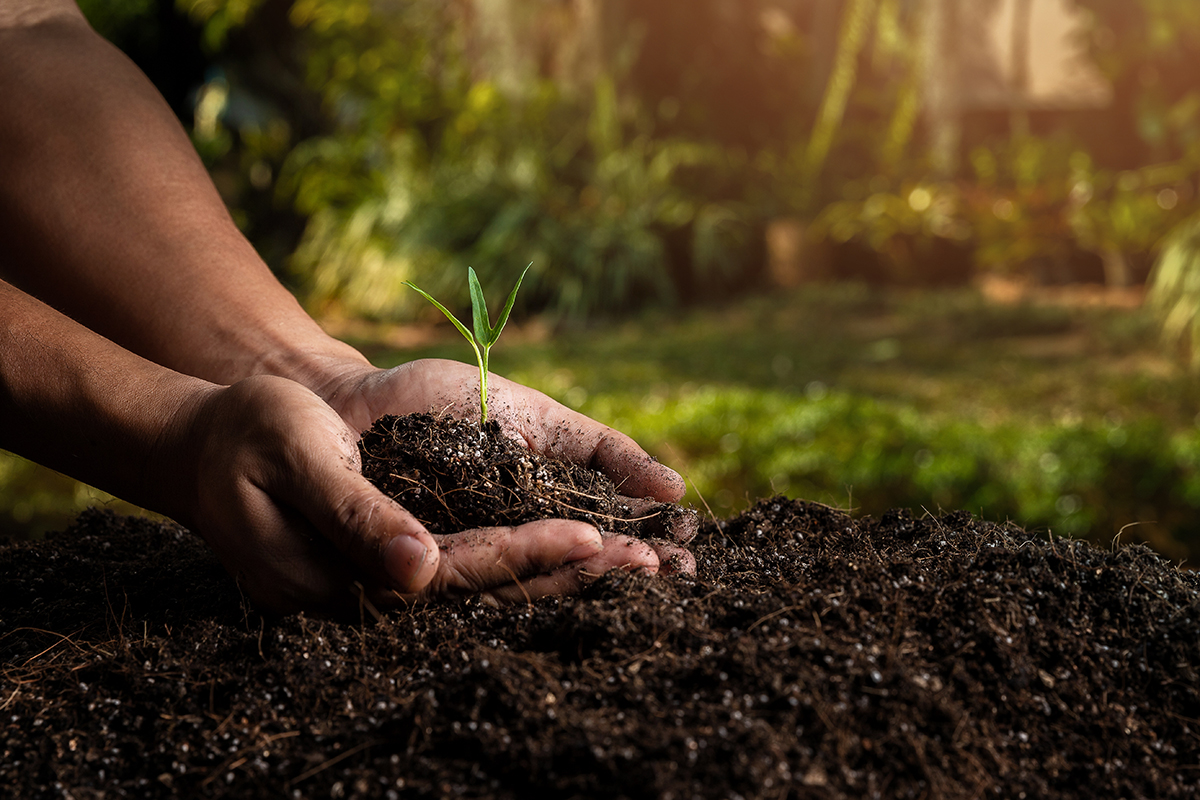
The secret to a truly sustainable food system might not be found in high-tech machinery or new chemical additives, but in a fundamental shift in how we view the dirt beneath our feet. According to Janel Ohletz, director of agriculture for Plantd, who holds a doctorate in soil science, the former chef-turned-soil-expert says the industry is beginning to realize that soil health is the “secret ingredient” that determines the ultimate quality of specialty crops.
The “Microbe Farmer” Mentality
For Ohletz, the transition to sustainable farming starts with a radical change in perspective. She says successful regenerative farmers must stop seeing themselves as merely growers of carrots or onions and instead adopt the mindset of “microbe farmers.” This philosophy treats the soil as a living ecosystem, much like the human gut microbiome, where the primary job of the farmer is to feed the soil, so that the soil, in turn, can feed the plant, Ohletz says.
“If we change our mentality that we're not farmers of carrots or onions or whatever, but we're instead ‘microbe farmers,' the soil will feed the plant, and when it's all there and available, then the plant will just naturally take it up.”
This microbe-first approach has a direct impact on the nutrient density that ends up on the plate. Ohletz says a plant simply cannot put nutrients into food if the building blocks, such as phenols, antioxidants and minerals, are missing from the soil. While conventional methods might help a plant survive, regenerative systems allow them to thrive, resulting in higher Brix levels and a more complex nutritional profile.

The Carbon-Negative Blueprint: Biochar as a Power Strip
In the quest for carbon-negative materials, Ohletz says carbon should be viewed not as a buzzword but as a tangible asset. A key component of this blueprint is biochar, which provides a physical and chemical foundation that standard compost cannot match. Ohletz describes biochar's function using the analogy of a power strip.
“It's kind of like if you think of it as a power plug or a power strip, the more plug places you have to put things plugged into, the better,” she says.
This structure increases the soil's “anion and cation exchange capacity,” allowing it to hold onto nutrients that would otherwise leach away. Furthermore, biochar acts like a sponge; its high porosity allows water to drain effectively while simultaneously retaining moisture for the plant's use. Unlike organic matter that breaks down quickly, Ohletz says biochar remains in the soil for hundreds of years, relieving the pressure on organic matter to do all the heavy lifting.
Regenerative Farming in Specialty Crops
Ohletz says the specialty crop sector, specifically smaller 30-to-60-acre vegetable farms, is actually adopting these practices faster than row crop operations. Though the implementation differs, such as managing “coal crops” in colder months or limiting disturbance in leafy greens, the core premises remain the same: add organic matter and limit soil disturbance.
The Retail Secret: Selling the Story of Taste
However, producing high-quality crops is only half the battle, she says. The other half is convincing the consumer. Currently, most shoppers buy based on the physical appearance of a fruit rather than the health of the farm. Ohletz believes the secret to shifting this behavior lies in the culinary experience.
“As a chef, when you buy something that's a locally grown thing, the flavor is just better,” she says.
Retailers can bridge this gap by connecting soil health to ecosystem services that consumers care about, such as:
- Pollinator protection: Highlighting that regenerative farms use meadow strips to help the bees
- Environmental impact: Linking produce choices to improved air and water quality
- Nutrient retention: Explaining that nutrient density is also affected by the length of time an ingredient takes to get from the field to the plate, with local soil-healthy options often outperforming store-shelf staples
By focusing on taste and the environmental benefits that healthy soil provides, such as supporting pollinators through meadow strips and improving air and water quality, retailers can tell a more compelling story. Ultimately, Ohletz says the goal is to help consumers realize the simple choices they make in the produce aisle can have a profound impact on the environment as well as their own health.
Your Next Read: How an Agri-Food Pioneer Transforms Soil Science into Real-World Solutions