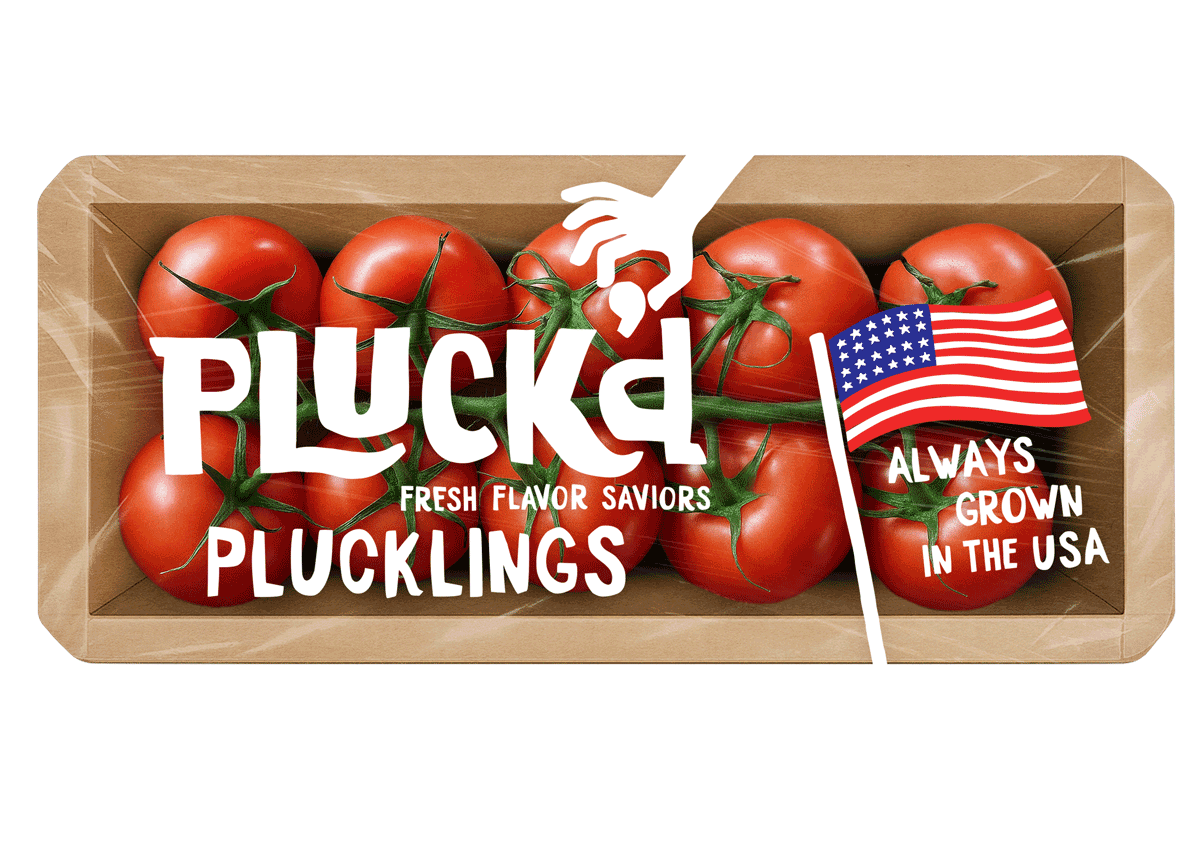
Pluck'd is a new U.S.-grown tomato brand with tomatoes available in select Walmart, Weis Markets and regional retailers. Ben Alexander, CEO of Pluck'd, says he saw a strong need for consistent, high-quality tomatoes.
“If not now, then when?” Alexander says of the timing.
He says the company has worked on projects around the world on greenhouses and brings a lot of lessons to this new venture.
“We thought the U.S. was a really solid, obvious choice, partly because we felt that we could produce a really high-quality, high-flavor product that was grown in the U.S.,” he says. “Looking at the sort of macroeconomic side of things, all of the product really is coming from Mexico and Canada. And we felt, well, why on earth does America not have more domestic production?”
He says when the company started the project, it looked at the science behind tomato production, which includes weather data to help identify the optimum location.
“It just so happened to be a wonderful coincidence that Virginia, and specifically the part of Virginia we're in, is within a day's drive of the entire East Coast,” he says. “That's just a happy coincidence, more than anything.”
Winnowing Down 500 Varieties
Alexander says Pluck'd is very intentional with the selection of its first three varieties: Preemos, a mid-size tomato-on-the-vine with a rich, balanced flavor and vibrant red color; Plucculents, cocktail-sized tomatoes-on-the-vine with juicy sweetness and a bright finish; and Plucklings, small, snackable tomatoes-on-the-vine with bold flavor and natural sweetness.
He says he and the R&D team likely tasted about 500 different tomatoes to choose the final three. And from there, the team conducted blind taste testing with a wide swath of consumers from diverse demographics.
“Ultimately, we unanimously ended up with the ones that we've chosen,” he says. “And it started with segments, and then we worked down into varieties.”
He says within this research, there was a clear consistency void the team at Pluck'd hopes to fill.
“In the research that we did, it's clear that there's a lack of consistency year round,” he says. “One week is good. One week it might be bad. One week is fresh. One week it's not fresh. Why can no one just do this week in, week out?”
Alexander says the grow team has more than 200 years of experience that helps propel the goal of freshness and quality.
“We think we've set the foundations to consistently provide high-quality, high-flavor product that is fresh,” he says. “You can see it in the vine. It's still thick, it's not withered. That's what we're aiming for with high-quality varieties grown properly by really experienced people.
The Packaging Strategy
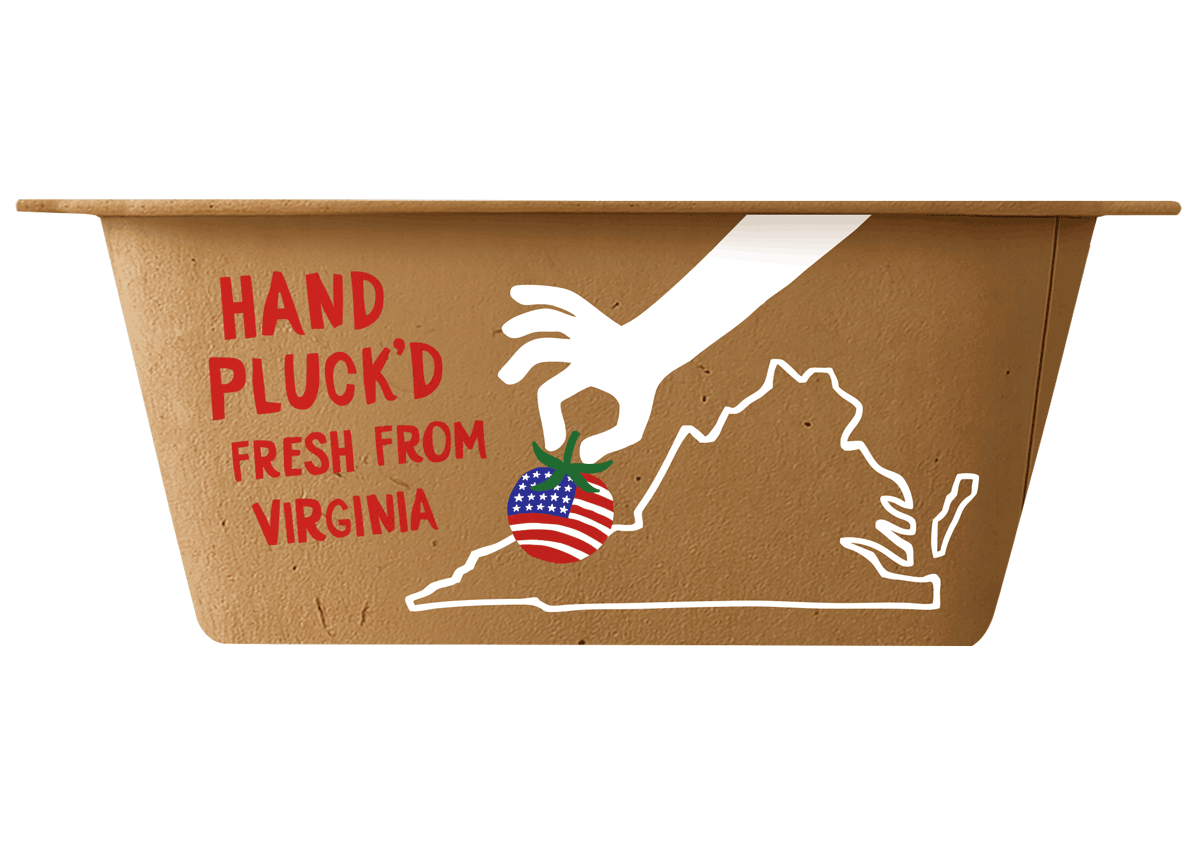
Packaging plays an important role for Pluck'd. The company uses natural craft packaging with a QR code, callouts to the state of Virginia and “Always Grown in the USA.” And when the packages are stacked, it forms a tomato vine.
“We're just trying to make it fun and something that you want to pick up and try,” he says.
The company plans a marketing campaign around “Pluck'd Around and Find out.”
“We're just trying to be exciting, interesting, but, but ultimately, what will determine our success is consistent, high quality, freshness and good flavor, and that's it,” he says. “We want people to think ‘Pluck'd, okay, it's grown in the U.S. That's the idea behind ‘Always Grown in the USA' on the package.”
Tech Meets Nature
Alexander says the Austinville, Va., site has proprietary technology. He says Pluck'd has the ultimate goal of lowering the operation's carbon footprint. This includes the addition of a biomass boiler in the future.
“We want a consumer to be able to buy our product, and it'd be cost competitive and obviously high-quality, highly fresh, etc.,” he says. “But also, one day, have the ability to, by virtue of buying the product, take X amount of CO2 out of the atmosphere.”
He says technology plays an important role in helping the company farm intelligently. But he says that's in concert with Mother Nature.
“We found the perfect location that enables us, as a growing entity, to sail with the tide,” he says. “Equivalently, we use nature to our advantage because we're not fighting it every day because we found the perfect location.”
He says that comes with improved pollination with the optimum technology to produce year-round high-quality tomatoes.
“Everything that we have done has been through that prism of like agronomy and pollination and quality,” he says. “I'm pretty certain, almost 100% certain, that we've got the most advanced tomato greenhouse in the U.S.”
Alexander says he hopes that the Pluck'd greenhouse will be pesticide-free thanks to a sophisticated integrated pest management system. And an irrigation system with nano filters.
“A healthy plant ultimately comes from good water,” he says.
And Alexander says Pluck'd has a “Spotless” team that is hyper-focused on cleaning everything to ensure the health of the plants. And Pluck'd selected varieties that are virus-resistant, which also helps. But he says the primary focus is on quality above all.
“We're not focusing on yields,” he says. Yield is a sort of nice benefit that comes from the correct climate location, climate internally, the correct technology and the correct operations.”
What's Next for the Vertically Integrated Brand
Alexander says Pluck'd has had a good reception from retailers. He says the unique value proposition of Pluck'd being picked one day and in consumers' hands the next is important.
“There are benefits to a buyer, such as it's not seven- to 10-days old by the time you put it on the shelf, it's arrived at their DC a day or two since it's been cut, and then it's there,” he says. “As a result, the shrink should be much less. The quality when the consumer buys it is significantly better, fresher, and so it lasts longer. They see less waste. There's just, there's better value throughout the system than just pure price.”
As far as future plans, Alexander says the first and most critical step of launching Pluck'd is to deliver on premium quality tomatoes.
“We have a scale that means that we can succeed as a vertically integrated company. We've set the foundations correctly, but we're not going to look to scale too fast,” he says. “We need to get operational excellence.”
And then, from there, he says there is potential to expand in the tomato category.
“There's a lot left to do in just tomatoes,” he says. “We can go deeper and expand further just within that category. That's our expertise currently. You know, everyone that we've hired is an expert in tomatoes.”