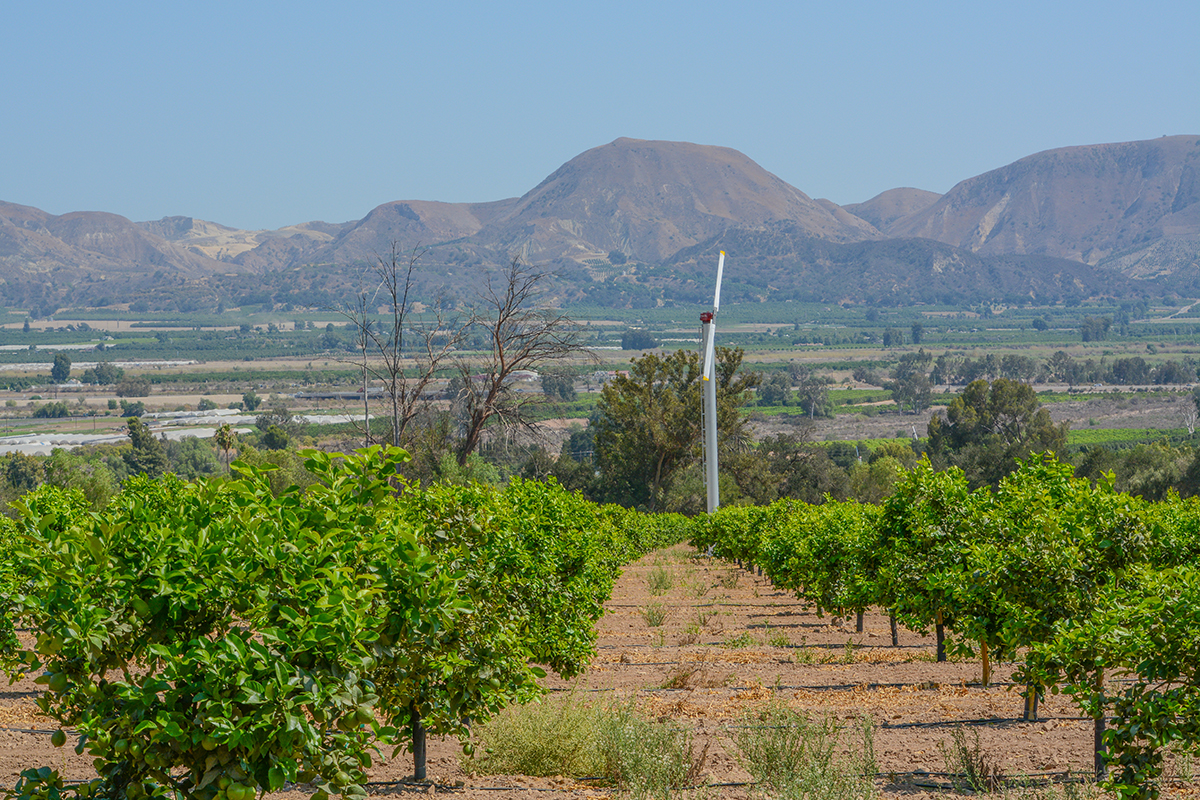
In the sun-drenched landscape of Ventura County, Calif., the geography of agriculture and daily life is inextricably linked. Citrus groves and strawberry fields sit just steps away from suburban porches, schools and parks. While this proximity defines the local landscape, it also presents an opportunity for a new model of land stewardship.
Ventura County remains a focal point for agricultural innovation, and today, that innovation is centered on transitioning toward regenerative organic practices.
To support this evolution, Patagonia’s Holdfast Collective has approved a $1.55 million, three-year grant renewal to support the Rodale Institute’s Regenerate Ventura project. This funding aims to accelerate the transition of farmland toward regenerative organic agriculture, a mission directly aligned with Patagonia’s vision for the future of food. For Patagonia, the investment is deeply local because its headquarters sits at the base of the Ventura River delta, where the mountain water meets the Pacific Ocean.
“This renewal reflects what we’ve proven in Year 1: That hyperlocal, farmer-first support works,” says Rodale Institute CEO Jeff Tkach. “With Holdfast’s partnership, we’re not just funding transition; we’re funding a systems shift. The full vision for countywide transformation requires $10 million in total investment. We’re calling on others who are committed to this work to join us in making Ventura County a regenerative organic model for the nation.”
Paul Lightfoot, general manager of Patagonia Provisions, notes that the company’s employees are neighbors to these farms, living in Oxnard, Ojai and Ventura. Because the groves and neighborhoods are so intertwined, the health of the soil and the methods of application are a significant point of interest for the local community.
“It’s a nice thing to think about, because the meaning is, like, really important and personal,” Lightfoot says. He points to Ojai as a specific example where groves run through neighborhoods, making the success of the farming operations a shared community priority. “Our employees live in Ventura County. ... It’s just a huge point of concern for all of our people who live there and whose dogs run on the streets and their kids go to the parks and go to the schools there.”
While many might assume Patagonia Provisions is funding this to secure its own supply chain, the primary goal is to support farm viability. The division currently does not carry fresh produce like the lemons or strawberries grown in Ventura. Instead, the company is using the Holdfast Collective to act as a partner and funder to help local growers explore alternatives to what Lightfoot describes as the chemical agricultural treadmill.
Conventional farmers often face intense pressure from pest diseases and may find themselves caught in a cycle of increasing inputs.
“And that maybe works for a while, but it doesn’t work forever, right? Resistance is bred,” Lightfoot says. He notes that Rodale Institute’s role is to offer a different path for those interested in change. “What Rodale is doing is saying, ‘We’re going to go in and see if any farmers want to learn about their options for getting off the [chemical] agricultural treadmill,’ and a lot of them are saying yes.”
Rodale Institute steps into this space by offering technical assistance, business planning and equipment stipends. This farmer-first approach ensures that growers have the data and support they need to maintain a productive, profitable operation while moving away from synthetic applications. The project has already seen significant success since its 2024 launch, with more than 10,000 acres currently in transition and nearly 39% engagement among farmers who are Black, Indigenous and people of color (BIPOC).
For Lightfoot and the team at Patagonia, seeing these funds put to work is a direct reflection of the company’s unique ownership structure. Because profits are paid to the Holdfast Collective to protect the planet, the success of the business is redirected back into the health of the local soil. Lightfoot says he views the grant as a way to use the “fruits of our labor” to help build a more resilient agricultural model right in their own backyard.
“Rodale Institute is filling a void,” says Greg Curtis, executive director of the Holdfast Collective. “They’ve shown up with rigor, trust and results. Their model proves that organic and regenerative organic agriculture is essential to climate resilience and farm viability in our own backyard and beyond.”





.png)