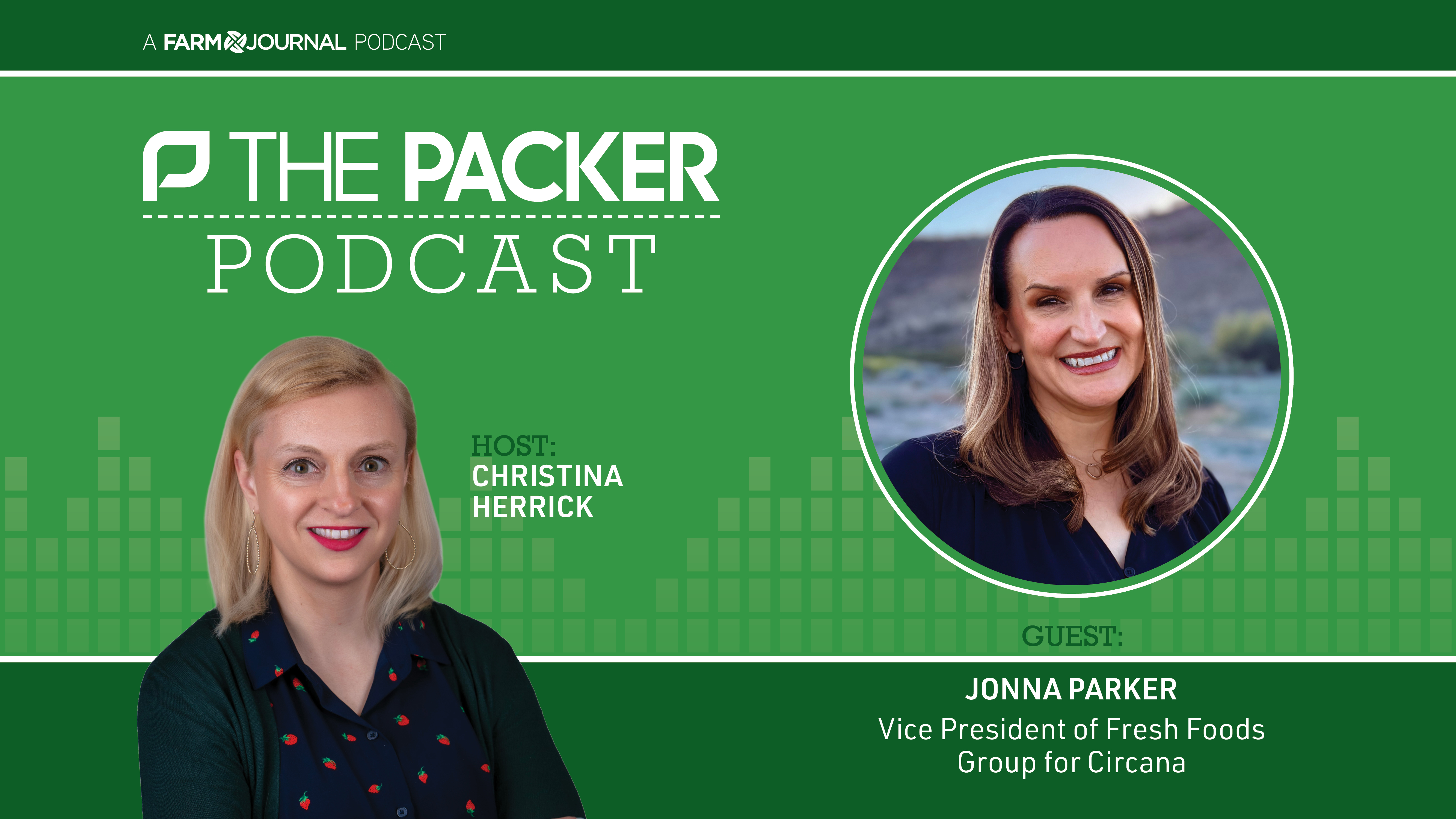
The days of circular ads driving sales is over says Jonna Parker, vice president of the fresh food group at Circana. Shoppers have changed, and because shoppers have changed, that means the industry needs to change its approach to how it sells produce.
“We’re not going back to the days where people are just opening up their circular ad and circling and then going to one grocery store that has not been the way we’ve shopped as Americans for many years,” she says.
Parker joined “The Packer Podcast” to share some of Circana’s latest findings from its “Future of” survey. She says the overall outlook for the produce industry looks good, with a 2.5% dollar increase year-over-year and the produce retail sector to hit $101 billion this year. And while those dollar figures make the fresh produce industry a formidable force of growth, Parker says the growth trajectory for pounds sold isn’t quite as strong. She says Circana projects only a 1% growth in pounds year-over-year.
“When you expect stronger growth, and certainly in the last year, produce didn’t always grow as fast, especially in pound volume, especially in dollar sales, as other departments, like the deli prepared space, the frozen food space, the beverages aisle and the big story of 2025 was all about protein,” she says. “This year, being a 2.5% is certainly something we can high-five about. But gosh, shouldn’t it be bigger?”
While pounds are a major metric for produce industry businesses, Parker says, dollars are obviously a critical part of a retailer’s financial outlook, so the two are always linked.
“If you’re a retailer, marketer, grower, shipper, brand or manufacturer, dollars are also important,” she says. “Because, especially if you’re a retailer, selling more pounds at a low loss leader doesn’t help you make your profit numbers.”
Parker, too, says price is another part of the equation with dollars and volume. Disruptions in the fresh produce supply chain can cause numbers to go up and down, while dollars and volume more closely correlate to supply.
“I’m not here to say that we should stop doing as advanced forecasting and supply as we have, but I think what I’ve often found in produce is the best place to explain this is demand is as important as supply,” she says.
She points to the dramatic change in shoppers’ behavior as more young shoppers move away from traditional grocery stores to buy produce.
“Grocery is now only about 40% to 45% of sales for U.S. produce,” she says. “When we did our survey work, many consumers, especially under the age 40, list non-grocery channel retailers as their favorite place to buy produce and give them tons of high marks on things like quality and freshness and healthy options and snacking.”
So, the focus needs to turn to “who is buying what, where and when,” Parker adds. She says building demand is critical for the fresh produce industry. Consumers get inundated with information through social media and other mediums. This digital age has changed consumer expectations and how consumers see produce.
“Produce is no longer a commodity,” she says. “A commodity implies there are no other choices. You have to buy this. But there are many other choices.”
And, consumers are no longer in a silo, she says, referencing the days of a circular ad driving sales. Consumers might research online and buy in store. Consumers might buy online. Consumers might also see product placement in a store that drives a sale.
“Where strategy is going to show a separation and results in this back half of the decade is to recognize the companies, whether they be retailers or suppliers, that are recognizing that consumers have needs and demands, and that when we understand that so much more with whatever we’re selling, that’s really going to help us stand out from the competition,” Parker says.