In a memorable scene from the 1996 film, “Forrest Gump,” our humble protagonist is shown during Vietnam War-era basic training, focused and excelling at rapidly disassembling and reassembling his weapon, to his drill sergeant's shock and amazement.
“Why did you put that weapon together so quickly, Gump?” the sergeant shouts to his face.
Gump stared ahead and answered: “Because you told me to, drill sergeant!”
Or perhaps, as some veterans have mused, there's the right way, the wrong way and the Army way. Well, the military is all about discipline and executing according to strict, well-documented procedures. The same is true in business to a large degree, especially in the very produce aisle that I talk about week in and week out.
The question sometimes raised is this: Is there a need for a chain to have a produce manual?
The short answer is, of course, yes. In any organization, standards need to be set. For goals and standards to exist, these must be in writing. Hence, the need for a manual of sorts.
In my 50-plus years in the produce industry, I've worked in some capacity (specialist, buyer, produce manager, inspector, clerk) for four separate chains. How many of these chains had a formal produce manual? None.
How many could have used one? Every one of them.
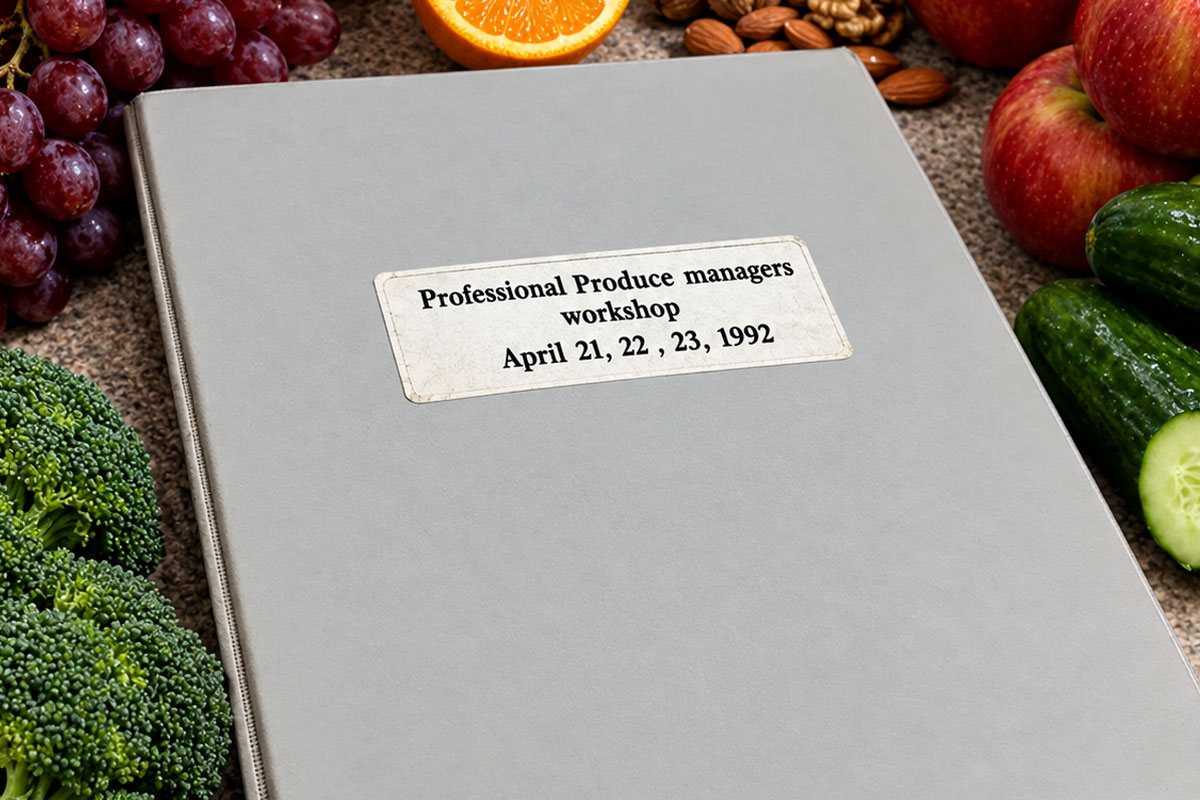
A manual doesn't need to be dull, redundant, overly complicated or try to account for every situation from crew discipline to schedule writing to, well, pick your topic. (That's what you have my smiling face for.) However, a manual identifies exact standards and expectations.
Produce manuals should:
- Focus on department management.
- Provide a training chart and review process for clerks and customer service.
- Include gross profit expectations.
- Establish procedures such as how to receive a load; how to maintain the cold chain; how to work safely, store and handle product; and how to date a cooler.
- Outline procedures on prep and crisping; rotation; merchandising philosophy; stocking; how to write an effective labor schedule; and how to write an accurate order.
- Include details on outside vendor guidelines, sanitation standards, how to monitor and build sales, how to increase inventory turns, how to reduce shrink, and many other critical control points.
As a buyer, such standards (in the same manual) can include establishing and purchasing specific grades, sizes, labels and points of origin. It should include a buyer's measurable metrics, such as using approved vendors, inventory turns, fill rate, shrink and out-of-stocks — just a few examples.
If produce operation standards aren't defined in writing, they don't exist at all.
Hence the need for some form of manual, be it in hard copy or in a digital format. Many chains (as mentioned in the handful I worked for) all said the same thing, as I paraphrase: “We don't have (or need) a manual. We all know what to do, when it is supposed to happen, how it ought to be done, who is responsible for what and why it's done the way we do it.”
The trouble with this line of thinking is that when things go sideways (and things go sideways a lot in the produce aisle), the easy out is to claim ignorance — i.e., “That's not my job. We've never done it that way. Nobody told me.” When rules, policies and procedures are identified and expressed in writing, only then can a produce director, supervisor or produce manager truly hold his or her charges fully accountable.
In fact, with rules and procedures in writing, it makes managing a whole lot easier.
Chains may discount having an established produce operations manual, and perhaps you have it and just don't need to drag it out. But if you have something at the ready, a charter of sorts — one that is open to changes as labor practices, technology or other philosophies evolve — then at least you have a foundation, a produce bible to place your hand upon and say this is how we do it, as well as have a path to follow and grow.
“I believe management is an art and a science. I think there is a structural part of management which is A, B, C: what we do, the technical things we've been taught. On the other hand, there's the human side of it: dealing with people, that part of management that we just develop a feel for.” — Produce Manager (gleaned from leadership skills workbooks, PMA workshop produce manual, 1992)
Armand Lobato's more than 50 years of experience in the produce business span a range of foodservice and retail positions. He has written a weekly retail column for two decades.