Editor's Note: The story was updated April 3 with comments from Walmart.
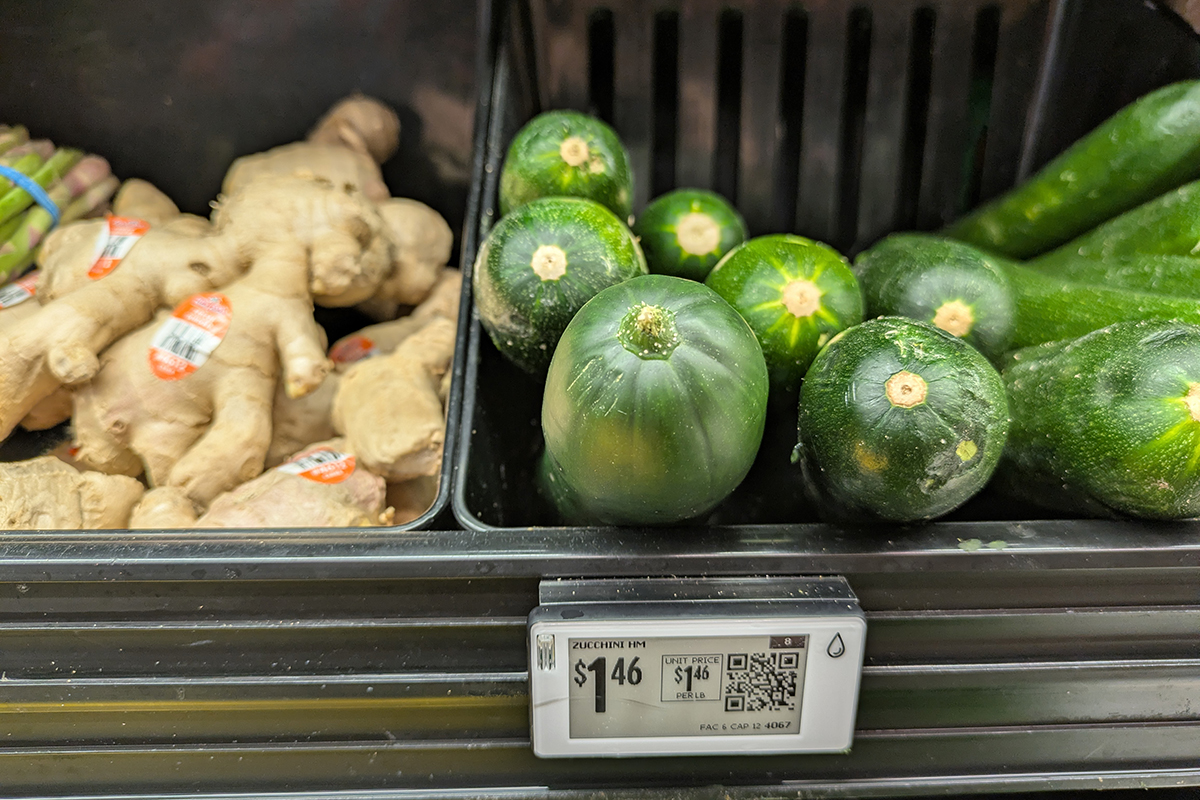
As Walmart accelerates its plan to install Electronic Shelf Labels (ESLs) across thousands of U.S. stores by the end of 2026, the grocery aisle has become the front line of a national debate. To retailers and tech analysts, these digital tags are a necessary evolution to combat labor shortages and supply chain volatility. To labor unions and a growing cohort of lawmakers, they are the connective tissue of a predatory puzzle known as surveillance pricing.
The conflict has reached a boiling point with the launch of the Affordable Groceries and Good Jobs Campaign by United Food and Commercial Workers (UFCW). Backed by federal legislation like the Stop Price Gouging in Grocery Stores Act, the movement seeks to ban ESLs in large retail environments. What remains is a fundamental disagreement over whether this technology serves the shopper or exploits the family budget.
The Union's Warning: “Surveillance Pricing” and Job Loss
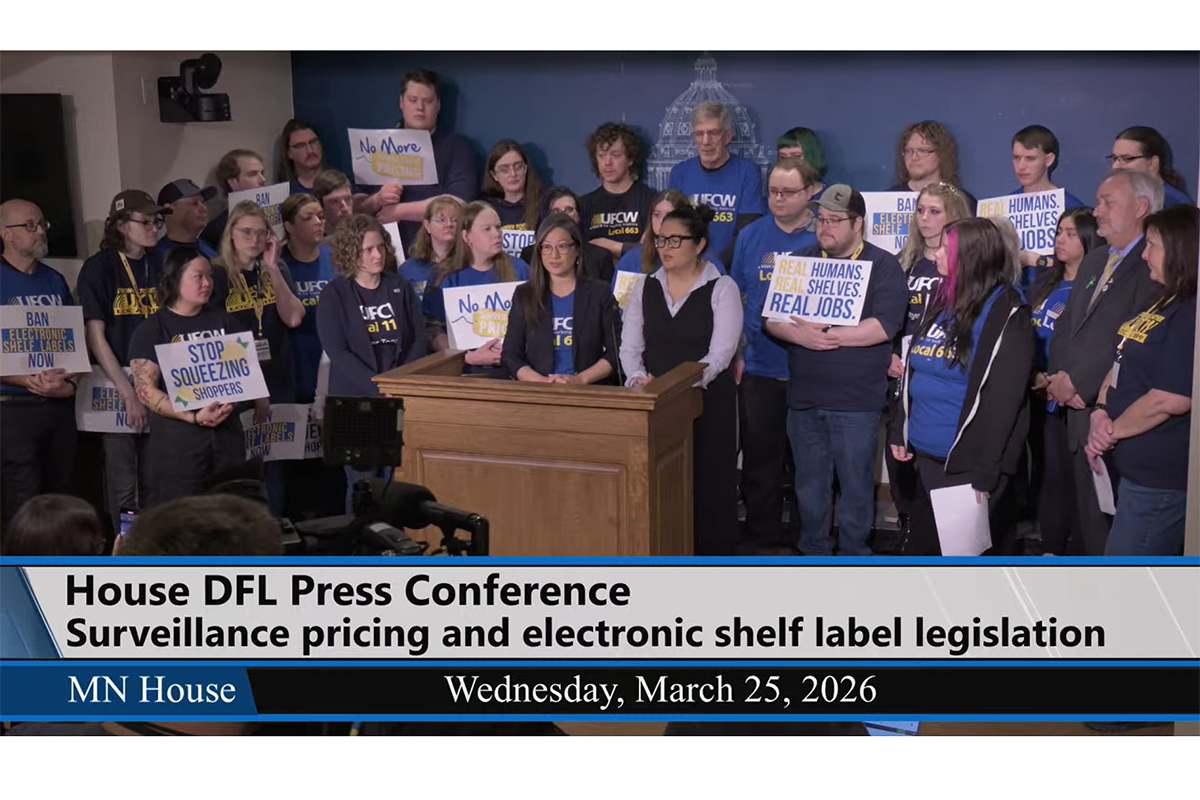
For the 1.2 million members of the UFCW, ESLs represent a dual threat: the loss of privacy for consumers and the loss of livelihoods for workers. At a recent press conference in Minnesota, union leaders painted a grim picture of a future where bread and milk prices spike the moment a blizzard is forecast.
“The second the weatherman forecasts a blizzard, companies can use electronic shelf labels to hike prices,” says Diana Tacidamer, secretary-treasurer for UFCW Local 1189. “Corporations want you to believe that ESLs will only help the customer ... but they're patenting the technology to allow algorithms to change prices in real time.”
The union's concern extends beyond the checkout line. In Minnesota alone, labor leaders estimate the automation of pricing could jeopardize 1,000 “family-sustaining” union jobs. Traditionally, pricing coordinators — workers who manually update paper tags — possess a deep knowledge of the store's inventory. By automating this task, unions argue retailers are not just cutting hours but are also removing the human element that helps shoppers navigate the aisles.
“ESLs threaten to take work away from workers while leaving us to handle rightfully angry customers,” says Jane St. Louis, a grocery worker in Maryland.
This sentiment is echoed by Milton Jones, UFCW International president, who argues the technology allows corporations to “change prices in front of [shoppers'] eyes just because they live in the wrong zip code or are a new parent.”
The Industry's Defense: Survival in a Low-Margin World
On the other side of the aisle, retail analysts like Greg Buzek, president and chief AI officer for IHL Group, view the union's surveillance narrative as a fundamental misunderstanding of retail economics. According to Buzek, the industry is currently “hemorrhaging” due to labor shortages and a $1.7 trillion “inventory distortion” problem — the cost of products being out of stock or spoiling on the shelf.
“The idea that retailers plan to adjust pricing on the fly per customer ... is totally bogus,” Buzek asserts.
He argues the primary driver for ESLs is operational efficiency. In a standard grocery store, changing thousands of paper tags manually is a “cost center” that diverts labor away from “profit centers” like the deli or prepared foods sections.
“What's important to know about Walmart is that we are a purpose-driven company, and our purpose of saving people money so they can live better guides our pricing strategy,” says Brooks Forrest, vice president of associate tools for Walmart. “The way that comes to life is in ‘Everyday Low Price,' which means being consistent for our customers. Typically, if we execute price changes, we do so overnight when our stores are closed to ensure that consistency and trust.”
While critics fear the technology allows for instantaneous price hikes, Forrest noted that the digital system actually has built-in safeguards. “Our stores have the autonomy to change prices only in favor of a customer, meaning they can only take the price down,” Forrest says. “In the tools and technology that connect to the digital shelf label, [store associates] actually cannot take prices up; they can only take them down.”
Buzek notes ESLs allow retailers to implement dynamic discounting — lowering the price of meat or produce as it nears its expiration date to prevent it from ending up in a dumpster.
“If I can have a system that knows [a product] expires in two days, I can drop the price 20% and sell it rather than throwing it away,” he says. From this perspective, ESLs are a tool for sustainability and waste reduction, not a weapon for price gouging.
Regarding the surveillance aspect, Buzek clarifies most camera-based systems at the shelf edge are designed for inventory tracking, not tracking people. “The camera is looking at the shelf to see if the product is there,” he says, adding that retailers who tried to surge price milk during a storm would face a PR nightmare no profit margin could justify.

The Legislative Battleground
The debate has moved from the store floor to the halls of power. In Washington, D.C., Senators Ben Ray Luján and Jeff Merkley have introduced legislation to prohibit price gouging and ban ESLs in large grocery stores. The bill would also require the disclosure of facial recognition technology.
“Americans should not be targeted with higher costs simply for trying to put food on the table,” Luján says.
The federal push is being mirrored at the state level in New York, Oklahoma, Washington and beyond. These bills typically require analog paper pricing for stores over 10,000 sq. ft., effectively stalling the digital rollout.
Washington State Rep. Mary Fosse summarizes the legislative intent: “If two people are in the same store buying the same item, they should pay the same price.”
Lawmakers fear without analog protections, the grocery store will become a place of algorithmic mystery where prices fluctuate based on hidden data points.
The Privacy Paradox
A central point of contention is the hardware itself. Modern ESLs often include Bluetooth sensors and can be paired with AI-driven cameras. While Buzek maintains these are for inventory and “stock-to-light” systems (where a tag flashes to help a worker find a product for an online order), the UFCW views them as the infrastructure for “Retail Media Networks.”
In these networks, the shelf acts as an advertising platform. If a shopper lingers in front of a specific brand of cereal, the store's data systems record that behavior. Unions argue this data harvesting is the first step toward personalized pricing, where a loyal shopper might be shown a different price than a one-time visitor.
Buzek counters that while retailers do want to reward loyalty, it is almost always through discounts, not hikes.
“The only thing I've ever heard any retailer even contemplate was ... a better price because you were a more loyal customer,” he says.
A Crisis of Trust
At its heart, the battle over ESLs is a crisis of trust. Retailers, facing razor-thin margins and a desperate need for labor efficiency, see digital tags as a lifeline. They point to Europe and Asia, where ESLs are standard and have not led to the dystopian surge-pricing scenarios critics fear.
However, for the UFCW and its supporters, the lack of transparency in AI algorithms makes the technology too dangerous to trust. They see a future where the simple act of buying groceries is governed by a black box that prioritizes corporate profit over the common good.
As legislation moves through statehouses and Congress, the grocery industry faces a pivotal choice: Find a way to implement technology that respects both the privacy of the consumer and the dignity of the worker, or face a total door slam on the digital tools of the future. For now, the Affordable Groceries and Good Jobs Campaign has ensured the price on the shelf is more than just a number — it is a political statement.
Your Next Read: