Editor’s note: This story is part of an ongoing Sowing Change series about urban farming.
We have been taught to view the city as a mouth, a concrete consumer that breathes in resources from the countryside and exhales waste. In this modern narrative, the urban garden is a charming hobby, a lifestyle choice of expensive heirloom tomatoes and aesthetic raised beds. But according to environmental historian Kate Brown, this version of history is a convenient fiction.
In research for her fifth book, “Tiny Gardens Everywhere: The Past, Present and Future of the Self-Provisioning City,” Brown unearths a forgotten reality that cities were once the most productive agricultural hubs on the planet. To move forward, she argues, we must shift our mindset by distinguishing between self-provisioning and leisure gardening to create a resilient food source.
There are many ways to do so, both historically and now.
“I spoke with a woman recently in a town outside of Atlanta. She’s growing on a 12-acre urban organic farm that’s owned by the town’s parks and recreation department,” Brown says. “They have 1,200 volunteers and five farmers, two full-time. She told me they give away 95% of their food to people who need it, and the farm runs like a dream.”
By looking back at how we used to feed ourselves in urban landscapes, Brown proves that urban farming was a sophisticated, radical infrastructure of autonomy.
Paris: Making ‘Black Gold’ From Sand and Scraps
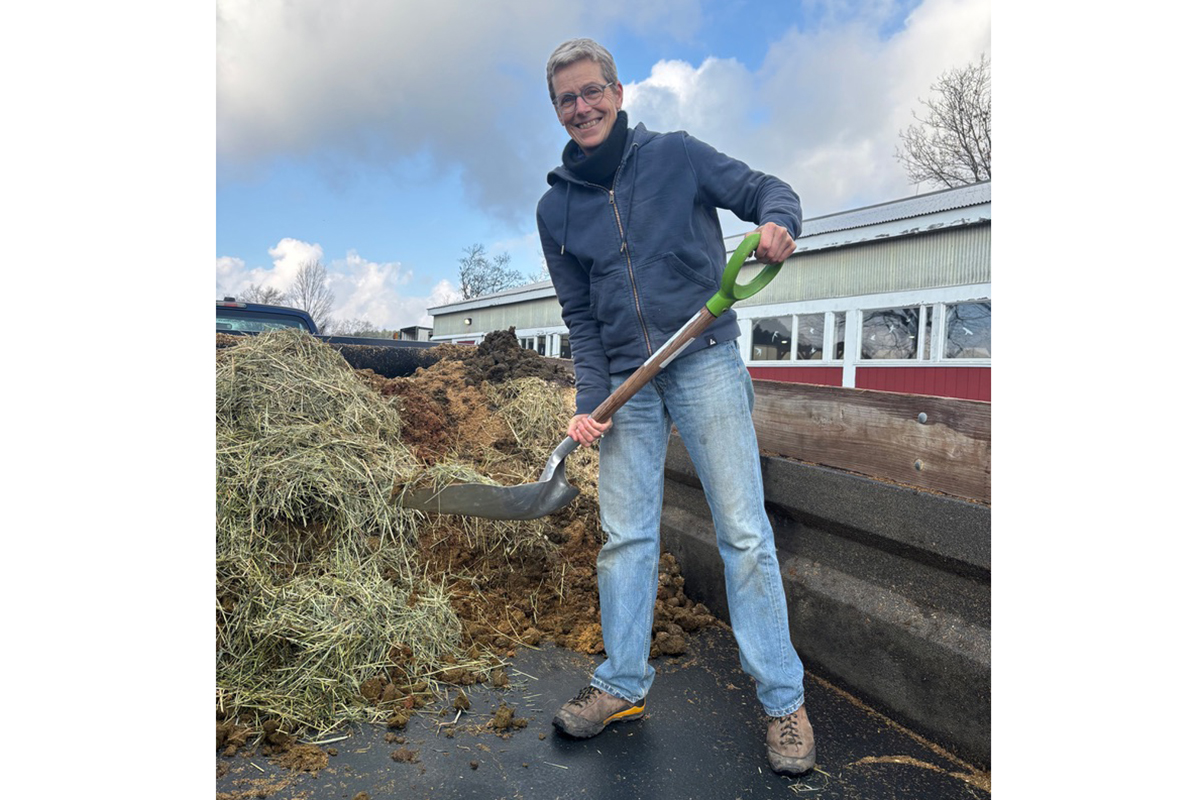
Brown points to 1900s Paris as the gold standard of urban efficiency. On plots that began as little more than sterile sand, 5,000 gardeners used the city’s abundance of horse manure to manufacture soil so rich it was treated like a movable asset. These farmers fed their neighbors as well as produced enough surplus to export vegetables across the English Channel.
Brown highlights this as the ultimate rebuttal to the idea that cities are naturally barren.
The Parisian model proves that with the right waste inputs, a city can be a net producer of life.
According to Brown, around 1900, Paris was home to approximately 5,000 urban farmers featuring:
- Self-sufficiency — These farmers produced enough fruits and vegetables to feed 2 million residents, with enough surplus to export produce to London.
- Innovative heating — They utilized the city’s waste, specifically a superabundance of horse manure, to create hotbeds. By covering these manure-heated beds with glass frames, they essentially created early greenhouses that allowed them to grow summer crops in the spring and spring crops in the winter.
- High yields — Using these methods, they could harvest three to six crops a year from a single plot, achieving what Brown calls some of the highest agricultural yields in recorded history.
- The legacy of soil — This process was so successful that when these farmers moved to different plots, they would often shovel up their topsoil and take it with them, as it was considered their most valuable physical asset.
By the turn of the century, this manufactured soil was so productive that a single acre could produce several times the yield of a traditional rural farm.
Berlin: Gardens as a Radical Safety Net
The Arbor Colonies of Berlin functioned as essential hubs for social resilience. These radically egalitarian garden subsistence settlements provided housing and cultivation space for over 150,000 Berliners between 1870 and 1970. Factory workers used these plots as primary residences to find relief from the city’s dense urban housing. Throughout the 20th century, the colonies also served as active sites of political resistance, offering both literal and figurative sanctuary for those seeking cover from the Gestapo.
Brown says that as people were pushed off land in the countryside and moved to the cities, they brought with them knowledge about how to garden.
“The people who come to cities know how to farm, and they know how to garden. They’ve all had big fields and small garden plots, and they have a notion of what to do with wastes and how to reclaim wasted land and regenerate it,” Brown says. “And so they go to Berlin, and during the 1860s, 1870s, all around Berlin is sand dunes. There are sand dunes there because there used to be wetlands. The wetlands were dried up ... so farmers built anthrosols, human-engineered soils. I have these photos I got out of the archives, and you can almost time-lapse the progress.”
Brown says the archival photos show this transformation: It begins with tiny houses struggling in the sand with withered plants. Over time, the gardens flourish. By 1890, these green shanty towns were buried under lush, towering vegetation. This was possible because cities act like a nutrient delta; by capturing the constant stream of organic waste instead of discarding it, residents built rich soil that allowed them to grow massive amounts of food right in the heart of the city.
In Berlin, the movement was as much about social safety nets as it was about food:
- The Arbor Colonies — Starting in the 1870s, factory workers moved into wild gardens on the city’s periphery to escape disease-ridden tenements. By 1900, roughly 50,000 households were part of these Arbor Colonies.
- Political sanctuary — During the Nazi era, these working-class garden plots served a radical purpose as they were used to harbor dissidents and Jewish residents.
Washington, D.C.: Community and Homeownership
Closer to home, Brown highlights how Black migrants from the American South transformed the landscape of Washington, D.C. By raising livestock and orchards on small urban plots, these families didn’t just achieve food security; the income generated from selling surplus produce often provided the funds necessary for homeownership. This was a system of financial autonomy that built generational wealth before mid-century urban renewal projects disrupted these thriving community-based systems, Brown says.
In the early 20th century, Black residents in D.C. turned systemic neglect into a source of wealth. Because their neighborhoods lacked city services like garbage collection, residents treated waste as a resource.
“They used all their organic garbage to compost ... they used what was in the privies to compost,” Brown says, adding that garbage was so valuable the city eventually had to pass laws restricting where people could collect it.
By the 1940s, this neighborhood had the highest rates of homeowner occupancy in the city. As Brown puts it: “They do it not with subsidies or federal help ... they do it with vegetable-powered wealth.”
In early 20th-century D.C., gardening was a tool for overcoming systemic inequality:
- Black Southern migrants — African American migrants moving to D.C. brought Southern traditions of self-provisioning with them.
- Financial autonomy — In neighborhoods east of the Anacostia River, residents built small farms with orchards, berry bushes and livestock like pigs and chickens. The income generated from selling this surplus produce often provided the funds necessary for homeownership.
- Disruption — Brown notes that these thriving community-based systems were later largely disrupted by mid-century urban renewal projects.
The ‘Dirty’ Truth About Urban Soil
Addressing the modern fear of lead and pollutants, Brown draws on her extensive work in post-disaster environments, including Chernobyl, to offer a pragmatic path forward. She recognizes that “one of the biggest hurdles for urban farmers is the fear of soil contamination and urban pollutants.”
However, her global research, from the USSR to the U.S., suggests that we can safely navigate the reality of growing food in disturbed environments. By understanding the history of how we have handled contamination, we can move past anxiety and back into the dirt, transforming waste spaces into the permanent infrastructure of the 21st century.
Ultimately, Brown’s work asks us to consider a final philosophical shift. When asked what a tiny, 10-square-foot urban plot can teach us that a 1,000-acre industrial farm cannot, the answer lies in the connection to the system itself.
“One thing it can teach us is about the metabolism of our cities. Our cities are rich in organic materials. All we need to do is just make a compost pile and build soil. So, that’s one thing,” Brown says. “Once you have good soils, you have turned the hard work of farming, which is often about killing things, right? Kill the microbes, you kill the weeds, you kill the insects, kill, kill, kill. And that’s waging war on the environment. The farmers are the soldiers out in the field, and they do it with the tools of war. You repurpose bulldozers and turn tanks into tractors, and you repurpose nitrites into chemical fertilizers, and you repurpose chemical agents of chemical warfare into insecticides and pesticides. War is a lot of work, and it’s not pleasant. People don’t like it.
“Gardening, though, we consider recreation, and the reason we consider [it] recreation is because a good gardener works with the environment, not against it,” Brown adds.
Brown’s insights are validation of the small-scale grower as a vital part of a global solution: a tiny garden that holds the key to the future of the self-provisioning city.
Your Next Read: