Editor's note: This story is part of an ongoing “Sowing Change” series about urban farming.
On the corner of 31st and Prospect in Kansas City, Mo., a Sunfresh grocery store, the last full-service grocer in this food desert, closed and left a void that made national news. For many residents in the surrounding neighborhoods, it had been the primary source of fresh food. Within weeks, a small network of Black farmers stepped in to help feed people living within a 1-mile radius.
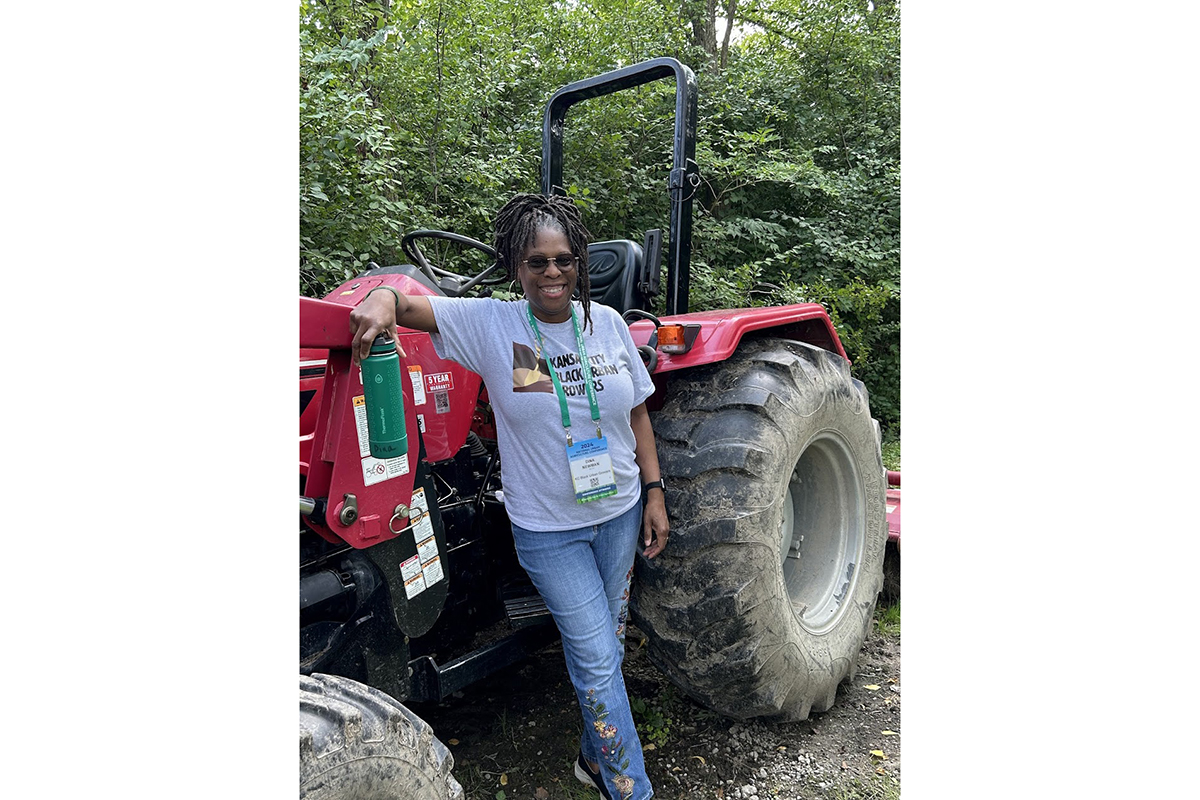
“We partnered with The [Kansas City] Defender, which is the Black newspaper, and five of our farmers, and said, ‘How can we do food boxes for people who live one mile within this grocery store?'” says Dina Newman, founder of KC Black Urban Growers. “One thing, we're going to get locally grown, affordable fresh produce in the hands of folks within 1 mile of that grocery store. And the other thing, it was an opportunity for those folks around there to meet a Black farmer.”
They called it the Hamer Free Food Box, named after civil rights activist Fannie Lou Hamer. The pilot ran in late summer and early fall.
“Amazing. People were, first of all, so grateful. Secondly, again, it was an opportunity of, ‘Wow, I didn't realize that this was even a possibility,'” Newman says.
That moment captures her larger vision, one rooted in what she calls “afri/agri-culture,” a reconnection to land, heritage and power.
Reclaiming an Agrarian Identity
“We are agrarian people,” Newman says. “Coming from Africa, coming to this land and bringing with us certain plants, certain seeds, certain knowledge. In some cases, [they] have been forgotten, but it's there.”
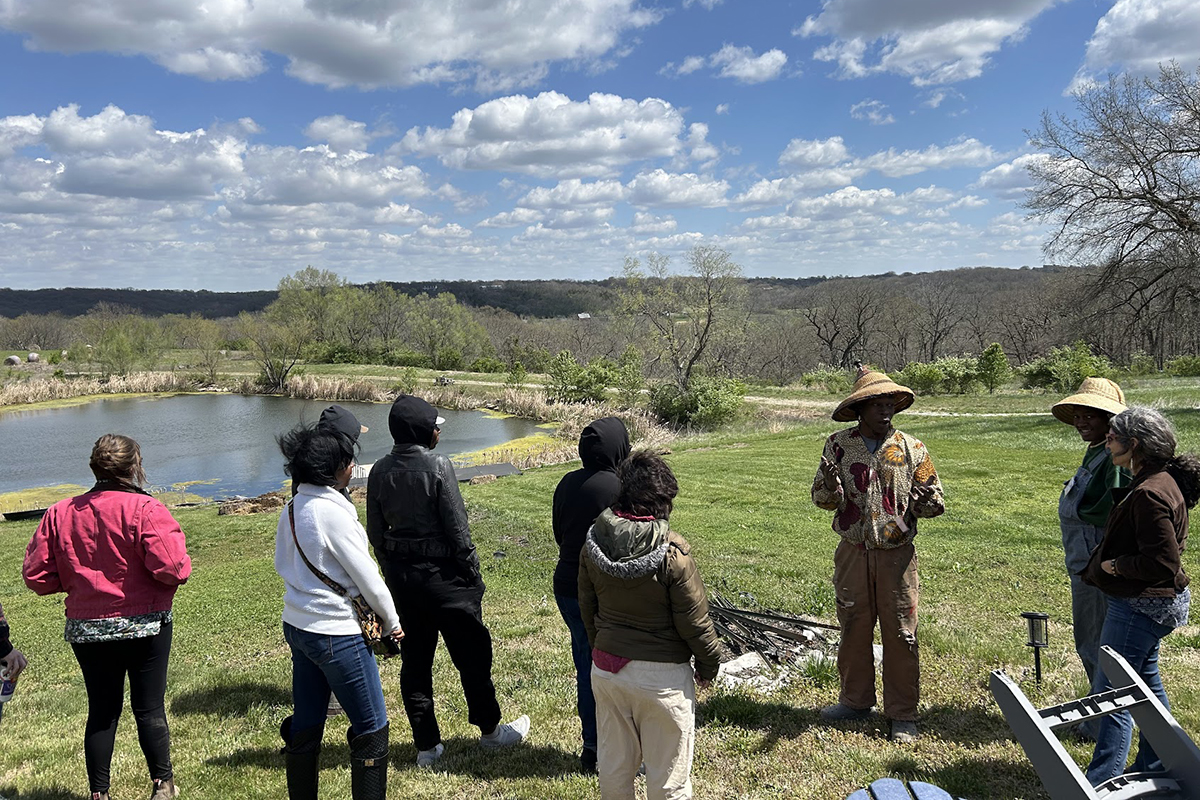
For Newman, reconnecting Black growers to that legacy requires intention. KC Black Urban Growers creates what she describes as “a brave and safe space” where Black farmers and gardeners can gather every other month to share stories, techniques and hard truths.
“There are certain things that we are dealing with as Black farmers and growers,” she says. “Finances, for one. Historically, you know the stories. Land, acquiring land, even at an urban level, there are still challenges.”
In those gatherings, history becomes practical knowledge.
“Oftentimes, somebody is like, ‘My grandmother or my grandfather, my great grandfather used to do it this way. Have you tried that?' So we're able to have that deep connection,” Newman says.
Part of that reconnection includes economic self-determination. The group prioritizes sourcing “food that has been traditionally labeled as African American or Black foods,” Newman says, and ensuring they are “getting them from Black seed companies. We are supporting those farms and those who are doing that work.”
It is a direct response to generations of discrimination that stripped Black farmers of land and capital. Small-scale support can make an immediate difference.
Bridging Gaps With Microgrants
Through a Just-in-Time microgrant program, KC Black Urban Growers offers grants ranging from $500 to $2,000.
“For some people, $500 will buy you some seeds,” Newman says. “It's going to help you get some soil amendments. It may also help pay that water bill.”
Water, especially for growers on city systems, is a significant expense. “Water is so expensive,” she says. “They may be able to offset.”
In some cases, that modest grant becomes leverage.
“It's not a lot, but they can leverage that to try to get more funds from someone else,” Newman says. “It's like, ‘KCBUGs believe in this project. Here's my kind of seed money. Can you leverage that?'”
Recipients have used funds for raised beds, lumber, training opportunities and conference travel.
“I had one grower who needed raised beds,” Newman says. “We've also had people who've been like, ‘I need to go to this training, and I can't afford to go.' So, we've been able to support folks to go to different trainings and events as well.”
Reframing Farming for the Next Generation
Convincing young Black people to see farming as opportunity rather than oppression requires careful reframing.
“It's not easy,” Newman says. “I remember the resistance from folks saying, ‘I've been freed from that kind of life. I'm not a sharecropper. I'm not a slave. I don't want to do that kind of work.'”
The shift has come through storytelling and meeting young people where they are. During the pandemic, the message centered on health. “With COVID, it was like food is medicine; there was a surge of interest. It was, ‘I need to know where my food is coming from.'”
Newman recalls a young person telling her: “‘I want to be able to play pro basketball, but I have to be healthy, right? I've got to be healthy.‘ Well, let's look at your food situation.”
Today, the conversation also includes green careers.
“We're having conversations about green jobs right now, which is a primarily white field,” she says. “But we know there are really good green jobs out there outside of farming. There's forestry.”
Urban agriculture becomes an entry point into a broader ecosystem of environmental work and green infrastructure.
Building Toward Food Sovereignty
The food box pilot did more than fill empty refrigerators. It sparked a larger idea: a Black-led, community-supported agriculture program.
“We are looking at doing the very first Black CSA [Community Supported Agriculture],” Newman says. The model would include five to 10 Black farmers, with a sliding-scale structure. “Those who can pay would help offset the cost for those who couldn't. So, we still want to make sure that those who need fresh, affordable food would be able to get it at a really reduced rate or no cost at all.”
That vision aligns with Newman's long-term goal of food sovereignty, a system where communities control how their food is grown, distributed and consumed.
She also envisions a physical hub dedicated to education and processing.
“People are looking for a place where they could go and do some of that experiential learning, that hands-on [learning],” she says.
Newman says she imagines a space where food and fiber intersect, referencing a farmer who grows cotton alongside vegetables.
“That is so emotionally historic and an opportunity to learn and teach,” she says.
A dedicated site could host trainings, youth programs and workshops on harvesting, seed saving and even textiles connected to Black agricultural history.
“It's a pipe dream,” she says with a laugh. “But yeah, I would love to see our own space where people could come in, where we could also have trainings, offer trainings into the community, particularly with young people. That would be a dream.”
Expanding the Circle
KC Black Urban Growers' mission has focused on supporting farmers and growers within 100 miles of Kansas City. Now, rural communities are showing interest.
“Our rural brothers and sisters are reaching out,” Newman says.
The group is building connections as far west as the historic Black township of Nicodemus, where farmers are installing high tunnels on more than 50 acres.
“They're out there, and they need our support as well,” she says.
For Newman, the work is both practical and profound. It is about fresh produce within a mile of a closed grocery store. It is about microgrants that pay water bills. It is also about restoring memory.
“We are agrarian people,” she says, returning to the core of her message.
The seeds, she believes, were always there.
Your Next Read: