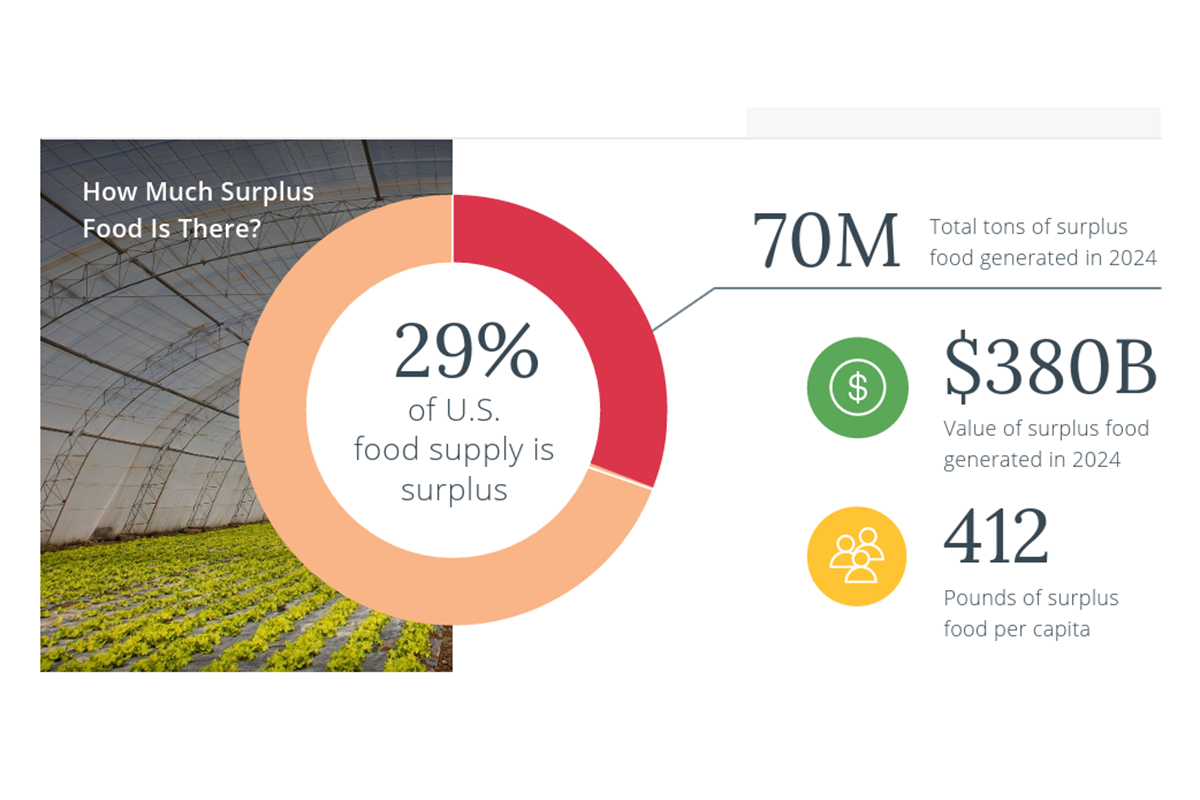
Progress on the Plate: 2026 ReFED U.S. Food Waste Report marks a turning point in the movement to reduce food waste, revealing the first year-to-year reduction in surplus food since COVID-19 pandemic. In 2024, total surplus food in the United States decreased to 70 million tons, a 2.2% reduction from the previous year, or a 3.7% decrease per capita. While this represents a significant milestone, nearly one-third of U.S. food supply (29%) still goes unsold or uneaten.
The new report from ReFED includes key statistics, insights, barriers and points of progress on the issue, to help professionals and communities alike understand the current state of the food waste challenge and how to meaningfully address it.
“This is an opportune moment to focus on wasting less food,” says Dana Gunders, president of ReFED. “With higher food prices, Americans are looking for ways to extend their grocery dollars. Using up more of what they're already purchasing and wasting less is proving to be one of the most accessible ways to do it. At the same time, food waste reduction is recognized as a business decision with material impact on the bottom line for food businesses, which are elevating the issue to the C-suite and boardroom. The wind is at our backs, and it's time to step on the gas.”
Fresh Produce Waste: A Persistent Challenge
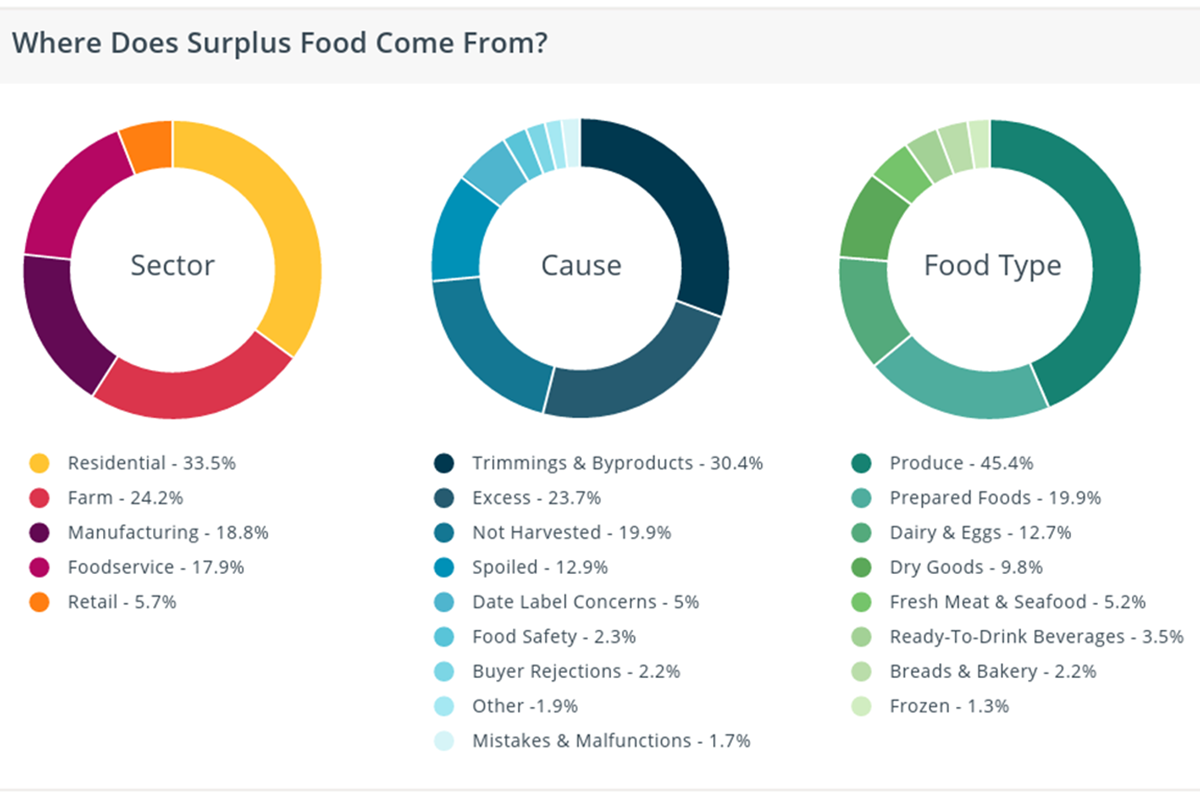
Fresh produce remains the most wasted food type in the United States, accounting for 45.4% of all surplus food. Despite overall reductions in food waste, fresh fruit has been particularly difficult to manage and did not see the same waste reductions as more “visible” everyday items like milk.
To bridge the national results with specific industry trends, the following sections examine how fresh produce waste is currently being addressed across the farm, retail and consumer sectors:
1. At the Farm Level (24.2% of Surplus)
Farms are the second largest source of surplus food, contributing 24.2% of the total. Much of this waste is driven by systemic factors:
- Harvesting: Approximately 19.9% of total surplus food across the supply chain is never harvested.
- Buyer rejections: Strict aesthetic standards lead to “buyer rejections,” which account for 2.2% of surplus food.
- Emerging solutions: Make America Healthy Again (MAHA) movement is increasing the appeal of imperfect produce, which can be diverted from landfills and sold at a discount to improve both nutrition and affordability.
2. In the Retail Sector (5.7% of Surplus)
While retail accounts for a smaller percentage of total surplus (5.7%), it represents a significant financial opportunity.
- Efficiency gains: Grocery retailers saw a 1.1% decrease in their “Unsold Food Rate” between 2023 and 2024.
- Financial impact: Surplus food in the retail sector was valued at $26.9 billion in 2024.
- Policy and AI: Standardizing date labels through the proposed federal Food Date Labeling Act could save retailers $253 million annually through better inventory management. Additionally, AI-enhanced demand-planning tools are helping retailers right-size orders and improve yield.
3. Consumer Waste (33.5% of Surplus)
Residential waste is the leading driver of surplus food, but it also showed the most progress in 2024 with a 950,000-ton reduction.
- Economic drivers: High food prices have forced consumers to adopt better food management practices, such as meal planning (72%), checking inventory before shopping (87%) and eating leftovers (76%).
- The produce gap: Consumers are more effective at managing prepared foods, but struggle with fresh produce, which often goes to waste because it is “harder to manage.”
- Financial burden: On average, individual consumers spend $762 per year on food that eventually goes to waste.
Looking Forward: The Path to 2030
The report identifies 47 solutions — including centralized composting, upcycling and portion size customization — that could reduce food waste by 20 million tons annually if fully implemented. By focusing on inventory visibility and behavioral change, U.S. aims to maintain this momentum to meet the goal of halving food waste by 2030.
To read the full report, click here.
Your Next Read: