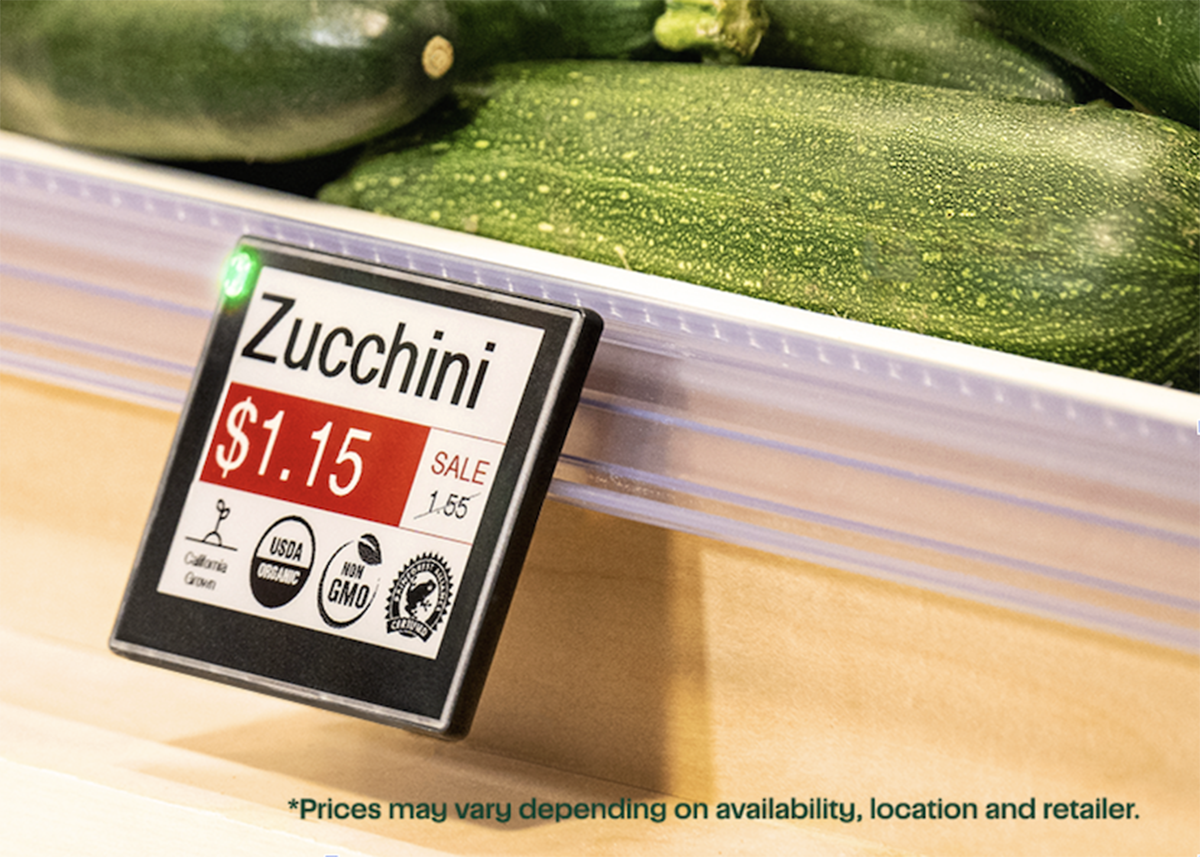
A groundswell of consumer opposition is forming against the grocery industry’s shift toward digital shelf technology. A new poll reveals that a majority of New Yorkers support a statewide ban on electronic shelf labels and surveillance pricing, citing fears of predatory price hikes and the exploitation of personal data.
The poll, conducted by GBAO Strategies on behalf of a coalition of United Food and Commercial Workers locals and the Retail, Wholesale and Department Store Union, found that two-thirds of New York voters favor legislation to outlaw the technology in grocery stores.
The sentiment is fueled by deep economic anxiety: More than 70% of respondents reported being worried about the cost of groceries, and 64% specifically think that switching from paper to digital tags will cause prices to rise.
Presidents of UFCW Locals 1, 338 RWDSU/UFCW, 342, 1500 and RWDSU, which represent retail grocery workers in New York, said in a release: “Our members know the dangers that electronic shelf labels pose to consumers and grocery workers alike. This poll confirms that the majority of New Yorkers understand the same thing.
“Grocery prices in our state are among the highest in the country,” the statement continues. “The last thing shoppers need is to have personal data like their ZIP code or shopping habits used to squeeze every last dollar out of their pockets. We’re proud to support the lawmakers pushing to protect New Yorkers from this predatory technology.”
The technology in question allows retailers to change prices instantaneously across an entire store. Lawmakers, led by New York state Sen. Michael Gianaris and Assemblywoman Michaelle C. Solages, are currently advancing the Protecting Consumers and Jobs from Discriminatory Pricing Act, which would mandate traditional paper labels in large retail environments.
Walmart’s Digital Push Sparks Nationwide Debate
The legislative battle in New York comes as the world’s largest retailer doubles down on the very technology some state lawmakers seek to ban.
As the retail industry continues to evolve, there’s a deepening divide between major retailers and labor groups over the implementation of these high-tech systems.
Walmart is currently on track to replace traditional paper price tags with digital ones in all of its U.S. stores by the end of 2026. While Walmart frames the move as an efficiency play that reduces manual labor for employees, the retail giant’s recent patents have sparked fresh alarms.
The company recently secured patents for technology that could use shoppers’ personal data to update prices at scale. This so-called “surveillance pricing” capability is the primary target of the proposed New York ban. While Walmart maintains that the labels are about operational ease, the GBAO Strategies poll suggests a massive trust gap: 66% of New Yorkers say they do not trust grocery retailers to use such technology responsibly.
As New York lawmakers consider the ban before the end of the current session, the state has become a primary battleground between corporate automation and labor-backed consumer protections. If the bill passes, it could create a significant roadblock for Walmart’s 2026 nationwide rollout and set a precedent for the 11 other states currently participating in UFCW’s campaign.
“Shoppers across New York are already facing record-high grocery prices. Electronic shelf labels, with their ability to change prices at a moment’s notice, threaten to drive up costs even higher,” UFCW International Vice President Ademola Oyefeso says.
“This poll confirms that New Yorkers understand just how dangerous this technology is and expect their elected officials, regardless of political party, to take action,” Oyefeso continues. “UFCW applauds the lawmakers who are standing up for consumers and workers, and urges the entire legislature to make these bills law before the end of session.”
New York is among 12 states to have joined UFCW’s Affordable Groceries and Good Jobs Campaign to ban the predatory practice of surveillance pricing, target the encroachment of artificial intelligence-driven technology in grocery stores and deliver fair prices for families while preserving union grocery jobs.
Maryland Passes Nation’s First Ban on Surveillance Pricing
While New York activists push for a total hardware ban, Maryland has just set a significant legal precedent. According to Kiplinger, Maryland is poised to become the first state in the country to officially ban surveillance pricing.
Earlier this month, the Maryland Legislature passed the Protection From Predatory Pricing Act (H.B. 895), a landmark bill introduced by Gov. Wes Moore. Rather than banning the physical electronic labels, the act targets the algorithms behind them. Taking effect on Oct. 1, the law prohibits grocers and third-party delivery apps from using surveillance data or “dynamic pricing” to fluctuate costs throughout the day.
“Marylanders deserve to know that the price they see on the shelf is the price they will pay at the register,” Moore said in January. “Our administration is laser-focused on protecting Marylanders from skyrocketing costs. At a time when Marylanders are already stretched by the rising cost of groceries, housing and everyday necessities, we must ensure that new technologies are not used to drive up the bill for working families.”
The law carries significant teeth, with first-time fines reaching up to $10,000. However, the measure remains a point of contention; despite the historic nature of the bill, the UFCW has criticized it for containing “loopholes,” arguing that only a total ban on ESLs can truly protect families.
As New York lawmakers review their own pending legislation, they now face a choice: follow Maryland’s regulatory path or enact the total ban demanded by the state’s labor unions and many of its voters.
“Dynamic pricing is predatory pricing,” Maryland state Delegate Kriselda Valderrama said in January. “We have no hesitation telling the marketplace that groceries are off-limits for these kinds of practices. Data used against Marylanders to create individualized grocery prices is a breach of public trust.”
Your Next Read: