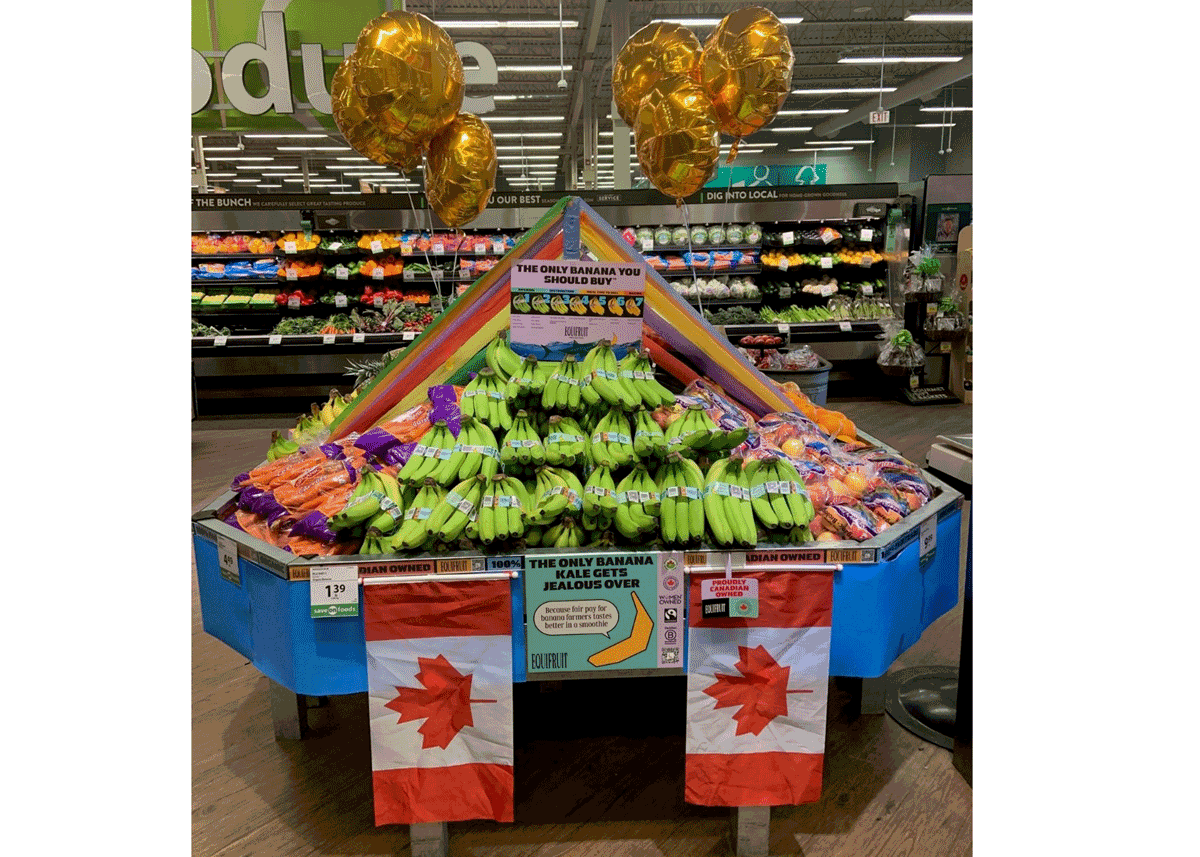
Bananas have always been considered a loss leader at retail. However, Justin McGregor, general manager of produce and bulk with Pattison Food Group, says a recent partnership with Equifruit to bring organic fair trade bananas to its banners is driving a shift in strategy.
Bananas, he says, are always popular at retail.
“It's historically always done really well,” he says. “It's an easy fruit for people to consume. It's got a peel and you can take it wherever you go. It's easy to peel and eat and consume. … There's all sorts of snacking products being introduced that are trying to combat that and get in that space, but the banana has remained resilient.”
Beyond the fruit's natural resilience, McGregor says driving sales first starts with execution with Pattison Food Group's ripening teams, which carries onto its stores, including banners Save-On-Foods, PriceSmart Foods, Urban Fare, Buy-Low Foods, Quality Foods and Nesters Market.
“We have a program where we want to have the green tip fruit that are going to last a few days at the customer's house, right through to ready-to-eat yellow, more ripe bananas displayed for our customers,” he says. “The most important thing, obviously, is what the store teams do and how that is executed at retail. It's absolutely critical.”
Frictionless Education
McGregor says that while it's easy to think that consumers wouldn't pay more for produce, they do, heartily, if there's a good story behind it. Yes, quality sells, but he says consumers have responded well every time Pattison Food Group has leaned into the storytelling behind the produce.
“It's one thing to put it out there on the shelf,” he says. “It's another to have content at the shelf signage or some way to share what differentiates that product. And we see when we do that … we always see the benefit.”
McGregor says digital elements such as QR codes also help consumers learn more about where their produce comes from. Recognizing that time is a premium for modern shoppers, McGregor says Pattison Food Group tries to make the educational experience as frictionless as possible.
“The message we want our customers to receive has to be done in a simple way, where it's not overwhelming for them,” he says. “We try to keep the content and the message really clean, really clear, very concise, so they can understand what we're trying to tell them. I still think there's that component we have to consider that consumers don't have a lot of time on their hands, but whatever we do or whatever sharing with them while they're interested in it, it's got to be done in a way that's efficient for them.”
McGregor says he's found consumers have been engaging with the content available at the display and on social media channels, which points to consumers' hunger for more information.
“It just goes to show they want more content from retailers,” he says. “We're really, really leaning into that any way we can, whether it's at shelf or online or any other owned assets. We do a lot of work on our social channels and online and things like that to highlight some unique things about our products.”
McGregor says consumers also seek transparency and supply chain accountability.
“Obviously, there's a growing alignment between our customers' values and how they spend their money and what they purchase inside our stores,” he says. “That's becoming more evident than ever, especially inside traditional retailers like us.”
From Price to Purpose
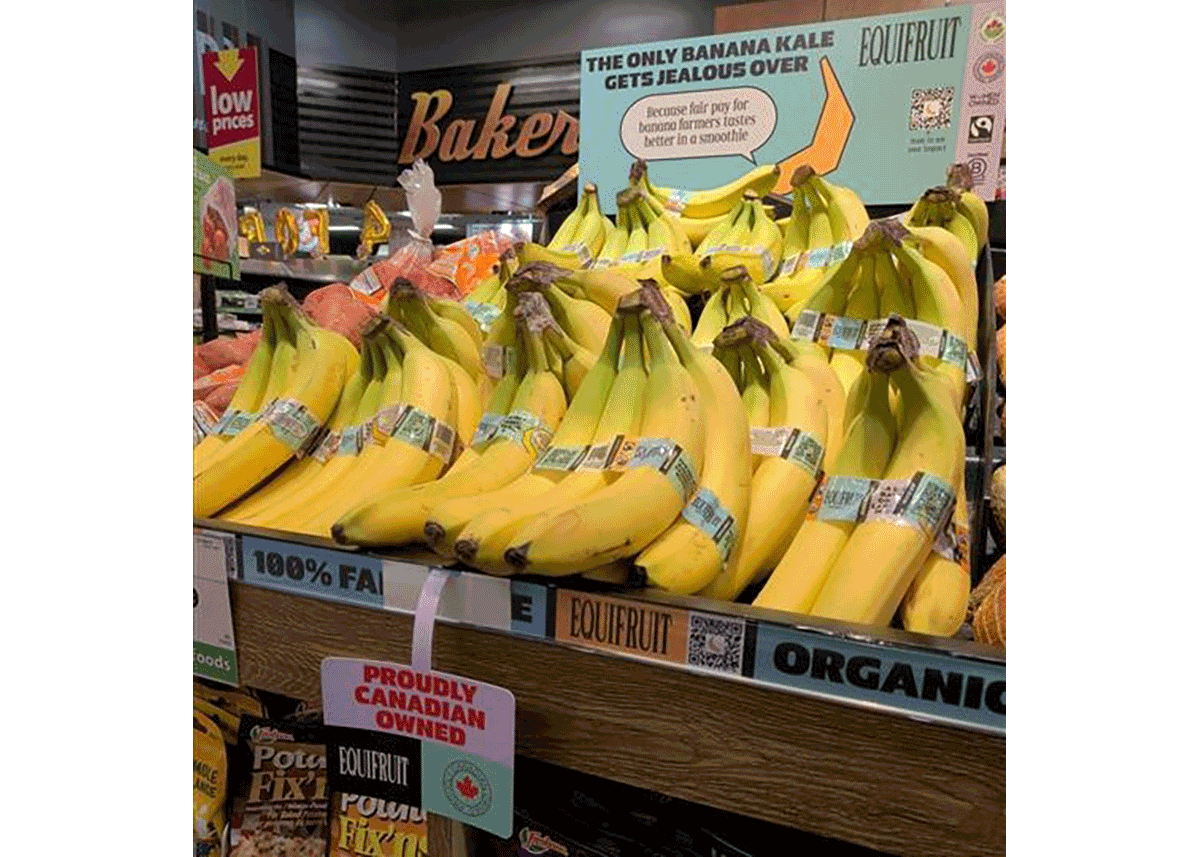
McGregor says that while fair trade organic bananas retail at a higher price, consumers have responded well to the message behind the produce, especially with strong displays.
“It's a little bit more [of an] expensive shelf for consumers were with fair trade, but they're telling us that it doesn't matter,” he says. “Understanding the story behind it means a lot more to them, and they're willing to pay a little bit more for that … When the displays are executed well with strong storytelling, it's clear that consumers are engaging in that are willing to try something new, or what we're seeing already is likely to continue purchasing.”
McGregor says this fits with a growing trend of consumers seeking to understand more about where the food they purchase comes from.
“Just in the short time since we've launched the fair trade banana program with Equifruit on the organic side, we've already seen big increases, and it's driven mainly from the amount of signage we've displayed and the POS material that we work with the vendor on.”
McGregor notes that the success Pattison Food Group has seen with Equifruit fair trade organic bananas is due to Equifruit's unique value proposition.
“We're starting to see the consumer shift from price to purpose,” he says. “They're happy to pay a little bit more to purchase a product they could feel good about knowing that it's focused on worker welfare and things like that. I think you're going to continue to see more retailers get behind programs like this as a way to highlight more value to the consumer just beyond cost per pound.”
He says shoppers are already responding to Equifruit's community involvement, which makes them feel good about the bananas they're purchasing.
“If we can continue to highlight things like ethical sourcing with items like bananas and how Equifruit is focused on community investment, customers feel good about knowing that their dollar goes somewhere that they could feel good about,” he says.
The Future of the Category
Despite a tight banana market in Canada and retail prices shifting, McGregor says he hasn't seen a noticeable shift in purchasing trends.
“If you look at fair trade, that's where some of the biggest price differences have been for us, and they're still buying more than ever,” he says. “We seem to have traded up some consumers who would have bought conventional and are now paying more for fair trade products.”
McGregor says he doesn't see any sign of consumers shifting from price to purpose ending any time soon.
“I think we're starting to see a shift there in the banana category, and how it's going to start changing over time here. … It's really interesting to see that shift and now we're trading people up to fair trade,” he says.






.png)