BERLIN — In an increasingly global fresh produce industry, there has never been a time of greater challenge or opportunity. From tariffs and trade to labor issues, supply chain complexities to extreme weather events, rising food costs to nutritional deficiencies, the barriers to increased consumption of fresh fruits and vegetables are experienced around the world.
At the same time, the industry has reached an incredibly powerful moment with its ability to harness global intelligence, find solutions to overcome these challenges and new opportunities for growth.
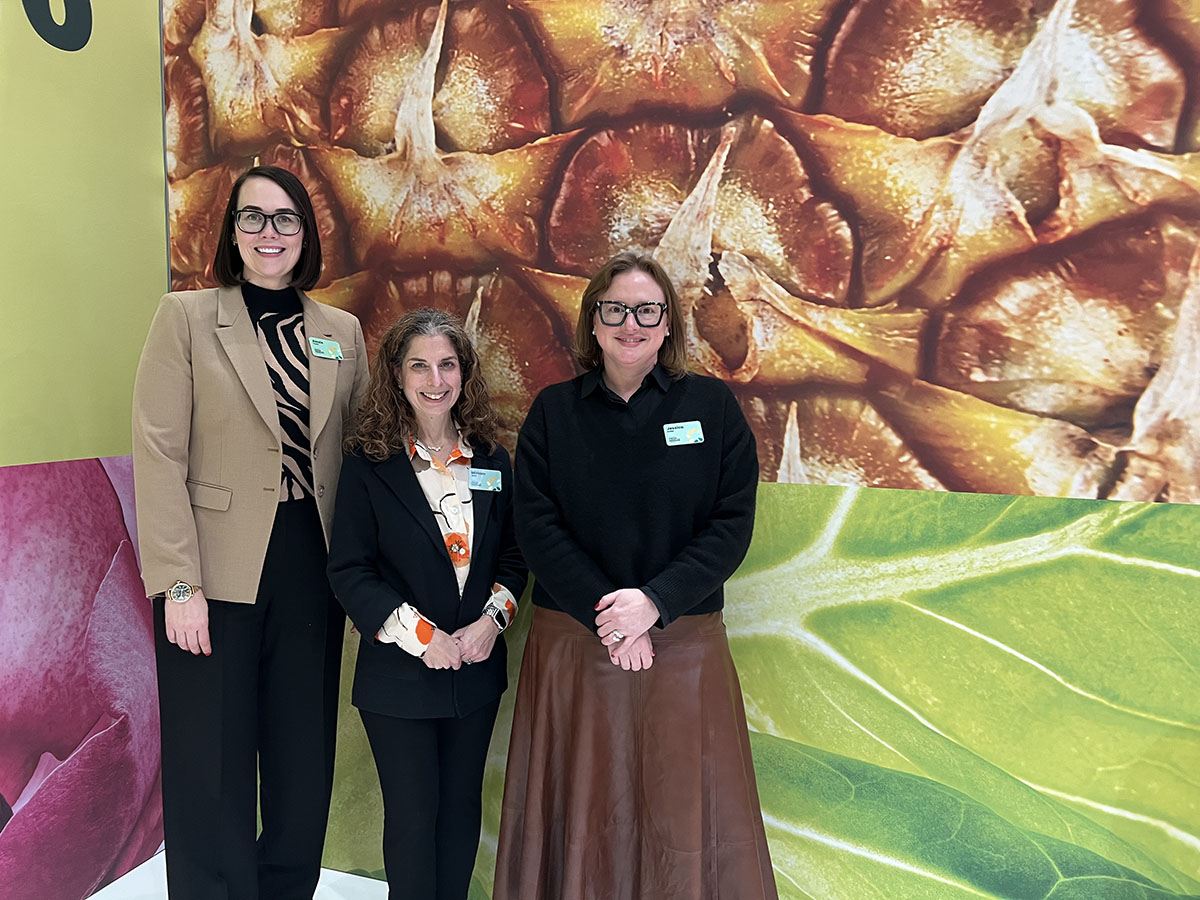
At last week’s Fruit Logistica, The Packer sat down with the International Fresh Produce Association’s Alexis Taylor, Miriam Wolk and Jessica Keller to discuss the organization’s efforts to support its members locally and connect them globally — all with the aim of increasing fresh produce consumption around the world.
“When you think back to 2024, globally there was so much going on. There were over 70 global elections, new people came in, and we’ve seen a lot of change globally in the policy arena,” says Taylor, IFPA chief global policy officer. “But there’s also been new opportunities with the new dietary guidelines and MAHA (Make America Healthy Again) — you can’t be healthy without fruits and vegetables.”
And it’s not just America, Taylor says. Conversations about health are happening around the globe.
“Cardiovascular disease is the leading cause of death in Europe and diet can be at the forefront of that conversation,” she says. “Only one in 10 Americans and one in eight Europeans meet the recommended [daily] dietary guidelines for fruit and vegetable consumption.”
A sustainable global food supply is also critical to meeting the world’s nutritional needs.
“No industry is as sustainable as produce,” says Taylor, who sees fresh produce players around the world striving for climate resiliency, global economic sustainability, sustainable packaging and more.
“IFPA looks to solve any situation that limits its members’ ability to drive consumption,” she says.
Enter IFPA’s Global Intelligence Engine, which CEO Cathy Burns launched at the Global Produce and Floral Show in October.
What is the Global Intelligence Engine?
IFPA says its Global Intelligence Engine “delivers data-backed, current insights for fruits, vegetables and floral products. From POS (point-of-sale) data and consumer trends to import/export flows and production patterns, it transforms complex datasets into clear answers, visualizations and recommendations.”
In short, it’s designed to help IFPA members “spot opportunities, stay ahead of shifts and make faster, smarter decisions.”
“I do think our Global Intelligence Engine is a game changer,” says Wolk, IFPA’s chief membership officer. “It transforms the association as a curator of information accelerated by AI. People want accurate data they can trust, and we’re very careful that the information our members put into the engine is protected. They also want efficiency from shared intelligence.
“What would take an analyst three days [to produce], our members can get in 30 seconds ... and in 50 different languages,” she adds.
The engine also pulls the latest POS insights and recent consumer trends from Circana to help members identify and get ahead of market shifts.
“Circana is a great partner. Together we’re delivering data that informs decisions,” Wolk says. “Members may not realize all the POS data we have.”
IFPA says the engine also allows members to “seamlessly track import, export and production data from around the world to optimize [their] supply chain and identify new growth opportunities.”
“And it’s only going to grow and get better,” Wolk says of the Global Intelligence Engine, to which IFPA members have exclusive access.
Connecting Buyers and Sellers Globally
As IFPA continues to expand its membership around the globe, new connections are made and new markets accessed.
“I’m really excited about our membership growth,” says Keller, vice president of global industry relations. “Together we continue to support the mission of increased consumption.”
Keller says IFPA and its members have also benefited from country managers and regional representation in key areas around the world, including Brazil, Chile, South Africa, Australia, New Zealand and Mexico. Most recently, Sarah Pau, based in Hong Kong, joined IFPA as the East Asia country manager.
“The team is built out now, and I’m confident that we’re in a solid position to support our members locally where they are in their markets and support them globally, working together across markets,” Keller says.
“Our global network that connects buyers and sellers is such a benefit,” says Taylor, who along with Wolk and Keller points to a recent connection facilitated by IFPA that will result in South African stone fruit headed to China for the first time.
The IFPA team says it educated a member from China on the unique properties and quality of stone fruit from South Africa, and the Chinese member educated the South African member on the retail market and consumer trends in China.
Wolk, who was in Dubai the week before Fruit Logistica, says the Gulf Cooperation Council, or GCC, is another region ripe for opportunity.
“The GCC is interested in produce and wants to connect with suppliers, but they didn’t know where to start,” she says. “I know we’ll help them grow. The USDA also sees a lot of opportunity for growth in the GCC.”
A diverse population in the United Arab Emirates, where 88% of the population wasn’t born there, is fueling this opportunity for fresh produce imports from around the globe, Taylor says.
Supply Chain of the Future
At IFPA’s Executive Leadership Summit, held Feb. 3, the day prior to Fruit Logistica, the association shared more on its Supply Chain of the Future.
The industry-led group seeks to improve supply chain data sharing and integration to reduce waste, meet consumer demands for transparency and create greater efficiencies.
While the cost of inaction is billions of dollars lost to spoilage, eroded consumer trust and missed opportunities for growth, companies can’t do it alone, says IFPA, encouraging its members to get involved and become part of the solution.