A new poll released by the United Food and Commercial Workers International Union (UFCW) revealed Marylanders are deeply skeptical of the high-tech makeover coming to grocery store aisles. According to the data, a bipartisan majority of voters support a ban on electronic shelf labels (ESLs), viewing the technology as a catalyst for price hikes rather than a tool for consumer convenience.
The survey, conducted by GBAO Strategies, arrives as Gov. Wes Moore and state lawmakers deliberate on legislation that would prohibit the use of ESLs and the practice of “surveillance pricing” in Maryland retail environments.
Overwhelming Public Skepticism
The poll results paint a picture of a restless electorate already struggling with the cost of living. Nearly 80% of Marylanders surveyed reported a negative view of the U.S. economy, with 71% specifically worried about their household grocery bills.
When asked about the digital transformation of the shelf edge:
- 69% of voters believe switching from paper tags to electronic labels will cause grocery prices to increase.
- 73% of voters believe surveillance pricing — the use of AI and personal data to set individualized prices — will drive costs higher.
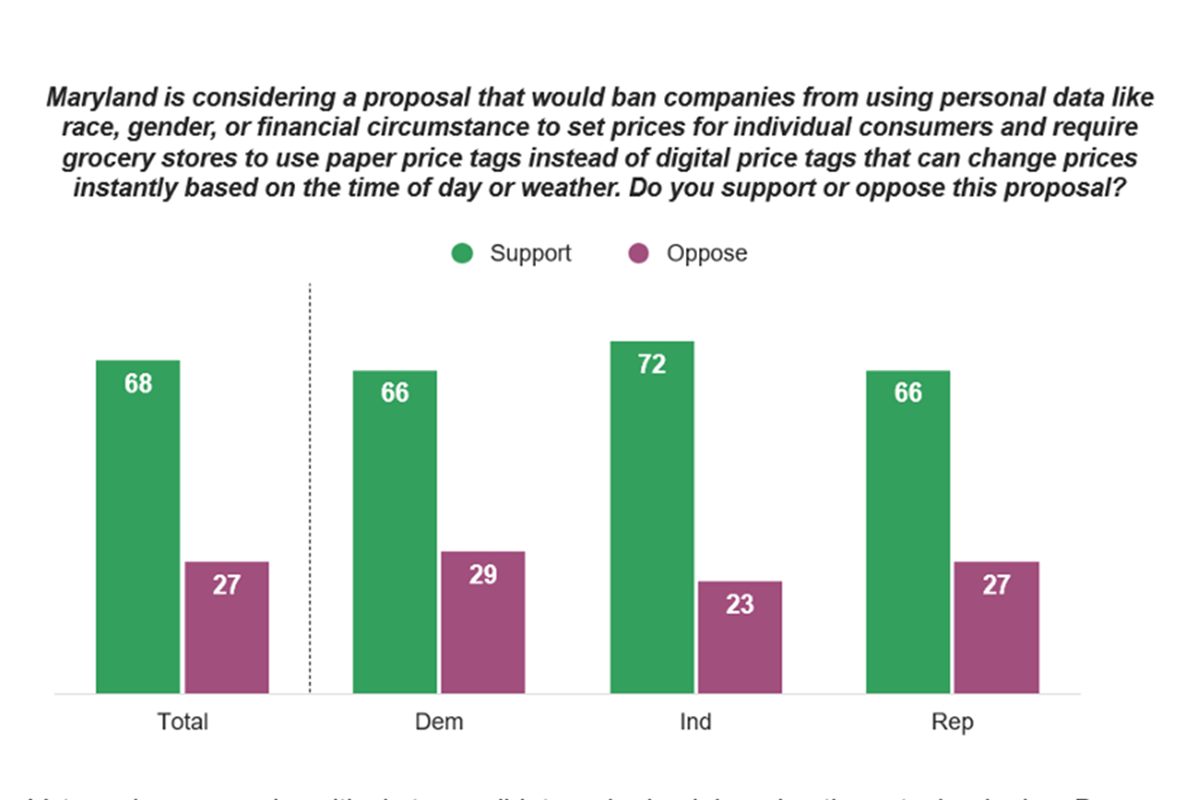
- 68% of Marylanders support a total ban on this technology in grocery stores, a sentiment UFCW notes remains strong across party lines.
“No Marylander is insulated from the devastating effects of record-high grocery prices,” says Ademola Oyefeso, vice president of UFCW International. “Electronic shelf labels, and the discriminatory practice of surveillance pricing that they enable, threaten to drive costs even higher.
Oyefeso continues: “The results of this poll confirm that Marylanders know the dangers of electronic shelf labels and surveillance pricing and expect their lawmakers to take action. Maryland has a chance to get ahead of this corporate exploitation before it becomes common practice. UFCW applauds the lawmakers who are standing up for consumers and workers.”
The Surveillance Factor
The heart of the opposition lies in how the technology functions. While retailers like Walmart — which plans to digitize all store prices by 2026 — argue ESLs improve efficiency and accuracy, critics point to the infrastructure behind the screens.
UFCW highlights recent corporate patents that would allow retailers to use a shopper’s personal data, ZIP code or even identity to update prices at scale and in real time. This instant price-changing capability is what labor leaders call a predatory practice.
“Food is a necessity, and no one should be paying more for milk or eggs based on their identity or ZIP code,” says Mark Federici, president of UFCW Local 400. “UFCW members are at the frontlines of the affordability crisis, and they are demanding action from their lawmakers. Keeping electronic shelf labels out of our grocery stores is vital to lowering the cost of groceries for Marylanders.”
A Threat to Union Jobs
Beyond the checkout counter, the poll underscores concerns regarding the workforce. Sixty-one percent of respondents stated they do not trust grocery stores to use this technology responsibly.
For the 800,000 grocery workers represented by UFCW, ESLs represent more than just a digital screen; they represent a potential reduction in human labor. Union leaders argue these systems are designed to replace the skilled work of grocery clerks, leaving remaining staff to manage the fallout from “rightfully angry shoppers” confused by fluctuating prices.
“UFCW members understand the toll high grocery prices take on lives. They see it at the register, in the aisles and in their own grocery bills,” says Jason Chorpenning, president of UFCW Local 27. “Electronic shelf labels will only hike costs higher. With the ability to change prices at a moment’s notice, ESLs make it nearly impossible for families to stick to a budget. I commend the lawmakers who are fighting to keep this predatory technology out of our grocery stores.”
National Momentum
Maryland is currently one of 12 states participating in UFCW’s Affordable Groceries and Good Jobs Campaign. The initiative seeks to establish legislative guardrails against AI-driven retail practices before they become the industry standard.
As the debate moves through the Maryland General Assembly, the polling data suggests lawmakers who support the ban are aligned with a significant majority of their constituents. The message from Maryland voters appears clear: In an era of economic uncertainty, they prefer the transparency of a paper tag over the unpredictability of an algorithm.
Your Next Read: Walmart and Unions Clash Over the Future of Digital Price Tags