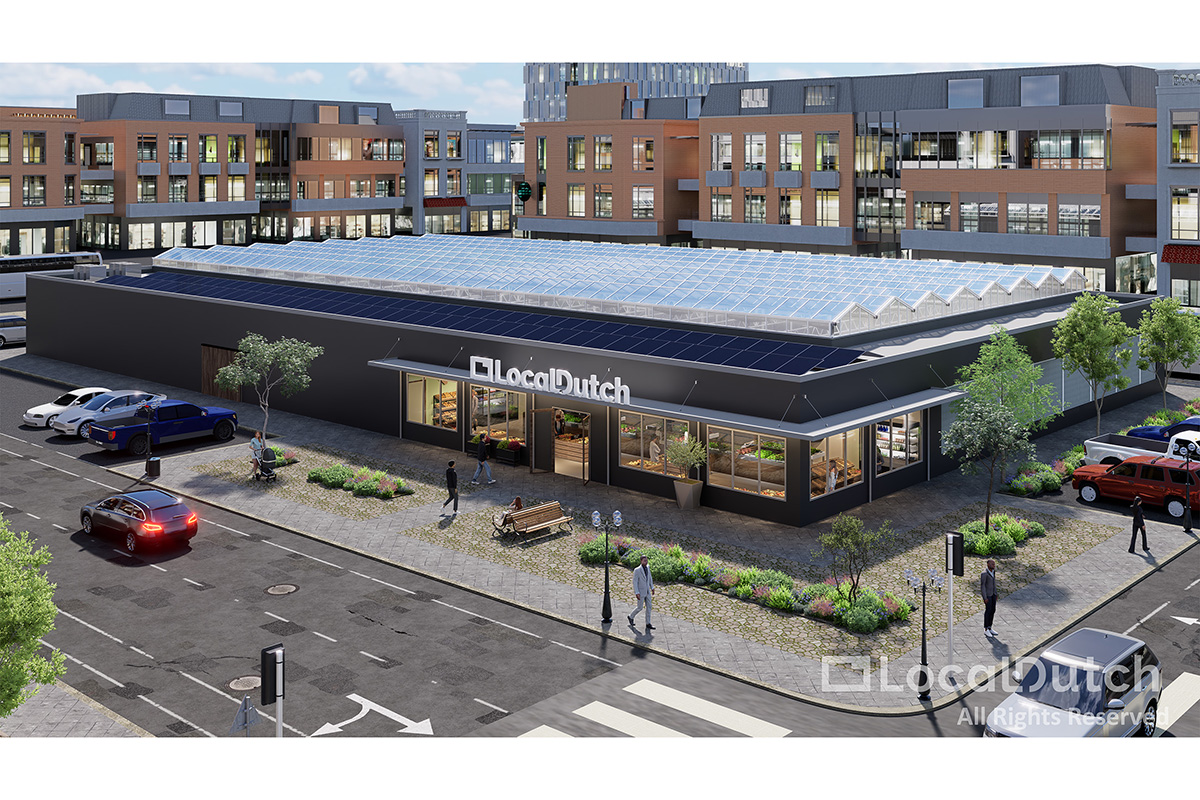
In an era where global supply chains are increasingly fragile and food deserts persist across the U.S., a Dutch agri-tech firm is proposing a radical shift in how we grow and buy our groceries. LocalDutch, headquartered in The Hague, Netherlands, has unveiled its plan to roll out Urban Farm Shops — a standardized, scalable model that merges high-tech greenhouse production with neighborhood retail under one roof.
The concept is a direct response to a growing paradox in modern agriculture. While the demand for fresh, local produce is at an all-time high, the specialized expertise required to run high-performance greenhouses is becoming increasingly scarce.
LocalDutch's solution is a proprietary “climate autopilot.” This artificial intelligence-driven system manages the internal environment of its shops by integrating external weather data, internal sensors and validated growth models. By automating the complex biology of farming, the company says it can neutralize regional extremes, from the humid Southeast to the arid Southwest, without needing a master grower on-site at every location.
“What we are bringing to the United States is truly Dutch technology, applied in a way that is both effective and easy to scale,” says Arne Spliet, co-founder of LocalDutch. “In a sector where skilled specialists are rare, our system automates that work to ensure consistent production. That is exactly what many communities urgently need.”
Rather than targeting a specific demographic, the U.S. rollout is prioritizing intersection points where fresh food access is low but demand and municipal support are high. This includes both dense urban centers like Chicago and New York, as well as peri-urban areas where land may be available but supply chains remain inefficient.
By positioning these shops as neighborhood food infrastructure, LocalDutch has been able to navigate notoriously difficult U.S. zoning laws, pitching its sites as a mix of community-serving retail and local job creators.
“Our format is compact and standardized, so we select sites based on demand and real estate fundamentals, not just a label,” says Catherine Wilsbach, local impactor for LocalDutch.
While the growing process is handled by algorithms, the storefront remains intentionally human. LocalDutch isn't looking to replace the weekly supermarket trip. Instead, it aims to enhance it.
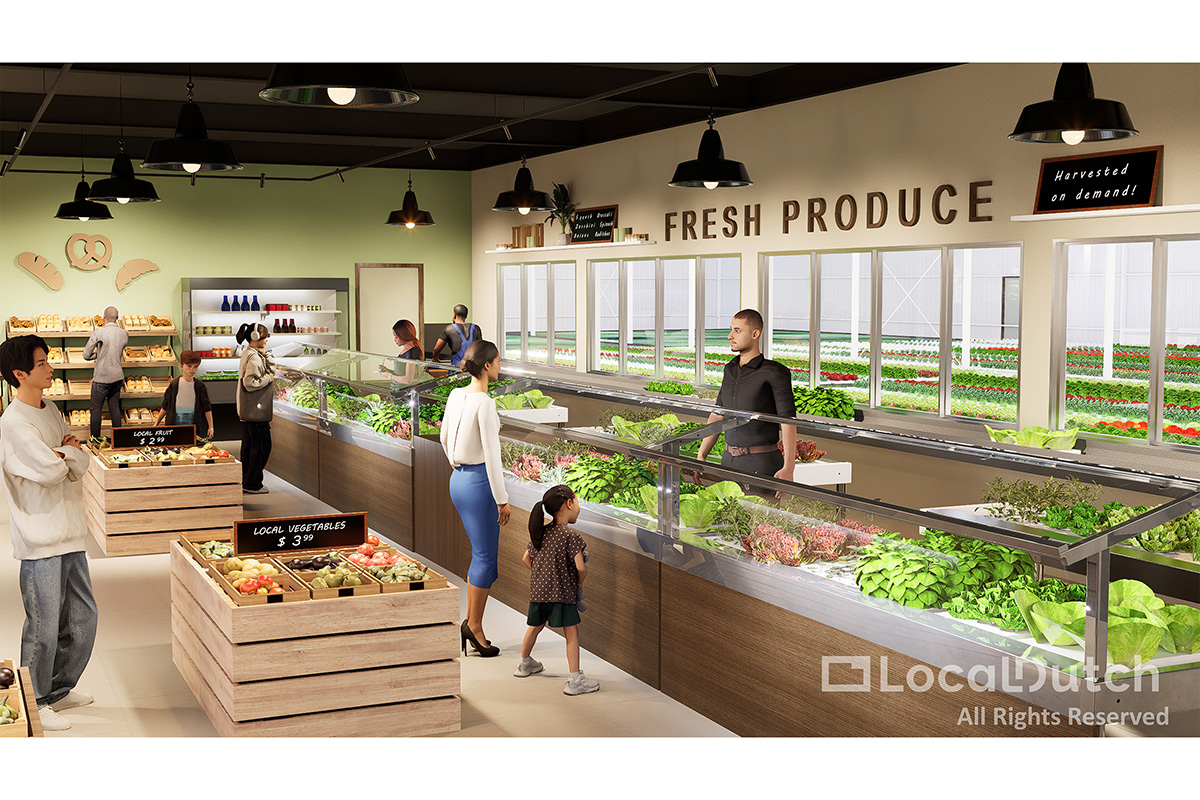
The shops are designed to function as social meeting points, capturing the transparency and trust of a traditional farmers market but with the year-round consistency of a daily market. Because the AI handles the farming, local teams can be recruited for their retail and community engagement skills rather than agricultural degrees.
“We're building on something that already resonates strongly in the U.S.: the desire to know where your food comes from. Farmers markets have shown that Americans value transparency, local growers and a direct connection to their food,” Wilsbach says. “LocalDutch brings that same trust and visibility into a year-round, neighborhood setting. Customers can see their produce growing just steps from the shelf, combining the authenticity of a farmers market with the convenience of a daily market.”
Economically, the model is built for resilience. Revenue is generated through a hybrid of direct retail sales, community supported agriculture memberships and last-mile delivery partnerships. This flexibility allows each shop to adapt to its specific local market while maintaining a consistent operational backbone.
As LocalDutch establishes its U.S. offices, the goal remains clear: to prove that the future of food isn't just about growing more; it's about growing closer to the people who eat it. By shrinking the distance between the vine and the shelf to just a few steps, LocalDutch is betting that the next great American grocery staple will be a Dutch-grown model with a local heart.
With plans to launch in the U.S. this year, the initial locations are planned to be in Pennsylvania, “capitalizing on the strong local food production and historical strength in agriculture,” Wilsbach says.
LocalDutch highlights the following about its approach:
- Fresh and affordable vegetables — Quality matters; locally produced deliciousness that's cheaper than supermarkets.
- Farm-to-fork — Locally produced food gives zero food miles and no food waste.
- Standardized build — The build of the LocalDutch Shop is prefabricated and just has to be assembled on site.
- Expertise — LocalDutch says it arose from long-lasting controlled environment agriculture knowledge.
Read more about the LocalDutch story, background in the greenhouse sector and ideas on how to bring affordable fresh food to many different places on Stories of Purpose, a storytelling initiative by The Hague.