Editor's note: This story is part of an ongoing “Sowing Change” series about urban farming.
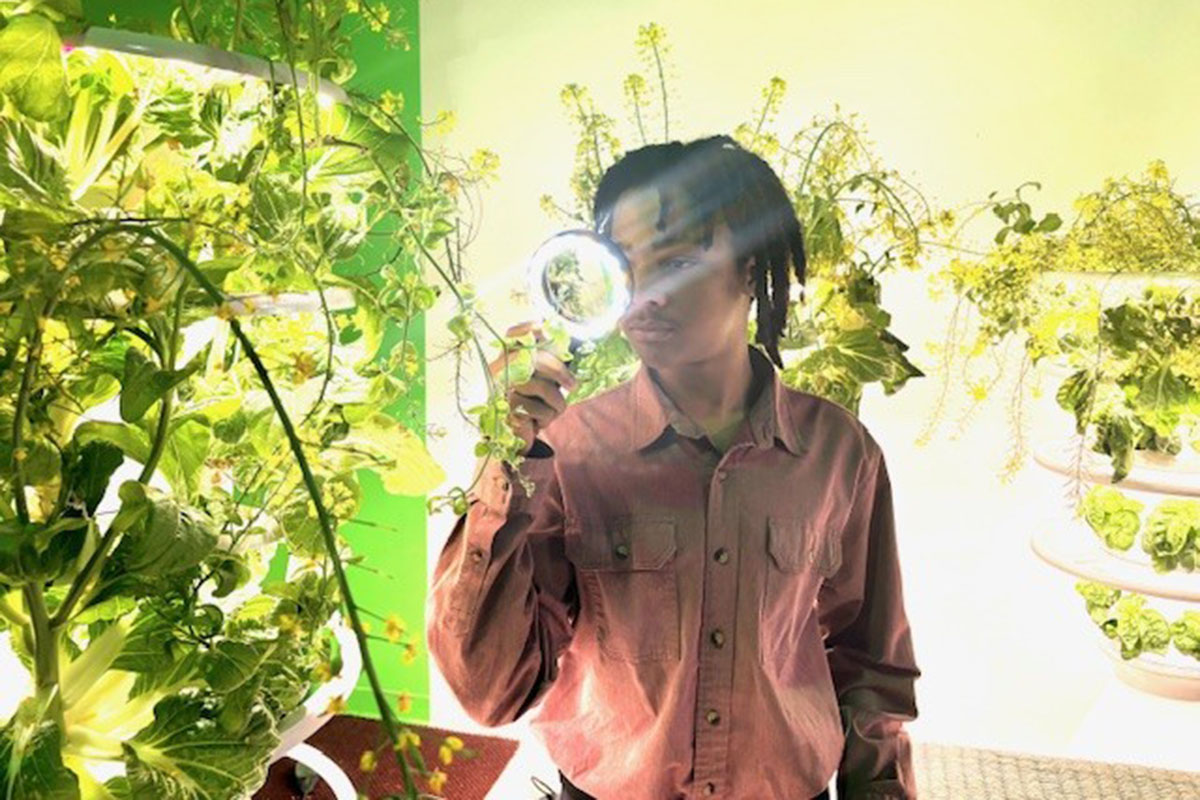
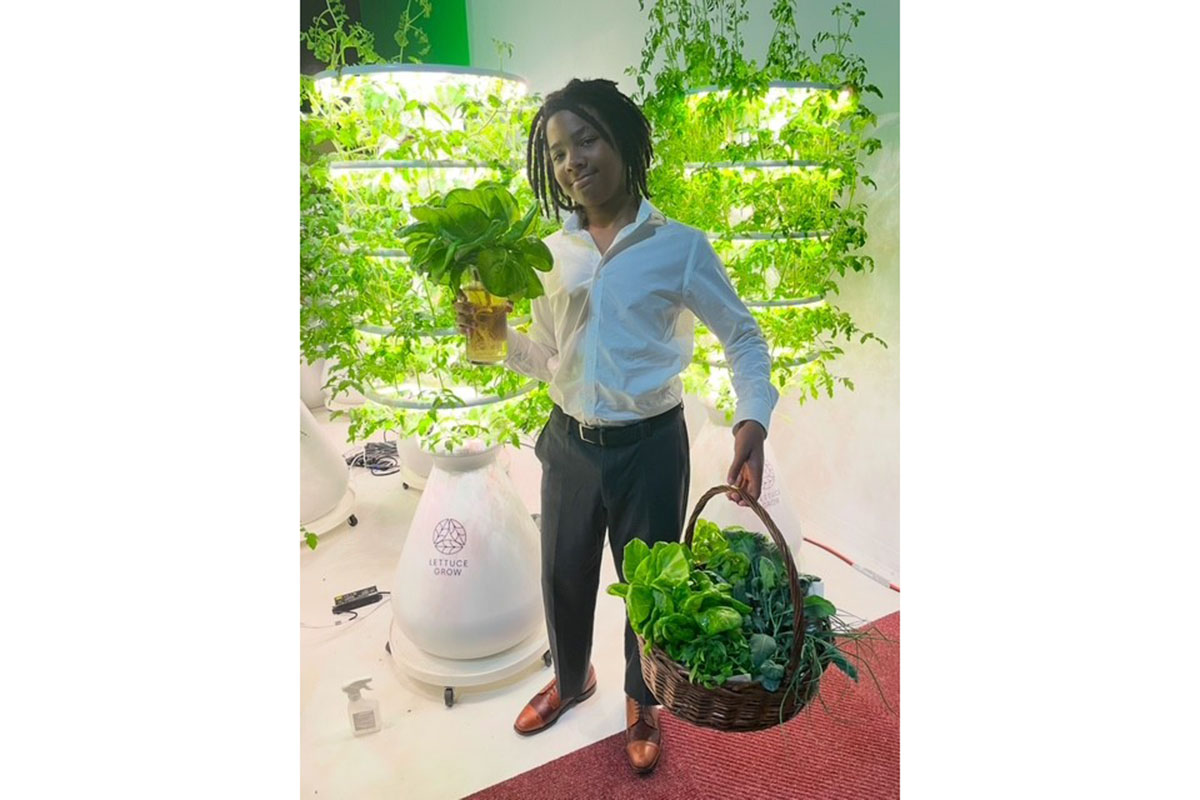
Malon E.D. James is not your typical farmer. Instead, he's a 15-year-old high school graduate (who actually graduated at 13) and a pioneer in controlled environment agriculture. While his Atlanta peers are navigating the 10th grade, James is managing a sophisticated hydroponic operation that bridges the gap between old-world tradition and the digital frontier.
It started in the kitchen of his grandmother, Mattie James. Affectionately known as “Mimi,” James says watching her grow plants in simple glasses of water left a lasting impression on him.
“Standing in her kitchen, just seeing her plants really grow, the roots take ... it's just so much life,” he says.
This early exposure to the magic of growth gave him a clear vision of his path: “That's how I know where my food is, that's how I know where it's coming from. That really gave me a picture that this is what I'm going to pursue.”
A Pandemic-Driven Mission
While his interest began at age 10, it was the onset of COVID-19 in 2020 that transformed a hobby into a global mission. Deeply moved by the vulnerabilities in the food supply chain, James began researching food deserts and climate-related agricultural failures.
His focus expanded to Liberia, where monsoons frequently wash away traditional soil crops and infrastructure. This inspired his drive to create indoor systems that offer safety and security by allowing people to grow food directly in their living rooms, shielded from the elements.
Turning this vision into a commercial reality required more than just a green thumb; it required capital and persistence. James successfully navigated the bureaucracy of the USDA Farm Service Agency to secure a youth loan, allowing him to move his operations out of his home and into a professional facility.
“The FSA loan I received was specifically for equipment and supplies. [A mentor], Judge Gundy helped me secure the space I'm in several months before I received the loan or modest marketing grant,” James says.
The transition wasn't without its hurdles. James says that older generations in traditional farming can sometimes be skeptical of oversophisticated technology. However, he has proven that his high-tech approach is viable, scaling up to 24 farm stands capable of producing dozens of plants simultaneously.
James' facility is a “lab-to-table” environment where he is assisted by Jarvis, an artificial intelligence system that monitors his actions, flags inconsistencies and manages rigorous schedules. This tech-forward approach has allowed him to move beyond standard leafy greens to experiment with over 42 varieties, including challenging crops like cotton.
“Cotton was something I really had to maneuver and understand,” James says, noting that it demands far more precise climate and nutrient scheduling than a simple head of cabbage. His research even extends to the molecular level, where he is currently working on a patent for a custom biodegradable substrate designed to help plants hold nutrients more effectively.
Of working with Jarvis as his assistant, James says: “Jarvis doesn't know much about the science of hydroponics yet, but he is a great student. Mostly, he proofreads my work and monitors. I don't want people to get the impression that AI can help you become a great hydroponic grower. It depends on how you program your AI.”
Beyond the Harvest
Despite the high-level research and AI-driven data, James remains motivated by the simple, human act of sharing food. He remembers his first successful harvest of tomatoes. Though he isn't a “tomato person” himself, he says the experience was transformative.
“It just gave me a sense of security,” he says. “I know I can do it again and again and again. I can feed my whole family with [this].”
As he looks toward his next steps of expanding into a larger lab and developing new models, his message to other young entrepreneurs remains one of pure resilience: “Don't let anybody discourage you from doing it ... Looking at something from a negative standpoint will never let you see the positive.”
James' future looks filled with light and growth as well.
“It's my wish to attend MIT after I complete my research project in Liberia,” he says.