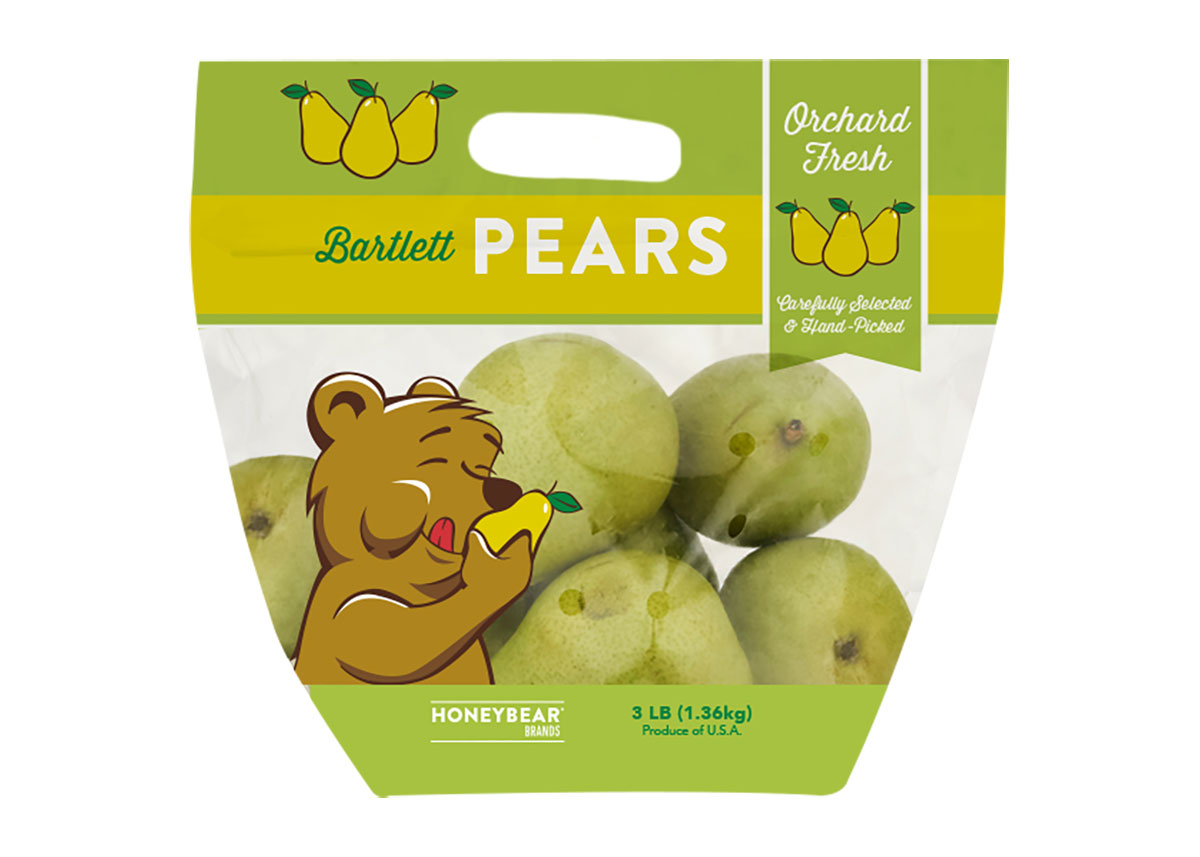
Honeybear Brands says its fresh-picked crop of bartlett and bosc pears from the Southern Hemisphere will begin hitting retailer shelves in early March, with the season set to run through June 1.
Chuck Sinks, president of sales and marketing at Honeybear Brands, says that with harvest in Chile and Argentina beginning in late January and February, this means promotable volumes will begin shortly after as domestic storage begins to lose momentum, which he says creates a clean handoff. That means retailers avoid gaps while produce maintains quality, and there are strong promotable volumes without interruption.
“South American pears come online at exactly the moment U.S. domestic supplies begin to taper off. Washington storage fruit typically reaches their quality and volume limits between late February and early March,” Sinks says. “As controlled atmosphere rooms are opened and inventories wind down, retailers often see increasing pressure on condition, sizing and consistency.”
Honeybear says long-standing partnerships and a vertically aligned import program provide competitive pricing for retailers.
“Direct grower relationships reduce middle-layer costs and secure priority access to premium fruit,” Sinks says. “Consolidated shipping programs allow for better freight efficiency and predictable landed costs, and year-round category management means Honeybear can plan volumes, vessel timing and pack styles months in advance, avoiding the spot market volatility that often drives up import pricing.”
Sinks says this results in a stable, value-driven import program that competes with domestic storage fruit and other importers.
While bartlett pears will begin arriving March 1 and bosc around April 1, Sinks says the two varieties are complementary, especially when consumers understand the differences. Retailers can highlight bartlett’s juicy, aromatic profile along bosc’s firmer, denser eating experience, which encourages multivariety purchases, he says.
Also, consumers often misunderstand pear ripening. Sinks explains that a simple check-the-neck messaging can help boost consumer confidence and reduce shrinkage. Other messaging includes mix-and-match pear promotions that encourage consumers to try new varieties and help retailers move volume across both varieties.
“Bartletts lean sweet and floral; boscs hold their shape for baking and salads,” he says. “Pairing them with complementary items increases basket size.”
Sinks says this season, retailers can expect pears with higher natural sugars due to warm days and cool nights. Retailers can also expect clean, bright aromatics with bartletts and smooth texture and dense flesh with bosc, he adds.
“Quality is strong enough to support early-season ads,” Sinks says. “Retailers can confidently promote as soon as fruit arrives, without waiting for later vessels.”