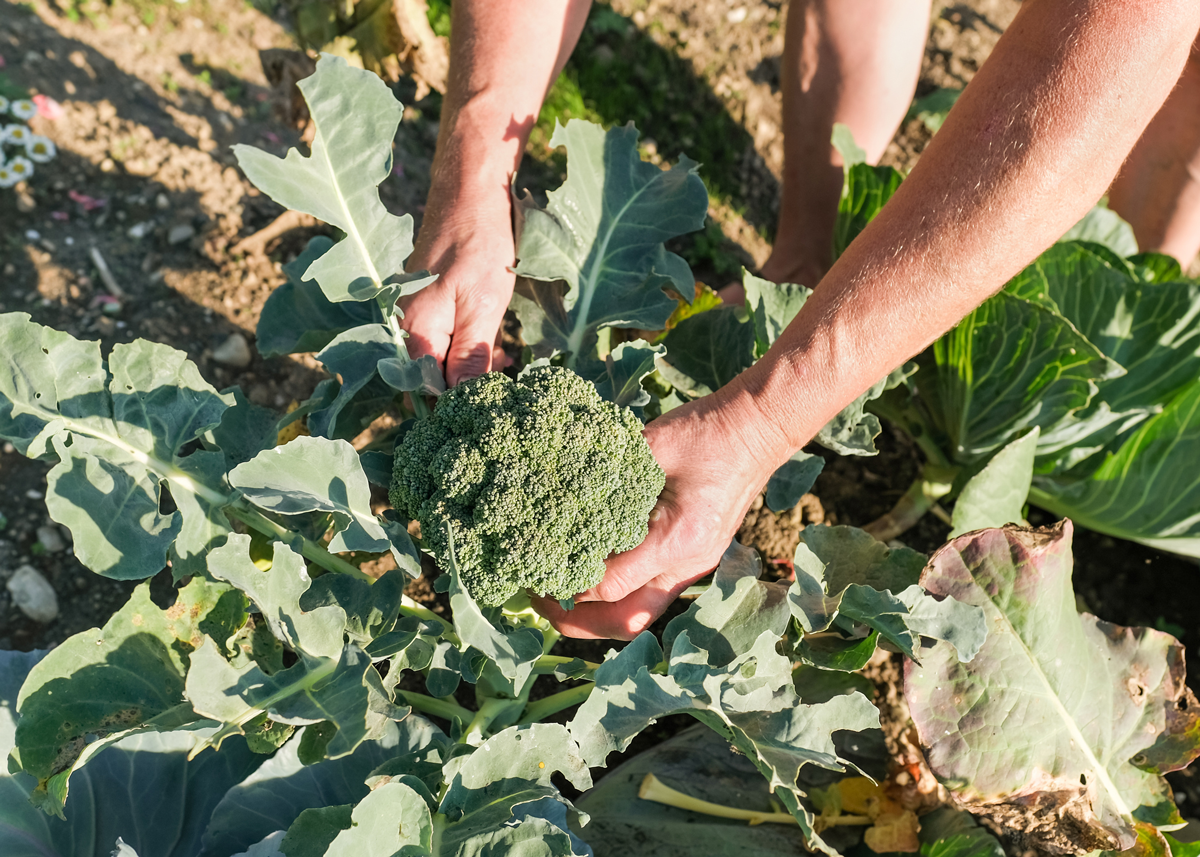
Mike Roberts, vice president of produce operations with Harps Food Stores, says his team noticed elevated shrinkage in its broccoli crowns due to moisture loss; the crowns had reduced firmness and a decline in quality.
However, fixing the issue required more than one approach.
“While temperature management is critical, it wasn’t fully addressing these challenges, so we needed an additional solution to better maintain product integrity,” he says.
Addressing Shrink, Improving Quality
This is where Roberts began working with the team at Verdant Technologies to trial the HarvestHold solution in its broccoli to address these issues. Roberts says the Harps team was aware of HarvestHold for a while, so they decided to implement a trial as he saw it was a fit with seeking to enhance performance in key categories.
Matthew Aronson, chief revenue officer of Verdant Technologies, says the conversation with Harps and adding HarvestHold stemmed from the need to extend the quality of the broccoli. Aronson says that HarvestHold’s technology blocks ethylene to address the water loss that the Harps team saw and that it helps the broccoli maintain firmness.
“We talked about seven extra days of shelf life with naked iceless broccoli and what that could mean to reducing shrink or food waste at the store and certainly at home for the shoppers,” Aronson says.
Verdant Technologies worked with Harps’ broccoli supplier, Ocean Mist, to implement this trial. Aronson says it was a team effort to get this trial in action, which spanned several months. Harps’ distribution partner, Associated Wholesale Growers, is also working to introduce HarvestHold across its retail network.
“Kudos, Ocean Mist, who has been a longtime partner of ours on the broccoli side and working with not just Harps but [also] the AWG team,” he says. “We executed this over not just a couple weeks. This is a few months to get a sizable enough data set.”
Measurable Gains in Sales and Sustainability
Roberts says that since implementing HarvestHold, broccoli volume at Harps stores has increased by 9.96%.
“While multiple factors can influence sales, we believe improved shelf life and better at-home performance are contributing to increased customer satisfaction and repeat purchases,” he says.
Roberts also acknowledges that part of the draw for using HarvestHold is its ease of use. He says the investment in adding HarvestHold is beneficial, based on what he’s seen from an improvement in quality and a reduction in shrink. He says the cost is minimal compared to the potential benefits of implementation.
“It’s easy to implement, cost-effective and doesn’t involve applying anything directly to the product; it’s simply a sheet placed in the box,” he says. “At the end of the day, it helps reduce waste, saves customers money and supports our mission of helping families enjoy fresh, healthy fruits and vegetables.”
Collaborative Supply Chain Blueprint
Roberts says that the reduction in food waste and keeping fresh produce out of landfills were key factors in adding HarvestHold technology. He says he also sees increased quality as an improved experience for the shopper.
“If a customer takes broccoli home and it lasts longer and maintains its quality, that creates a better overall experience,” he says. “That’s a win for the customer, a win for Harps and a win for reducing food waste. Those kinds of improvements can set us apart in a meaningful way.”
He says improving quality, reducing waste and improving customer satisfaction all contribute to the value customers see in the Harps brand, which in turn strengthens the financial performance and the company’s employee ownership.
Roberts says he’s deployed HarvestHold on Southern peaches successfully the past few seasons and is already looking ahead to the potential that HarvestHold might have in other commodities.
“Leafy greens would be at the top of the list, given their sensitivity and high shrink potential,” he says. “Beyond that, berries present a significant opportunity due to their volume and perishability.”