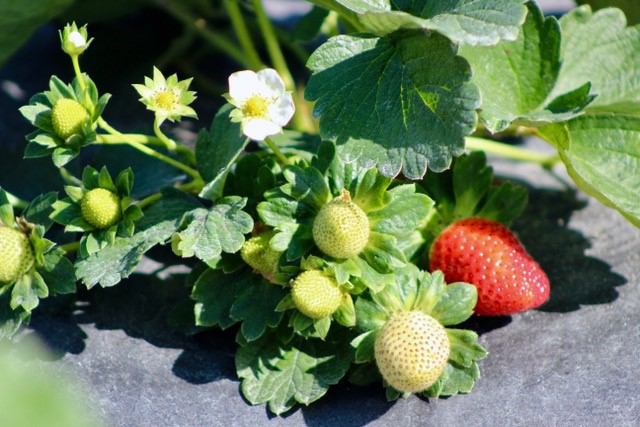
Florida’s strawberry season is off to an encouraging start, with growers and state agricultural leaders describing healthy plants, good early sizing and strong retailer interest. Still, the industry faces familiar pressures such as labor, input costs and unpredictable weather, requiring strategic planning both in the field and in the marketplace.
Insights from Gem-Pack, the Florida Department of Agriculture and Wish Farms reveal how growers are managing the opportunities and obstacles.
How the Season Is Shaping Up
Growers report a positive start to the season, citing strong early fruit quality, healthy plant stands and improved growing conditions compared to last year. Each organization notes that early varieties are performing well, with steady volumes expected as the season moves toward its February-March peak.
Kristen Hitchcock, chief financial officer of Parkesdale Farms and Gem-Pack Berries grower partner, says berry harvesting started earlier this season.
“Hurricane Milton caused significant damage to our fields last year, which impacted overall production,” she says. “Fortunately, our yields are currently higher than they were in 2024.
This season, Parkesdale Farms decided to grow a new variety, Ember, which was developed by the University of Florida. The variety is known for its bright red color, sweetness and ability to resist fungal disease, particularly Neopestalotiopsis, Hitchcock says.
“When I first tasted them straight off the vine, the flavor was delicious and sweet,” she says. “Their fragrance was so strong, I could smell the strawberries from 100 feet away.”
Nick Wishnatzki, public relations director for Wish Farms, says its 2025-26 Florida strawberry season is off to a promising start thanks to favorable weather conditions and the absence of hurricane disruptions for the first time in several years.
“Ideal temperatures have contributed to excellent fruit quality and sweetness across the board. While our Ember and Encore varieties were slower to start, production is now accelerating, and strong volumes are expected as we roll through December,” Wishnatzki says.
“The season began very differently than in previous years. Heavy rains in California reduced supply in November, along with cooler temperatures in Florida, delaying initial harvests,” he adds. “As of now, the industry is slightly undersupplied, but conditions are improving steadily heading into the holiday period. Production is expected to follow a normal curve as weather patterns stabilize, supporting what we think will be a great season ahead.”
Key Challenges Facing Florida Strawberry Growers
Growers continue to manage persistent pressures that shape each season’s outcome, such as weather variability that influences field decisions and crop management.
This season’s weather has been more favorable than last year, Hitchcock says.
“We are getting plenty of warm sunshine and cool air, which our berries love and thrive in,” she says. “Rainfall has been limited this season, which is beneficial since excessive rain isn’t great for the crops. We are expecting a cold front, but conditions will be more sporadic.”
Hitchcock says last season’s yield was low because of Hurricane Milton.
“With the new Ember variety, so far, it looks like we will have high volume this year. The fruit size looks like a normal strawberry, but its shape resembles a heart, which we think consumers will love,” she adds.
Hitchcock says Florida strawberry growers are hopeful for a strong year ahead. The weather has been excellent this year, but she says some of last year’s weather challenges are carrying over to this season.
“We are recovering from the challenges posed by the hurricane and are doing everything we can to move forward. Also, the rising costs from our inputs, such as labor and materials, continue to be a challenge,” Hitchcock says.
Wishnatzki says labor availability has remained stable through the use of the H-2A program, however, “its cost is highly burdensome.”
“There is some hope on the horizon with upcoming changes to the Adverse Effect Wage Rate and crew deployment rules,” he says. “They are expected to provide greater flexibility, reduce costs and improve compliance. While these reforms will not impact the current Florida season, they represent a significant opportunity to strengthen the domestic industry and improve competitiveness with Mexico in the future.”
Wishnatzki adds that the recent government shutdown delayed some of Wish Farms’ H-2A worker arrivals.
“Now that it’s resolved, we expect to be fully staffed at the farm later this month. However, our reliance on the government for this program, and an ever-shrinking pool of qualified farmworkers, is not sustainable over the long term,” he says. “An event like the shutdown just highlights how vulnerable we can be. It’s important that there is an acceleration in investment for domestically produced automated harvesting solutions, like Harvest CROO Robotics.”
As a result, Wishnatzki says escalating input costs have made operational efficiency a priority.
“Our cost per acre has increased substantially over the past decade, requiring us to be highly strategic in how we deploy resources,” he explains.
How Growers Are Working With Retailers and Driving Demand
Marketing teams report strong retail interest, with promotional plans aligning to peak winter volumes and key holidays such as Valentine’s Day.
Florida growers continue to emphasize freshness, highlighting the advantage of domestic winter berries over imports, and are leaning into messaging around flavor, sustainability and transparency. Partnerships with retailers include coordinated ads, in-store promotions and category insights designed to drive berry sales during the high-traffic winter months.
“At Parkesdale Farms, we want consumers to feel like they’re a part of our family,” Hitchcock says. “As a multigenerational family farm, we take pride in sharing our story so consumers know who is behind our strawberries.
The company first partnered with Red Blossom over 15 years ago. After a 2021 merger, its collaboration continued with Gem-Pack Berries, which has proven to be a natural fit since then, she adds.
“While we partner with Gem-Pack Berries, we always highlight that Parkesdale Farms is a family-owned farm,” Hitchcock says. “We receive support from the Florida Strawberry Growers Association and Fresh from Florida, which help us to promote our berries to local consumers. Every clamshell proudly features the Fresh from Florida sticker.”
Hitchcock says consumer trends and preferences for flavor, appearance and overall taste continue to shape how the strawberries are positioned.
“We have a great relationship with the University of Florida, and by working closely with them, we continue to learn about what preferences consumers have for strawberry characteristics such as flavor, taste and quality that they prefer,” Hitchcock says. “Our strawberries have high Brix for sweetness, and consistent sizing that fits well in the clamshell, and the vibrant red color that consumers prefer.”
For Wish Farms, the current fruit quality is exceptional, with strong sizing and flavor, setting the stage for successful holiday promotions, Wishnatzki says.
”Long-stem berries will be available for Christmas and Valentine’s Day,” he says. “We encourage retailers to consider extending promotions beyond the traditional Valentine’s window. Florida’s peak volume occurs from mid-February through early March. Quality remains very high, and pricing is most aggressive. Extending sharp promotional activity during this period supports Florida growers and contributes to their long-term sustainability.”
Florida strawberries are prized for their vibrant red color, juicy texture and naturally high sugar content, says Susie McKinley, director, division of marketing and development for the Tallahassee-based Florida Department of Agriculture and Consumer Services. Grown and harvested at peak ripeness, they are shipped quickly to ensure exceptional freshness.
McKinley says Florida’s unique winter growing season allows it to supply fresh, domestic strawberries when other regions cannot, giving it a distinct advantage in the marketplace. Florida strawberry growers differentiate their fruit by aligning with the Fresh From Florida brand and featuring the iconic sunny logo on their packaging, she says.
“The widely recognized logo helps consumers identify local produce, especially during the holiday season when strawberries are in high demand,” McKinley says. “Through a comprehensive, multi-channel advertising campaign, Fresh From Florida promotes Florida-grown strawberries across TV, radio, podcasts, digital platforms, social media, online grocery services, coupon apps and in-store promotions. These efforts increase awareness of Florida strawberry season and drive purchase intent.”
Retail partnerships play a key role in this strategy, she adds.
“Through the Retail Incentive Program, participating stores promote Florida-grown products in circular ads, digital ads, social media, custom displays, recipe cards and sampling events,” McKinley explains.
Targeted promotional efforts are in place to support the winter season and Valentine’s Day, peak times for strawberry consumption, she says. Television and radio ads will run throughout January and February, while digital recipe ads will span January through March, featuring Florida strawberries in seasonal dishes. Shoppable ads during this same period allow consumers to purchase strawberries online through their preferred retailer.
“Promotions on Ibotta and ShopKick will run in January, offering monetary incentives to encourage in-store purchases of Florida strawberries,” McKinley says. “Instacart promotions will run from Dec. 15 through March 15, targeting online grocery shoppers, while print and shopping cart ads will provide in-store visibility during February and March.”
Most Florida strawberries are sold fresh at retail, with some entering foodservice and limited processing channels, McKinley says.
“They are primarily shipped to markets along the East Coast and into Canada, with growing interest in the Midwest. Florida’s proximity to these markets allows for faster delivery, longer shelf life and a superior taste,” she says. “By emphasizing freshness, flavor and local sourcing, Florida strawberry growers continue to differentiate their product and encourage consumers to support American farmers by choosing Fresh From Florida strawberries.”