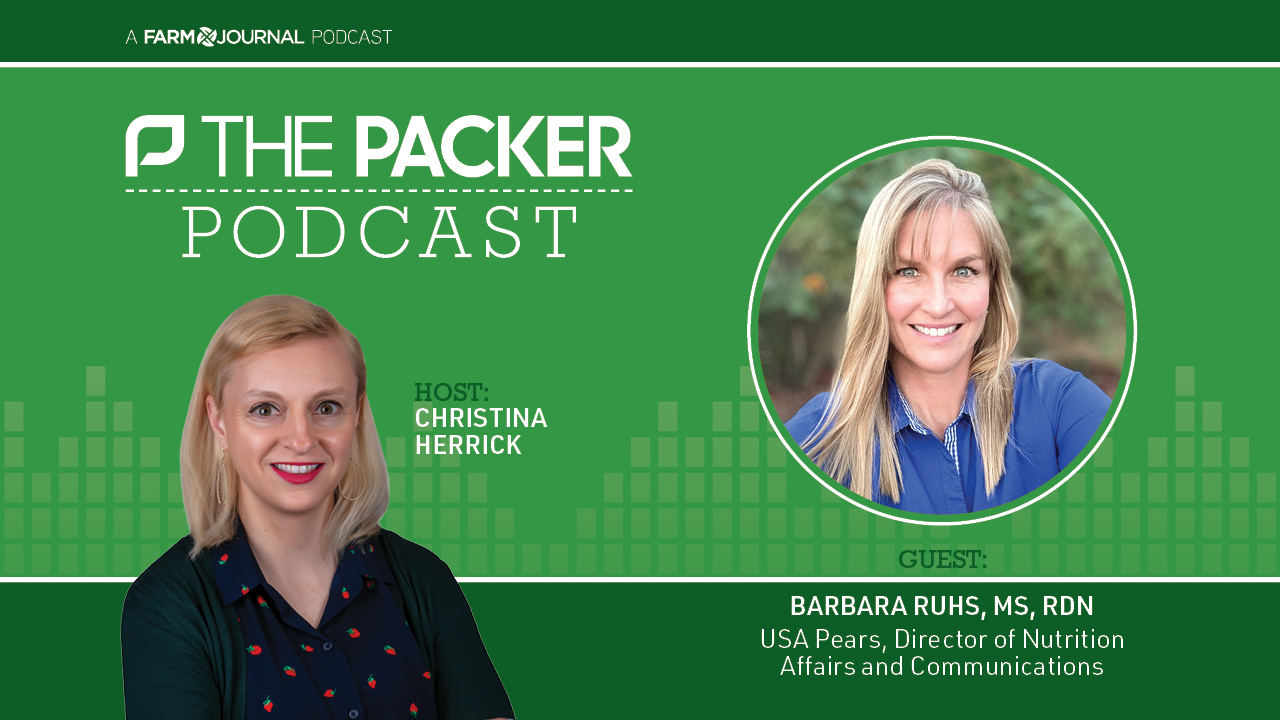
Fresh produce has a huge opportunity, says Barbara Ruhs, director of nutrition affairs and communications with USA Pears. Within the last year, the term “fibermaxxing” has exploded on social media, turning the latest viral trend into a shift in focus from protein to gut health.
Ruhs, who joined “The Packer Podcast” to highlight this trend, says the truth is most Americans don’t eat enough fiber.
“It’s estimated that for every 1,000 calories, people consume about 8 grams of fiber,” she says. “Daily recommendations are upwards of 25 per day. So, if you’re a general typical American consuming a 2,000-calorie-a-day diet, that means that you’re getting about 16 grams of fiber, which is about half.”
And fibermaxxing calls for consuming 30 grams or more of dietary fiber. While those interested in adding fiber can choose whole grains, beans, lentils, supplements and more, fresh produce is perfectly positioned to lead the fibermaxxing conversation.
“Fiber is just related to so many positive health benefits from obviously gut health,” she says. “Consuming fiber also feeds the microbiome, so these beneficial bacteria in the gut ... have all these beneficial properties for your health and well-being.”
Ruhs says the fresh produce industry can learn from the protein craze and apply that appeal to fiber.
“One of the key things with protein is that it’s cool and that it’s associated with performance and more energy,” she says. “Knowing that protein is associated with performance and energy, I think is something very appealing to consumers. It’s same thing for fiber. Fiber can also help you feel better and perform better and give you energy and all these other things that help manage your blood sugar.”
Naturally, Ruhs says, pears are a good option for those seeking to add more fiber into their diets, as a medium fruit contains about 6 grams of fiber, which she says is higher than other fresh fruit.
“It is really a natural way to consume more dietary fiber,” she says. “When I’m talking about eating more pears, of course, we do tell people to add them to meals and combine them with other foods like proteins — but to think of them as something that helps you to feel better and live better and perform better overall.”
With a viral trend like fibermaxxing, there’s a lot of information out there. So, how does Ruhs recommend breaking through the noise? She uses what she calls a “science sandwich” in her messaging: Lead with the attention-grabbing component, add scientific information in the middle and end with food messaging.
For example, she says a science sandwich tackling fibermaxxing might go something like this: “Fibermaxxing is a is a popular trend. Why should you care personally about it? It’s going to help you feel better, perform better with better digestion, manage your blood sugar, help with neurological health, help you reduce your risk for like chronic diseases. And then, wow, wouldn’t it be great to add some sliced pears on a grilled pizza with some gorgonzola cheese or putting pears on a charcuterie board with some really nice cheese?”
She says this makes the nutrition information approachable and doable and doesn’t overwhelm consumers, and it also helps to promote fresh produce as a way to achieve fiber goals.
Retailers also have a huge opportunity to capitalize on the fibermaxxing trend. Ruhs says it’s important for retailers to engage consumers all along the path to purchase, from digital outreach to circulars and then also at POS displays. She says retailers can help boost the health halo of fresh produce by communicating the real benefits of a fiber-rich diet while offering real-life solutions.
Ruhs says this could be touting fiber’s ability to offer sustained energy throughout the day, managr blood sugar and more.
“Communicating messages along the path to purchase and after purchase so that it’s easy for consumers to connect,” she says.
Retailers can also help consumers find fiber-rich produce in stores with shelf tags and color-coded icons and endcaps and recipe ideas, such as fiber-filled snacks and side dishes with a gut-health focus.
And Ruhs says as younger generations continue to see a spike in colon cancer, fresh produce can play a huge role, too. She says emerging research shows the benefit of eating more fiber in colon cancer prevention.
“If we can get people to actually consume the five recommended fruits and vegetables per day, which [with] 30 years as a dietitian, I’ve been saying the same message: Eat more fruits and vegetables,” she says. “The fact that less than 10% of Americans consume even close to that is sad, but look at what’s happened with protein. So, if we can put some of that same magic to fiber and fresh produce, I do think we’re going to see the needle move.”




.jpg)