The ripple effects of global conflict are landing squarely on the farm, where rising fertilizer prices and tightening supply chains are forcing difficult decisions. For many growers, the math no longer works the way it used to.
“More than 80% of rice, cotton and peanut producers reported they cannot afford all required fertilizer,” says Arthur Erickson, CEO of Hylio, underscoring the scale of the challenge facing production agriculture. While specialty crop-specific data remains limited, the broader trend shows that farmers are being pushed to do more with less.
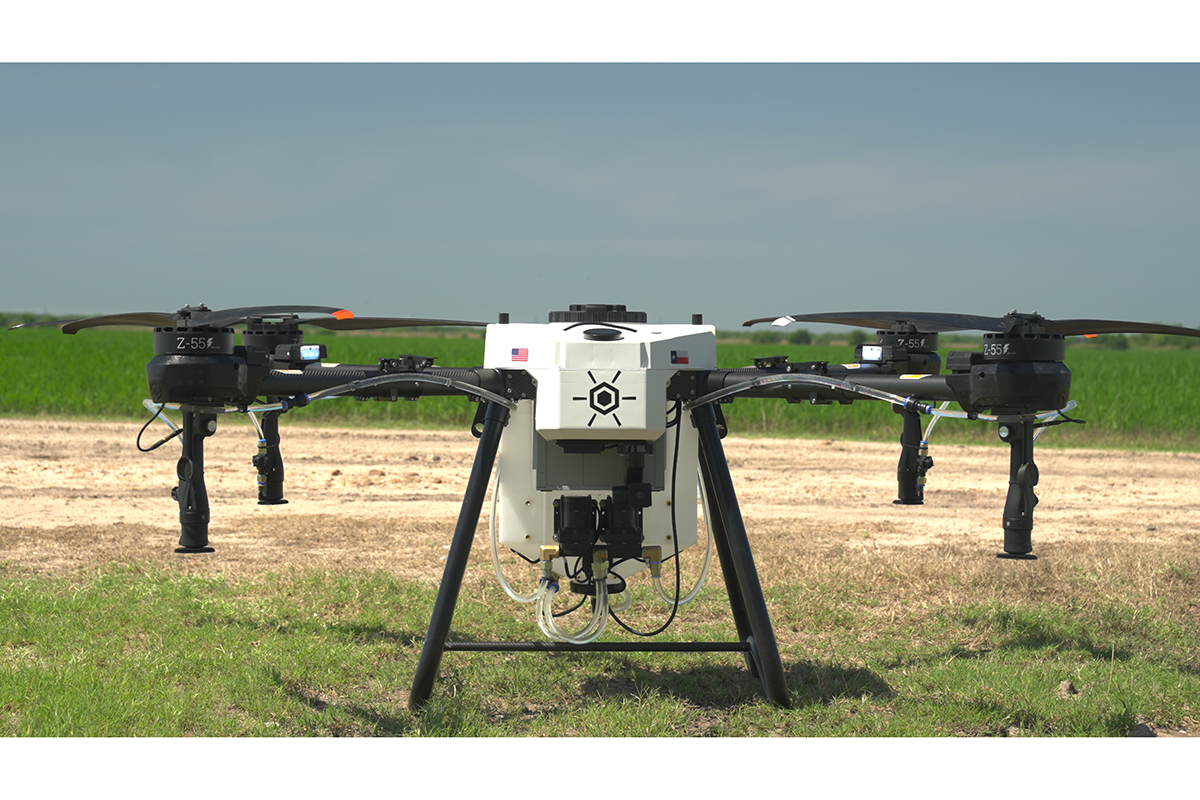
That shift is accelerating interest in precision agriculture tools, particularly drones designed to apply inputs with far greater accuracy than traditional equipment.
Erickson describes the approach as fundamentally data-driven. Farmers can deploy scouting drones or satellite imagery to assess field variability, identifying exactly where fertilizer or crop protection is needed — and where it isn't.
“You could analyze the pixels essentially across the imagery on your farm, and then, of course, just target those specific areas,” he says. “In that way, just being a lot more surgical … would lead to an overall reduction in your input needed to get the same or better result.”
That level of precision matters most when budgets are squeezed. If growers are cutting fertilizer use by 30% to 50%, blanket applications can translate into wasted product in some areas and insufficient nutrients in others. Targeted spraying allows them to stretch limited resources without sacrificing yield potential.

“You have to have the data,” Erickson says. “You also have to have a precise enough application tool to do right by that data.”
Traditional equipment, he adds, often lacks that granularity. Even with strong field intelligence, a 120-foot boom sprayer or aerial application cannot match the pinpoint accuracy of drones capable of treating small, defined zones.
An Accessible Alternative
The economic pressure extends beyond inputs. Erickson points to a “double whammy” of rising costs paired with falling commodity prices, leaving farmers with less revenue and higher expenses per acre.
“What we're seeing is a huge reduction in new purchases of traditional, larger equipment,” he says, noting that tractor sales are down significantly in some regions.
In contrast, drones are emerging as a more accessible alternative. Erickson estimates that a fleet of agricultural drones can cost a fraction of traditional machinery while covering thousands of acres per day.
“Instead of spending $500,000 on a tractor, you could spend $100,000 and still have a fleet,” he says. “So, four or five times cheaper in terms of capital cost and also on the operating cost side.”
That affordability is helping drive adoption even in a tight financial environment. In fact, Erickson describes the current moment as a turning point for farmers who may have been hesitant to embrace new technology.
“This was kind of a big enough shock to actually convince them to try something ‘new' or untested as drone technology,” he says. “Once they use it, they're going to realize it is pretty darn effective.”
Eye on the Horizon
Supply chain uncertainty is another factor reshaping decision-making. From COVID-19 disruptions to ongoing geopolitical tensions, farmers are increasingly concerned about access to equipment and replacement parts.
“Half the conversations we have with farmers come up like, ‘Hey, if I do buy your drone, where are your parts coming from?'” Erickson says. “Is it one-day shipping, or is it three months' shipping for a replacement part?”
That concern is driving interest in domestically produced technology. Erickson notes that Hylio has seen demand increase during past disruptions as farmers sought alternatives to overseas supply chains.
“It's been one thing after another,” he says, citing COVID-19, the Russia-Ukraine conflict and current tensions involving Iran. “Even the people that normally wouldn't pay attention are being forced to think about that every day.”
Incentives Serve as a Catalyst
Public funding may also help accelerate adoption. Several states already offer grants for precision agriculture tools, and federal programs tied to the next farm bill could expand access to subsidized loans or direct funding.
“These grants are generally funding precision agriculture tools,” Erickson says, adding that many programs include Buy American requirements that favor domestically manufactured equipment.
For growers navigating today's volatile environment, those incentives could lower the barrier to entry for technologies that promise both cost savings and efficiency gains.
The implications extend beyond the farm gate. Reduced planting or lower input use could tighten supply and push food prices higher in the coming months.
“There's going to be a price hike,” Erickson says. “I mean, the number of farmers that literally can't plant crops this year or they're severely cutting back on the acreage, there's a pretty good chance [of] significant price increases.”
While the exact trajectory remains uncertain, the direction is clear: As global pressures reshape agriculture, tools that help farmers maximize every input are moving from optional to essential.