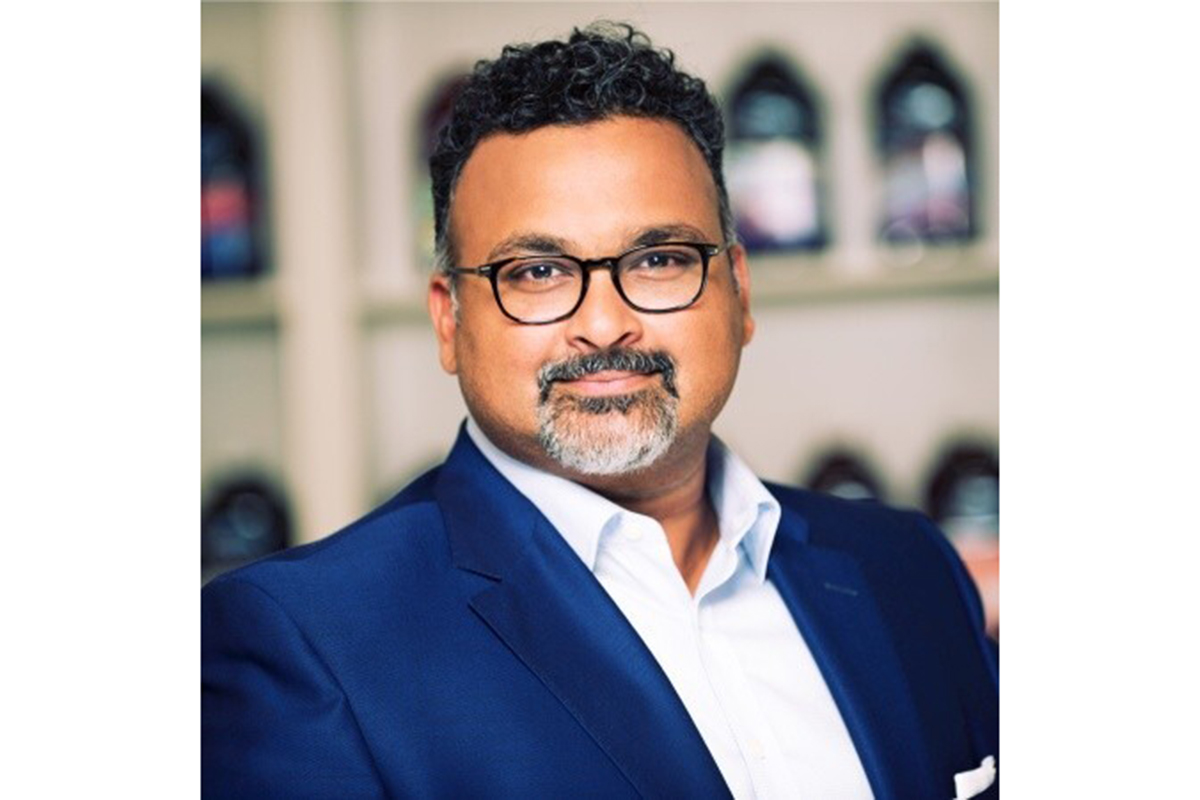
In the world of legacy consumer packaged goods, a leader often has months to course-correct a product strategy. But when Bobby Chacko stepped into the role of CEO for Bonduelle Americas, he found a business model where the clock resets every 15 days.
Bringing a high-octane resume that includes leadership roles at Coca-Cola, Mars and Ocean Spray, Chacko is now tasked with a bold identity shift: retiring the well-known Ready Pac name in favor of the 173-year-old Bonduelle family heritage. In this conversation, Chacko shares why he believes the fresh industry is finally ready for “iconic” brand building, the reality of the U.S. recycling infrastructure and how his team is using simple communication to solve complex supply chain predictability problems.
The Packer: You’ve spent your career at iconic CPG brands like Ocean Spray, Coca-Cola and Mars. What is the one ‘playbook’ item from the beverage world you think the fresh produce industry is still missing?
Bobby Chacko: I actually don’t like taking a playbook and just applying it to a new business. I want to go deep, really understand what the business needs, what the pain points are, from the consumer all the way through to the customer, and in our case, all the way back to agro and sourcing. That said, the one thing I’d love to see our industry truly scale is brand building — creating that emotional connection between a product and a consumer so price isn’t the first reason you’re buying something genuinely great for you.
At Bonduelle Americas, our whole portfolio is built on plant-rich products that are nutritious and delicious, things you actually want in your home. We want consumers to connect first with our mission: promoting plant-rich eating. Building that brand stickiness, that loyalty, that’s something the big iconic CPG brands do really well, and it’s absolutely something fresh produce can and should be doing.
In late 2024/early 2025, you began transitioning from the Ready Pac name to the Bonduelle brand in U.S. retail. How are American consumers responding to a French brand name in the fresh aisle, and what has been the biggest challenge in that identity shift?
The reason we made the move is actually pretty straightforward — unaided awareness between Ready Pac and Bonduelle was sitting at roughly the same level. So if we’re starting from a similar place, why not lean into a name that carries 173 years of heritage, family dedication and a genuine story rooted in plant-rich eating? We believed that story could resonate even more powerfully with the American consumer.
And look, L’Oréal, Danone, so many iconic brands have successfully made that journey to the U.S. We don’t see any reason Bonduelle can’t do the same. Putting the name on the packaging was step one. And what we actually saw during our test period was encouraging — like-for-like sales went up, roughly 6% growth. We saw no material adverse effects from the transition, which was really validating.
Now we’re focused on reinforcing the portfolio with complementary products and starting to tell the Bonduelle story. One thing I love is our tagline — Eat Well, Be Well, Bonduelle — because it does double duty. It connects with our purpose and it helps American consumers know how to actually say the name. We’re at the beginning of this journey, and I’m genuinely excited about it.
In recent interviews, you’ve mentioned predictability is the biggest challenge in the value chain. How are you using technology or long-term grower contracts to give your farming partners more certainty in an era of extreme weather and fluctuating labor costs?
Agriculture is a challenging industry as there are so many variables at play, and weather is obviously a big one. But here’s my honest take: Technology alone isn’t going to solve our predictability problem. Sometimes the most powerful solution is also the simplest one, and that’s communication. Just being able to talk to people, in real time, up and down the chain. That alone can solve a lot.
As we continue to build better processes and stronger controls around the things we can manage, I’m sure we’ll layer in more technology over time. But I think with the most complex problems, the simplest answers are often the right starting point. Get the fundamentals right first.
Bonduelle has a massive footprint in both the East and West Coasts. Are you looking to further regionalize your supply chain to reduce food miles and logistics costs, or is the centralized model still the most efficient for fresh-cut?
Honestly, I don’t want to think of us as a regional or even just a national business. I want Bonduelle Americas to be seen as a company that brings plant-rich solutions and complete meals to consumers wherever they are. That’s the lens I want us looking through.
The real question for us isn’t regional versus centralized, it’s: how do we get good food to people no matter where they are, without being held hostage by any single variable — whether that’s transportation costs, packaging constraints or logistics complexity? I’d rather take a holistic view, fresh, shelf-stable, real nutrition, and build a portfolio that supports all of it. The goal is accessibility, not just efficiency.
Does the B Corp status actually help with retail negotiations? Are buyers at Kroger, Walmart or Target valuing that certification, or is it still primarily a consumer-facing benefit?
I think buyers should care about B Corp, and here’s why. The certification is rigorous. It measures a company’s responsibility across people, planet, and in our case, how food moves from point A all the way to point Z. That’s a meaningful filter for any buyer who wants to work with partners that align with their own sustainability commitments.
Now, is B Corp fully appreciated by every buyer today? Not yet. But Bonduelle Americas has been B Corp certified for several years. We were recertified again this year, and we’re one of the only companies in fresh produce at our scale to hold that status. I genuinely believe this is a big opportunity for buyers to connect our certification to their own sustainability programs and tell a more cohesive, compelling story to their consumers. The value is there. It’s just about making that connection more visible.
As you look toward your 2025/2026 packaging goals, where are you seeing the most promising innovations in compostable or truly recyclable films that still maintain the shelf life consumers expect?
Let me be direct about compostable packaging: It’s a very tough topic. When you look at the full life cycle and cumulative impact, compostable isn’t truly achievable in today’s marketplace. The supply chain infrastructure to support it, especially in the U.S., just isn’t there yet.
What is promising is innovation in film technology recyclability, and that’s where we’re actively looking. Right now, over 90% of our packaging is already recyclable, which I’m really proud of. And we have a comprehensive road map over the next decade to keep evolving alongside industry standards. Sustainable packaging innovation isn’t a one-and-done play. It’s a continuous commitment, and we’re in it for the long haul.
You’ve led major legacy brands and scrappy startups. What was the most surprising thing you learned about the fresh world during your first 90 days at Bonduelle that you didn’t experience in the shelf-stable or beverage sectors?
Oh, this one’s good. Honestly, it comes down to the business model and specifically, shelf life. When you’re working with legacy CPG brands in beverage or packaged food, you might have 18 months of shelf life to work with. That gives you time. Time to plan, time to react, time to course-correct. In fresh, you have 15 days. Fifteen days. That completely changes everything — the process, the pace, the decision-making.
What surprised me most in those first 90 days was seeing how fragmented decision-making can become in that environment. And look, it’s always made with great intentions. People care. They’re trying to do right by the product and the customer. But without stable, repeatable processes, you end up in constant crisis mode. And in agriculture and fresh? There’s always an issue brewing somewhere.
So for me, the big ‘aha’ was recognizing both the challenge and the opportunity. There’s a real chance here to bring some discipline to the way decisions get made, to empower people at the right levels with the right tools and frameworks, so we can consistently deliver what consumers expect: fresh, high-quality, chef-crafted products that genuinely delight. That’s what Bonduelle Americas is all about.