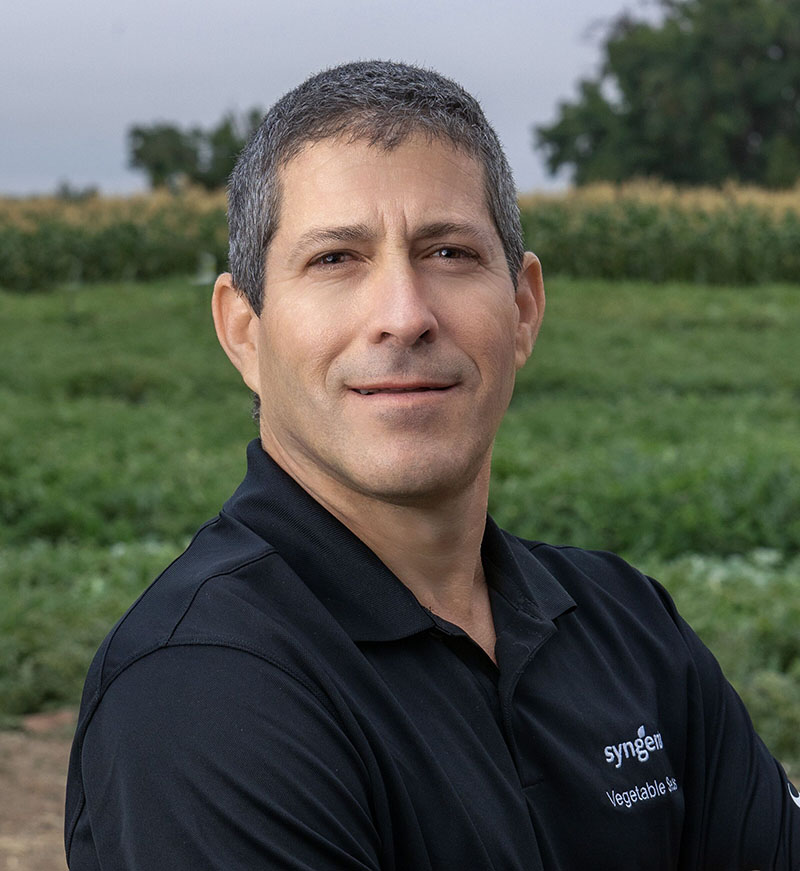
Melon sales are in decline, said Uri Krieger, Syngenta's global R&D head for vegetable seeds, during a “Seeds of Change” panel discussion at last month's New York Produce Show's Global Symposium.
Why? They're not harvested at the right time, so they're not as flavorful, and consumers aren't sure what they're going to get when they buy one, Krieger told The Packer.
This is where genome editing comes into play.
“As a seed and technology company, genome editing is another tool — a very effective tool — in the toolbox, and we've been investing quite heavily in that space, not just in veg but also in row crops,” Krieger says. “It can serve, I won't say any crop today — some are a little bit more complicated — but we've made a lot of progress in enabling that technology across many crops in our portfolio.
“The benefit that it can bring, first of all, is speed to market and also precision,” he continues. “You're no longer bringing traits from the wild that normally bring some of what we call ‘linkage drag.'”
Linkage drag refers to undesirable traits like lower yield or quality that get carried along with beneficial genes when they are transferred from the wild into cultivated crops.
“It comes as a package, because it's very hard just to take one nucleotide, the one gene out of the wild accessions,” he says. “This basically allows us to enter and make the edits to exactly what is needed. If you want to knock out a gene, just change one amino acid, and you can do that today.”
In addition to speed and precision, Krieger says genome editing also allows for the introduction of desirable new traits from disease resistance to flavor enhancements and more.
“The list of traits that we need to pack into our new varieties — that list is getting longer and longer,” he says. “Consumer demands are only going up; they want sweeter, better taste. They want the shelf life. And it gets more and more complicated to deliver that entire package in a variety. So, genome editing gives us kind of a shortcut.”
Can Melons Make a Comeback?
“We see a decline in melon consumption here in the U.S. Overall, I think the trend is not positive, and I love melons, so I'm a little bit biased,” Krieger says.
Long shipping processes and market demand for melons with a longer shelf life have also gotten in the way of more flavorful fruit. Krieger says once upon a time the same was true for tomatoes, but the industry moved away from it because of the impact on quality.
But Syngenta has found a solution for longer shelf life through the wild, he says.
“There are genes that don't stop the ripening process, but they slow it down dramatically,” Krieger says.
The loss of seasonality with demand for melons 365 days a year has also played a role in melon sales decline, he says.
For melons to truly make a comeback, the industry needs to rebuild consumer confidence in knowing that they're going to get a sweet and flavorful melon every time, he says.
“Our breeders have been working for the last eight years to identify a trait from a wild melon — I mean you wouldn't eat this melon. It looks like a tennis ball, but it has one very unique trait: When it's ripe, the ring around the melon turns from green to yellow,” Krieger says. “The breeder was able to isolate that gene and bring it into the modern melon, meaning when the melon starts accumulating enough sugars and is technically ripe, it's going to look yellow instead of green.”
The implications for melons with visual ripeness cues are potentially profound for both hand and automated harvesting.
“Think about it from a mechanical harvest perspective in the future,” he says. “Think about it in terms of the crew that is harvesting melons. You don't tell them, ‘Pick whatever you think is ready,' you tell them to pick the yellow ones instead of the green ones. You can't miss that.”
Krieger says highly flavorful melons are possible if you remove all the ripening inhibitors and grow them during the summer.
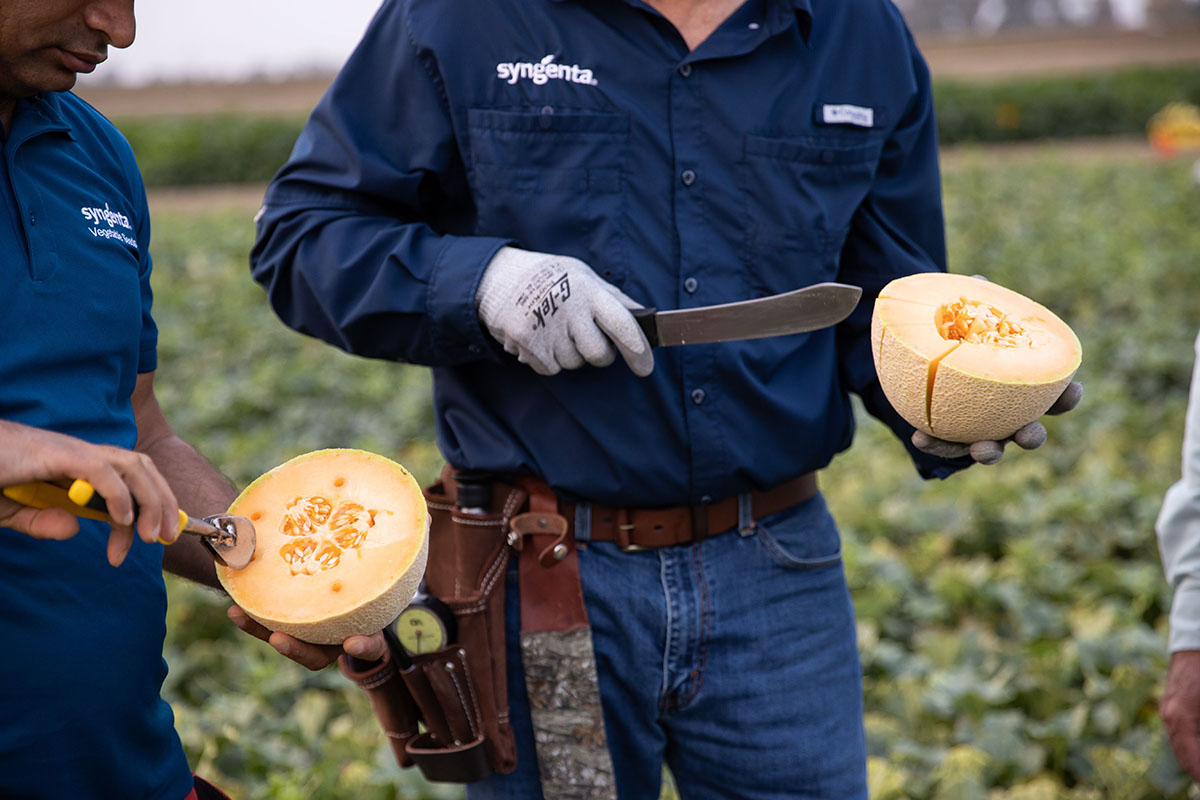
Syngenta hosts open field days every August in Woodland, Calif. Designed for professionals across the agricultural supply chain, these field days are also an opportunity to taste some amazing melons, Krieger says.
“We're going to have wonderful melons out of there in the field that taste just like you remember them from your childhood. They exist,” he says.
Thanks to genome editing, Krieger is confident melons will regain momentum.
“Slowly, we'll start to bring back the good image of melons at the retail level,” he says.