Marion Nestle has spent decades examining how food policy, corporate power and agricultural economics shape what Americans eat and what they do not. A professor emerita of nutrition, food studies and public health at New York University and one of the country's most influential food policy voices, Nestle has written extensively about the structural forces that favor ultra-processed foods over fresh fruits and vegetables.
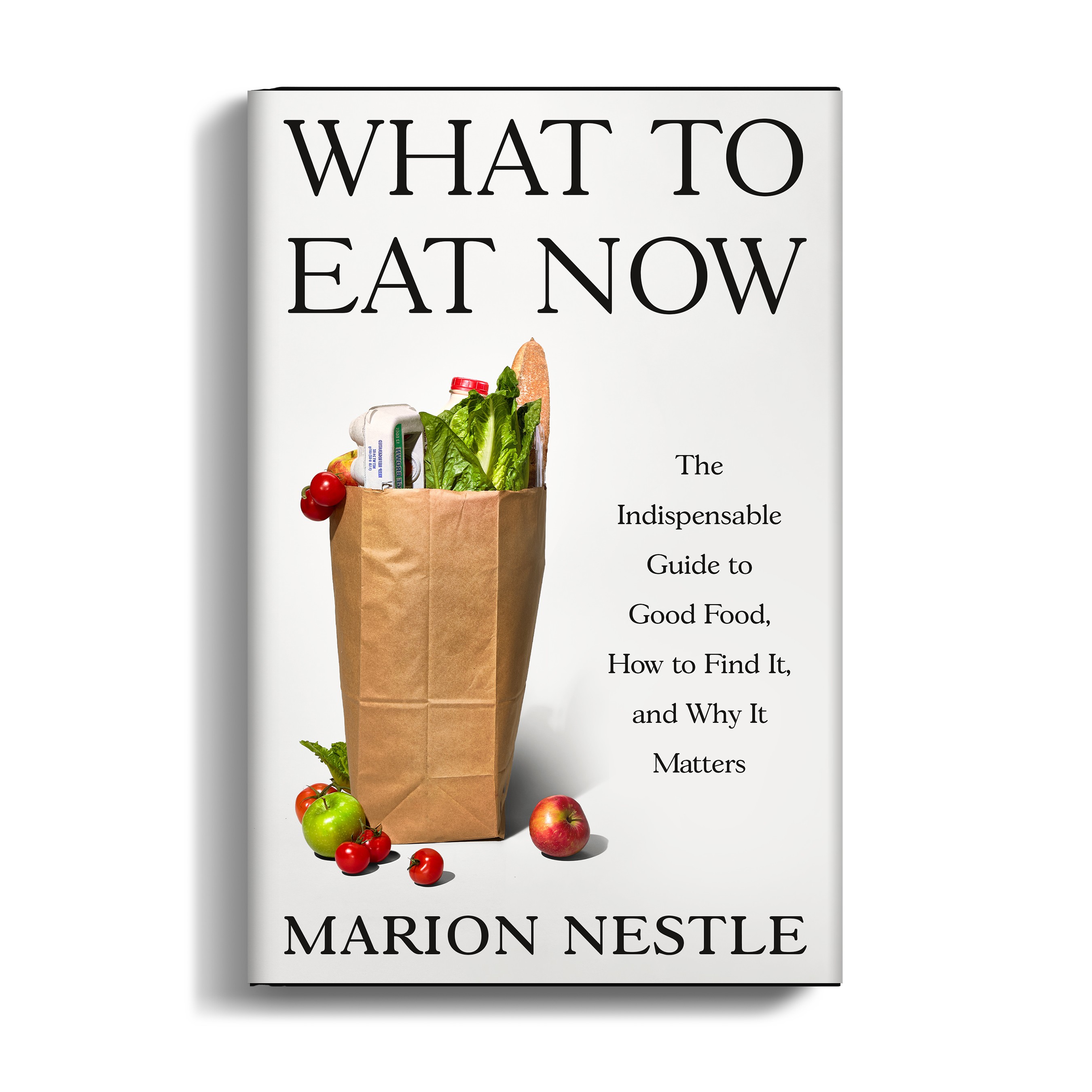
Her latest book, What to Eat Now, looks at today's food environment and argues that consumer choice is far less personal than it appears. From agricultural subsidies to retail consolidation, Nestle traces how policy decisions and market power steer shoppers toward cheap, calorie-dense foods and away from fresh produce.
For produce growers, shippers and retailers, her message lands squarely at the intersection of marketing, affordability and access.
Why Broccoli Can't Compete with Branded Snacks
When asked what it would take to make a head of broccoli as visible or craveable as a bag of branded snacks, Nestle does not start with advertising budgets. She starts with price and knowledge.
“The big issue is price,” she says. “People don't know what to do with fresh fruits and vegetables. Lots of people don't know how to cook. They don't have equipment, they don't have refrigerators, they don't have stoves, they don't have knives.”
Those barriers are compounded by cost trends that increasingly work against produce. While food prices across the board have risen, Nestle notes fresh fruits and vegetables have become relatively more expensive than ultra-processed foods.
“The cost of fresh fruits and vegetables has gone up faster than the cost of ultra-processed foods,” she says. “Everything is relative, and people view them as relatively expensive, and they are relatively expensive. You don't get a lot of calories the way you do [with processed foods].”
For shoppers who did not grow up eating vegetables, that gap is even harder to overcome.
“Lots of people don't eat vegetables,” Nestle says. “If you haven't grown up liking them, it's really hard.”
Education, Exposure and Policy
Nestle's solution begins early. Exposure to fresh produce, she says, can be transformative when it happens at a young age.
“I had this early farm experience where I was at a summer camp that had a big vegetable garden,” she says. “If you were a good camper, you got to go out and pick the vegetables for that night's dinner. A string bean picked off a vine in July is a revelation.”
That kind of experience, she says, needs to be institutionalized through schools by teaching kids how to grow food and taste it. Education alone, however, is not enough without structural change.
“You need policies that reform the agricultural system so it focuses on food for people, not fuel for automobiles or food for animals,” Nestle says. “We need to get money out of politics. That would help a lot.”
The Subsidy Problem
Nestle is blunt about where federal agricultural dollars go and where they do not.
“If the agricultural system was focused on food for people, it would be interested in specialty crops,” she says.
She points to the dominance of corn and soy in farm spending and production. Of the billions of bushels of corn produced annually, she notes more than 45% goes to animal feed and another 45% to ethanol, leaving little for direct human consumption.
“We have an agricultural policy that's not aimed at producing healthy food for healthy people,” Nestle says. “The nice thing about healthy food is it's better for the environment too. So you get a double bang for it.”
Retail Consolidation and Who Sets the Rules
Beyond production policy, Nestle warns consolidation at retail further limits leverage for produce suppliers.
“If Walmart accounts alone for a quarter to a third of grocery sales, then Walmart gets to set the terms of engagement,” she says. “It gets to set the prices for suppliers, and it gets to set the prices for consumers.”
She also expressed alarm at the growing role of third-party delivery platforms, particularly how data is collected and monetized.
In her opinion, “The Instacart thing absolutely shocked me,” Nestle says. “Instacart gets the data, and look how Instacart is using the data. The system is set up not for consumer protection.”
The consequences ripple backward through the supply chain.
“Farmers need protection too,” she says. “What we don't have is a system that really protects farmers who are growing real food for real people.”
Despite the complexity of the food system she critiques, Nestle insists eating well does not have to be complicated.
“Diets are easy,” she says. “They're so easy that Michael Pollan can say it in seven words: ‘Eat food. Not too much. Mostly plants.' I do it in 700 pages.”
For the produce industry, Nestle's work underscores a central challenge. Fresh fruits and vegetables are fighting not just for shelf space but against decades of policy, pricing and power structures that make unhealthy choices the default. Changing that equation, she argues, will take far more than marketing. It will require rethinking who the food system is designed to serve.