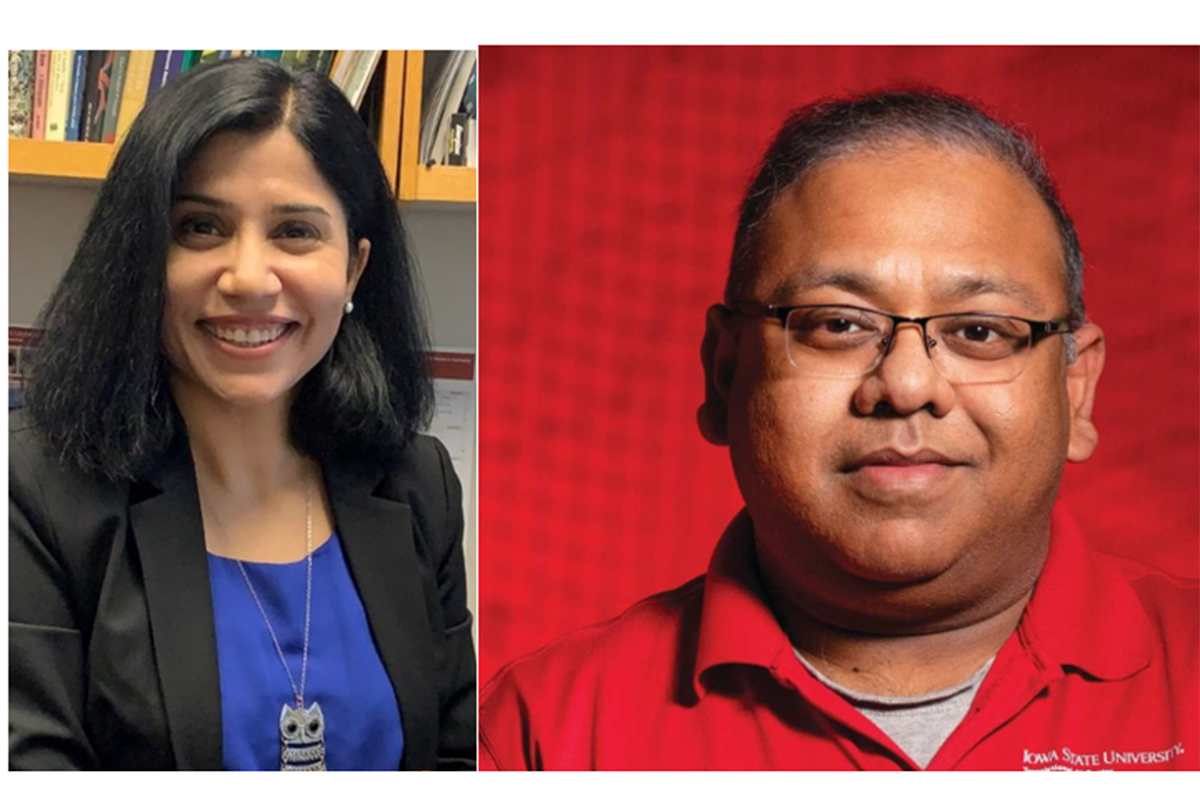
For over a decade, a dedicated team at Iowa State University has been working at the intersection of artificial intelligence and agriculture with a mission to provide farmers with the tools they need to stay ahead of an ever-changing landscape of threats. Led by Arti Singh and Soumik Sarkar, this research has culminated in the development of the PestIDBot, a sophisticated AI companion designed to act as an “expert crop advisor or extension agent in your pocket.”
By combining massive image databases with conversational AI, the team is moving agricultural protection from a reactive struggle to a proactive, precision-based science.
A Decade of Data-Driven Identification
The core of the technology lies in two specialized applications: Insect ID and Weed ID, the result of training massive AI models on staggering amounts of data. The Insect ID app has been trained on 16 million images and can identify roughly 4,000 different species, ranging from common pollinators and predators to invasive threats. Similarly, the Weed ID app utilizes 15 million images to identify 1,600 weed species, including noxious and invasive varieties.
While these models are global in scope, they have been fine-tuned specifically for regions.
“If a farmer in Iowa does a web search on a pest, they might get information relevant to the Southern U.S. that isn't applicable to an Iowa farmer,” Singh says. By narrowing the model's focus to local threats and incorporating management practices vetted by University Extension scientists, the tool provides personalized, actionable information tailored to the user's specific location.
From Identification to Conversation
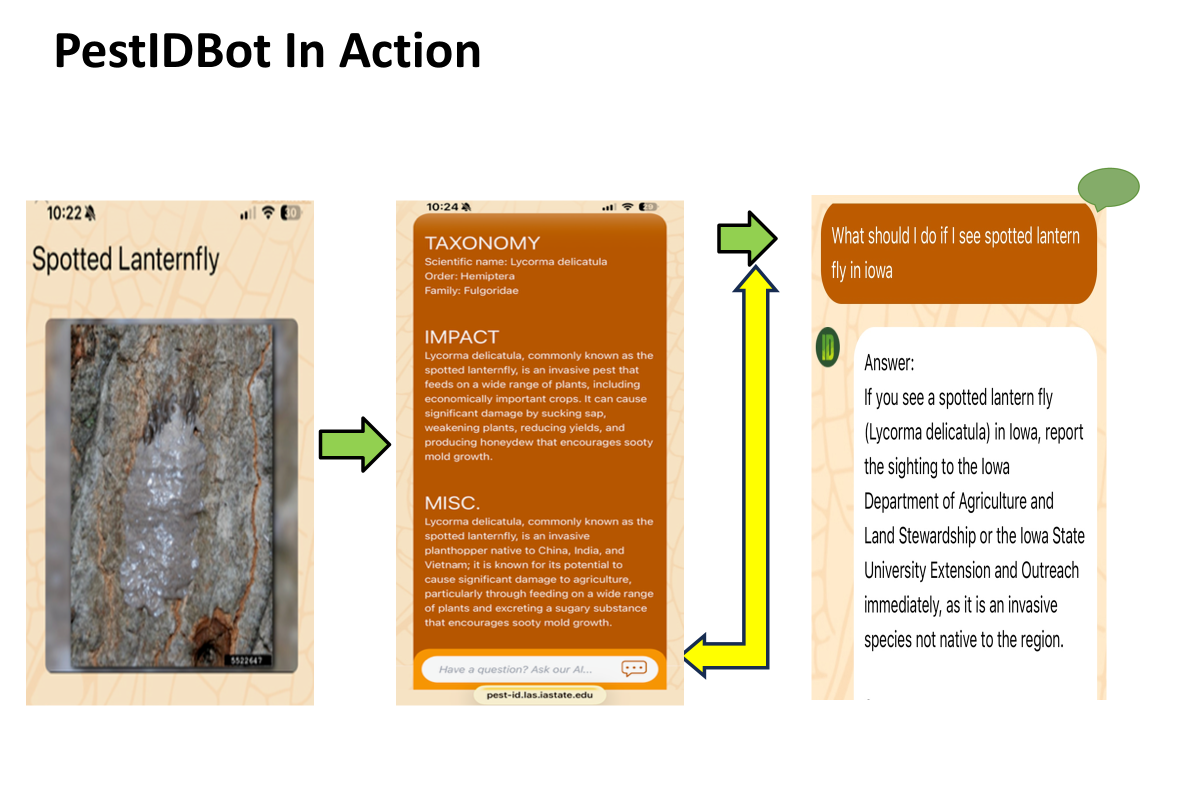
The true breakthrough of the PestIDBot is the integration of identification with a conversational chatbot. In the field, a farmer can take a real-time photo of an unknown insect or upload an image taken previously. Once the AI identifies the pest — even in early stages, such as egg masses — the chatbot allows the user to ask contextual follow-up questions.
“Rather than searching for a human expert while the clock is ticking, you can ask your first questions directly to the app,” Sarkar says.
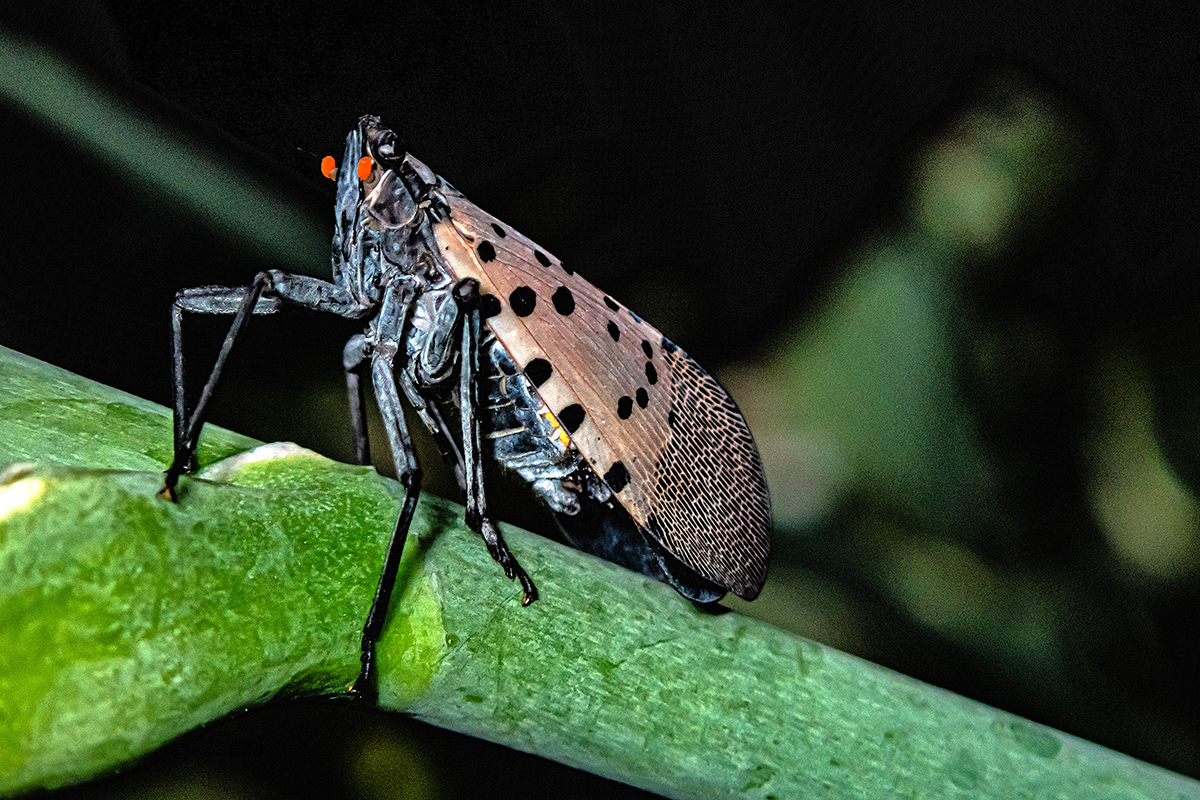
Users can inquire about treatment timing, the necessity of spraying or specific management steps based on their observations. For example, if the app identifies the eggs of an invasive species like the spotted lanternfly, it doesn't just provide taxonomic details; it can advise the user to contact specific state agencies, such as the Iowa Department of Agriculture and Land Stewardship.
Solving the Green-on-Green Challenge
Building an AI that works in a controlled lab is one thing, but the field presents chaotic variables. Sarkar notes that early models lacked the robustness to handle cases like green-on-green (pests on leaves) or brown-on-brown (pests on bark or soil) scenarios. To ensure the system is trustworthy and reliable, the team implemented strict guardrails to prevent hallucinations — where an AI confidently provides an incorrect answer.
These safety measures include out-of-distribution detection, which allows the AI to recognize when it is looking at something it wasn't trained for (like a human face) and simply say, “I don't know.” Furthermore, when the model is unsure, it is programmed to provide several likely options rather than a single potentially wrong identification, allowing the farmer to consult with experts using a narrowed set of possibilities.
The Global Horizon: The BRIDGE Project
The next frontier for the team is the AI Engage (BRIDGE) project, funded by the National Science Foundation. While insects and weeds are well documented, identifying crop diseases caused by bacteria, viruses and fungi is a much tougher problem due to the limited quality and expert-verified data.
By partnering with researchers in Australia, Japan and India, the team is building a global dataset of disease images. This international collaboration is critical for biosecurity.
“Threats emerging in Africa or Asia will eventually show up on our shores,” Sarkar warns.
By training models on global data now, U.S. farmers can be prepared for future threats before they arrive, shifting the agricultural industry from a reactive stance to a proactive one.
Vision for Sustainable Stewardship
Beyond technical identification, the team is driven by a passion for sustainability and the future of the agricultural workforce. By enabling precision-based farming, the PestIDBot can help farmers pinpoint exactly which part of a field needs treatment. This hyperprecise approach reduces the need for blanket chemical spraying, lowering input costs for farmers while protecting water systems and overall environmental health.
Finally, Singh and Sarkar are using this technology to make “agriculture cool again” for the next generation. Through workshops and gamified modules for K-12 and 4-H youth, they are fostering land stewardship and encouraging young people to see themselves as future innovators in both ag and AI. As Singh reflects, empowering a kid in a front yard to identify an invasive species can be the first step in a statewide defense against agricultural threats.