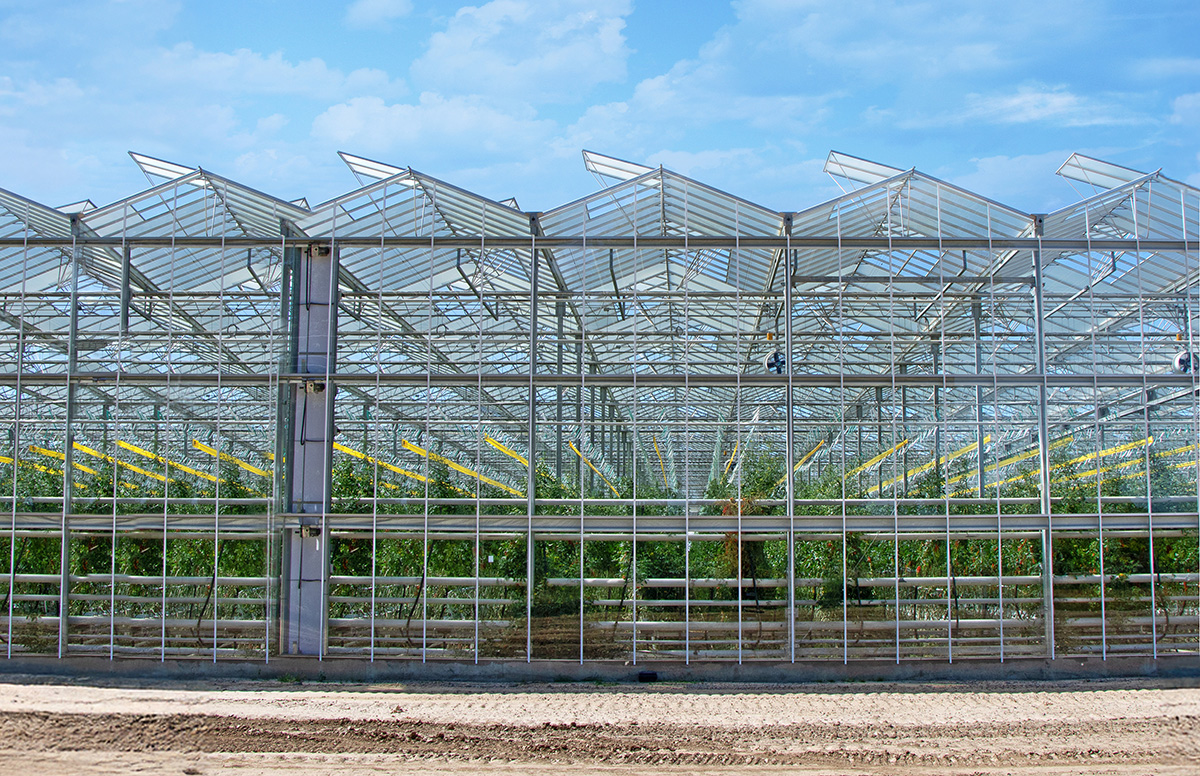
From a concentrated hub in southwestern Ontario, the majority of Canada's greenhouse growers are strategically located within a 24-hour drive of more than half the U.S. population — positioning the province, not just as a local producer, but as a year-round vegetable garden of North America.
Ontario Greenhouse Vegetable Growers represents a network of more than 170 of these growers, who specialize in tomatoes, cucumbers and peppers and contribute some $2.5 billion to the province's gross domestic product each year. Production is spread across 4,500 acres, about 80% of which is concentrated in Kingsville and Leamington.
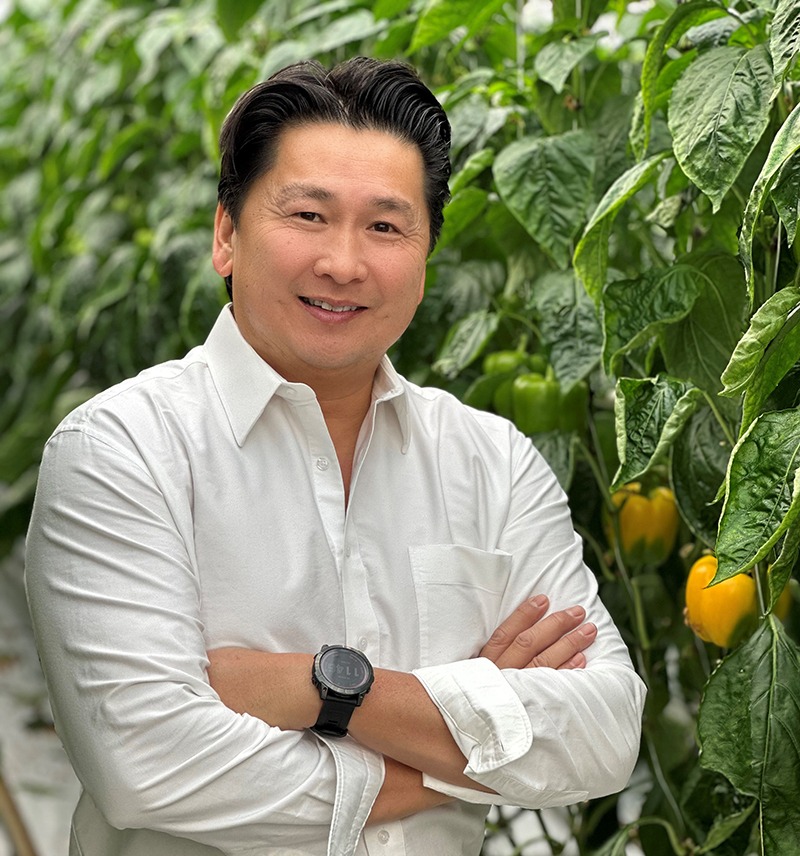
“In recent years, the sector has enjoyed an average annual growth rate of 7%, and projections suggest expansion could continue at roughly 5% per year until 2033, provided ongoing support from government policies and strong partnerships with local municipalities,” says Richard Lee, executive director of OGVG. “The sector's impressive expansion has been propelled by robust demand from the U.S., driving sustained growth over the past decade.”
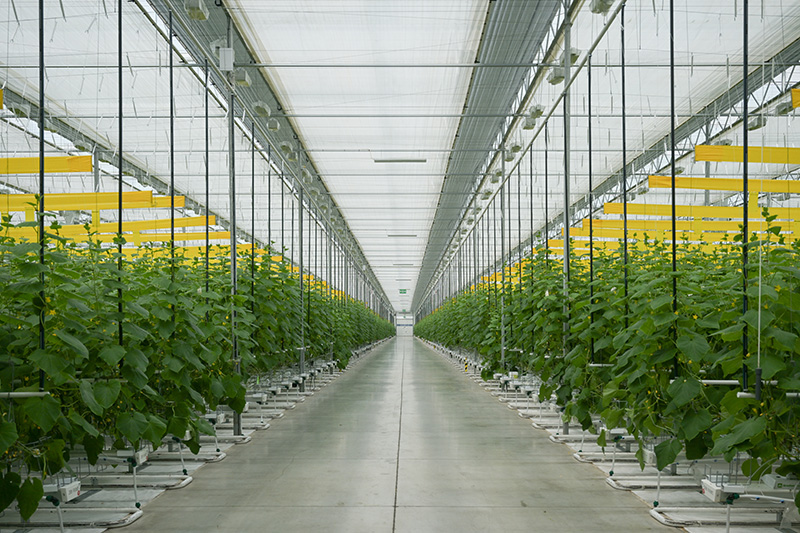
Ontario's greenhouse sector — the largest concentration of greenhouse vegetable production in North America — is leveraging its scale to ensure that fresh no longer depends on the season but rather the sophistication and sustainability of the indoor farm, where producers can achieve yields up to 20 times higher per square meter than conventional farming on a significantly smaller land footprint.
The region's strategic location is also critical to its success. Ontario currently has easy access to four major U.S. border crossings with a fifth — the Gordie Howe International Bridge — slated to open this year.
“Our members can service more than 58% of the U.S. population within a day's drive,” Lee says. “This proximity ensures that produce reaches consumers remarkably fresh, maintaining quality from vine to table.”
But Ontario greenhouse growers' reach extends far beyond the border. Its U.S. distribution network reaches as far south as Florida and covers most of the population east of the Mississippi River, Lee says.
And it's not stopping there. Lee says OGVG continues to identify new opportunities for growth in the U.S., a market nearly 10 times larger than that of Canada.
“A notable example is the ‘Tennessee Tested, Summertime Approved' campaign, which significantly raised awareness and boosted consumption in new markets,” he says. “Building on this momentum, efforts are now directed toward underserved areas like Missouri.”
Future-Proofing Highly Perishable Produce
With over 85% of Ontario's greenhouse produce headed to the U.S., recent tariff and trade barriers, as well as the upcoming United States-Mexico-Canada Agreement's first six-year review on July 1, have created uncertainty for North American produce buyers and sellers.
“OGVG recognizes that proactively safeguarding operations against possible trade barriers or changes in cross-border policy is essential,” Lee says. “Yet, the highly perishable nature of our products significantly narrows the scope of feasible mitigation strategies.
“For instance, seeking alternate export markets is neither realistic nor commercially viable,” he continues. “The short shelf life, strict handling standards and intense time sensitivity all limit how far our produce can travel before its quality or marketability is compromised.”
As a result, says Lee, OGVG operators face distinct challenges and competitive disadvantages, making meaningful market substitution impractical.
“In light of these realities, OGVG maintains that building resilience is best accomplished by fortifying stability and efficiency within our established primary trade corridors, rather than attempting to diversify into markets that remain structurally out of reach,” he says. “This strategy emphasizes proactive engagement with regulators and trading partners to anticipate policy shifts, ensure predictable border operations and minimize disruptions.”
Lee says OGVG's approach also includes ongoing efforts to boost operational efficiency and reduce delays at export points, alongside risk-management strategies within current markets to enhance commercial certainty.
“Ultimately, for commodities as perishable as those produced by OGVG, adapting to trade disruptions is less about exploring new markets and more about deepening certainty, efficiency and collaboration within existing cross-border relationships,” he says. “By focusing on these priorities, we are better equipped to maintain stability and thrive despite the challenges posed by evolving trade landscapes.”
As to USMCA, Lee says OGVG is “cautiously optimistic” the agreement will be renewed without additional challenges to food access or affordability.
“Our partnership with the U.S. is vital. We depend on each other for a diverse array of commodities, each country contributing what it grows best,” he says. “In particular, we rely on imports of products that are not commercially viable in Canada due to our climate, highlighting the importance of maintaining a balanced and mutually supportive trade relationship. This collaboration not only strengthens our food systems but also reinforces the economic ties that benefit both nations.”
Rising Input Costs
Input costs continue to make headlines with both greenhouse and field growers feeling the pinch.
“Greenhouse vegetable growers face significantly higher fixed and variable input costs, with energy and labor dominating their cost structure,” says Lee, who notes that heating, electricity — especially for lighting and climate control — and carbon‑related charges are major expenses in Ontario's year‑round greenhouse operations.
“Electricity consumption alone has grown sharply as growers expand production and adopt supplemental lighting for consistent output and displacing our reliance on imported produce during the winter months,” he says.
Unlike seasonal field-grown labor, the year-round growing model of greenhouses means labor costs are also proportionately higher, he says.
“In addition, greenhouse growers carry substantial capital costs tied to infrastructure, environmental control systems, automation and technology upgrades, which leaves them more exposed to interest rate fluctuations and financing costs than field growers,” Lee says.
Lee says greenhouse growers are addressing rising costs and the need for greater sustainability by making substantial investments in energy efficiency, automation and advanced technology. Upgrades such as modern lighting systems, energy-saving climate controls and data-driven production optimization are being widely adopted, he says.
Additionally, many growers are focusing on expanding their operational scale and maximizing yields to spread fixed costs across greater output, says Lee.
“[It's] a strategy that has fueled ongoing growth within the sector despite persistent economic challenges,” he says.
The Role of AI
Artificial intelligence continues to reshape how food is grown. For greenhouse growers, many of whom already have access to millions of operational data points, AI is evolving into a critical tool for everything from optimizing energy and labor efficiency to risk management.
“AI's most immediate role is in operational efficiency and decision support,” Lee says. “Greenhouse production already generates large volumes of data through climate controls, sensors, lighting systems, irrigation and crop monitoring. AI allows growers to integrate and interpret that data more effectively, identifying patterns and optimizing decisions around temperature, humidity, lighting intensity, water use and nutrient delivery.
“In a cost environment where energy and inputs represent a significant share of operating expenses, even incremental efficiency gains can have meaningful impacts on profitability,” he adds.
Lee sees AI also playing a growing role in labor optimization, which as growers face persistent labor shortages and rising wage pressures, has become increasingly important.
“Tools that support automated crop monitoring, predictive maintenance, harvesting assistance and workflow scheduling help reduce reliance on manual processes and allow labor to be deployed more strategically,” Lee says. “Rather than replacing workers, AI is increasingly about making existing labor more productive and resilient.”
AI-driven forecasting in risk management and planning, whether it's to support better yield predictions or identify early signs of disease, is another area where this technology is helping to improve greenhouse operations.
But OGVG also emphasizes that AI adoption is not a “silver bullet” or without limitations.
“For this reason, OGVG views AI as part of a broader toolkit rather than a standalone solution,” Lee says. “Its importance lies in how it complements grower expertise, supports efficiency and enhances resilience over time.”
Navigating Uncertainty
Last year was marked by economic turbulence for many farmers. Lee says OGVG supports its members through economic uncertainty in a number of ways that, together, aim to improve access to information, strengthen connections and ensure growers have both the insight and the voice needed to navigate today's economic pressures and plan for what comes next.
OGVG's key support initiatives include:
- Real-time educational resources
- Providing regular briefings, webinars and written updates on critical issues like energy pricing, labor policy and carbon costs.
- Translating complex market and regulatory developments into practical implications for greenhouse growers.
- Data sharing and sector benchmarking
- Interpreting sector-level data regarding production costs, energy demand and labor availability.
- Helping growers identify emerging risks and operational efficiencies by comparing their performance against broader sector trends.
- Peer learning and networking
- Facilitating forums where growers can share best practices and lessons learned.
- Encouraging peer-to-peer exchange on technical issues such as pest management, automation investments and cash flow management.
- Government and policy advocacy
- Acting as a bridge between policymakers and greenhouse operators to ensure real-world impacts are considered in regulation.
- Providing a two-way communication channel that keeps growers informed of upcoming changes while giving them a voice in the outcome.
- Long-term resilience planning
- Assisting growers in evaluating capital investments and understanding their risk exposure.
- Focus on technologies that improve efficiency and reduce the intensity of inputs (like energy and labor) to secure future profitability.
Innovation and Automation
While innovation has long been central to Ontario's greenhouse operations, Lee sees it becoming even more tightly integrated into day‑to‑day operations in the coming years.
“The next phase of greenhouse innovation is less about single, breakthrough technologies and more about the convergence of automation, data and biology to improve consistency, manage cost pressures and reduce operational risk in a highly competitive North American marketplace,” Lee says.
Automation and innovation that reduce manual tasks and address labor shortages will be of particular importance.
“Over the next several years, more operations are expected to adopt automated or semi‑automated systems for harvesting, pruning, crop scouting and material handling,” he says.
Energy and sustainability also will continue to be a major focus of innovation in Ontario, says Lee, who expects to see growers deepening investments in energy efficiency, electrification, waste‑heat recovery and circular systems that lower per‑unit production costs while aligning with evolving environmental expectations.
“Innovation in this area will not only be technological but also operational, as growers refine how energy systems interact with crop cycles, lighting strategies and production planning,” he says. “The goal is greater control and predictability in operating costs, rather than simply reduced consumption.”
Biological innovation that supports stronger, more resilient crops will also play an important role, says Lee.
“Ultimately, greenhouse innovation in Ontario over the next three to five years will be defined by its ability to solve real‑world pressures: labor constraints, rising input costs, market volatility and increasing expectations around sustainability and reliability,” he says. “Automation in harvesting and crop work, integrated AI‑driven systems and energy‑smart production models will not just enhance efficiency, they will increasingly be prerequisites for maintaining competitiveness, ensuring resilience and keeping Ontario's greenhouse sector firmly positioned as a leader in North American fresh vegetable production.”
A Model to Watch
While certain challenges including rising input costs, labor shortages and wage costs, pest and disease pressures, and geopolitical uncertainty have impacted all of farming — whether inside or outdoors — controlled environment agriculture has its own unique challenges to confront. Specifically, energy costs are the largest line item for Ontario greenhouse growers, particularly during winter months.
But despite these challenges, Ontario has emerged as a world-class hub of greenhouse growing. What's the secret to this success?
“What truly sets Ontario growers apart is their forward-thinking mindset: they readily adopt state-of-the-art technologies, aim to forge strong partnerships within their communities, and adapt swiftly to shifting market dynamics,” says Lee.
Education is also the cornerstone of their approach, he says.
“Ontario growers invest heavily in learning and advanced cultivation techniques, ensuring their crops consistently meet high standards for quality while maintaining sustainable practices,” Lee says. “Ultimately, their recipe for success blends teamwork, adaptability and visionary strategies — a combination that enables them to thrive in the ever-evolving landscape of greenhouse agriculture.”