Heading into 2025, all signs pointed to a breakthrough year for fair trade in the U.S. Then came tariffs.
“We had a ton of momentum going into 2025, and I would say it felt like it was going to be a breakthrough year,” says Kim Chackal, co-owner and vice president of sales and marketing for Equifruit, a Montreal-based importer of Fairtrade International-certified bananas from Ecuador, Peru, Colombia and Mexico. “We had some new relationships that were developing and looking very promising, but now that 2025 is behind us, it really was the year of the tariff.”
For Equifruit, which is marking 20 years in the fair trade banana business this year, the April 5 baseline tariff of 10% the Trump administration imposed on nearly all countries slowed the momentum it had been building in the category for two decades.
“What we saw is that retailers who had been talking with us for years and who were finally wrapping their minds around paying more for fair trade bananas — once that additional layer of tariff came in, it just blew up the conversations in many cases,” Chackal says. “It put conversations on hold where they just weren't ready to pass that additional layer of cost [on top of tariffs] to their customers.”
And then an interesting thing happened.
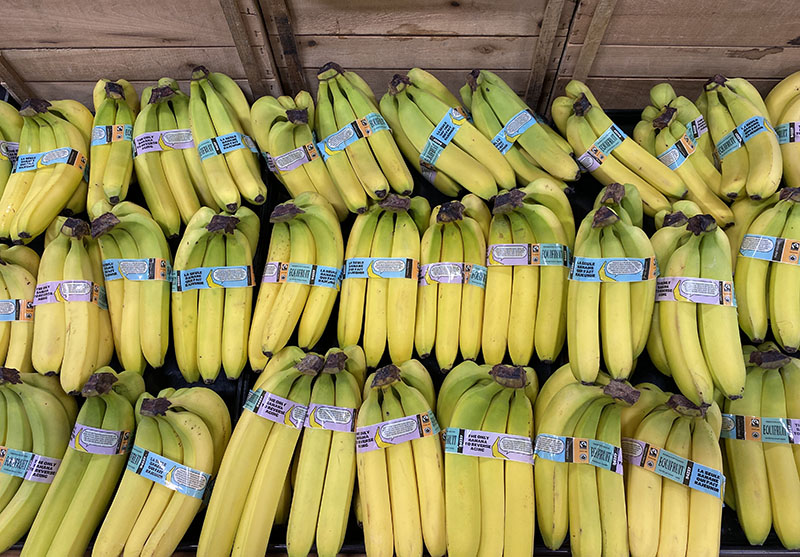
For years, Equifruit has worked to show retailers that the additional cost of fair trade on bananas, already the cheapest item in the produce department, is only about $5 a year — the equivalent cost to a cup of coffee. But some retailers remained reticent to raise the price of bananas even a little, fearing customer reaction.
“The most significant thing that came out of this ... was that we saw retailers in a position where, assuming that their vendors passed on the tariff cost, they were, in many cases, forced to pass on that cost to their customer in some way,” she says. “And so, for the first time, there was this mass case study on what happens when you raise the price of bananas.
“We saw everybody from the largest retailers to the smallest retailers increase their retails on bananas, and whether it was 5 cents a pound, or 10 or 20 or whatever it was, we saw that tonnage remain flat,” Chackal continues. “It's been an incredibly powerful part of the conversation with Equifruit and retailers, especially in the U.S., to say, ‘Well, remember 2025 when you did raise your banana prices?'”
With the fear of “what if?” behind retailers wondering if there would be customer fallout with higher banana prices, fair trade fruit may be better positioned for a fair shake moving forward.
“I feel like it set us up for success, because retailers have now lived through raising banana prices,” she says.
Moving Fair Trade Forward
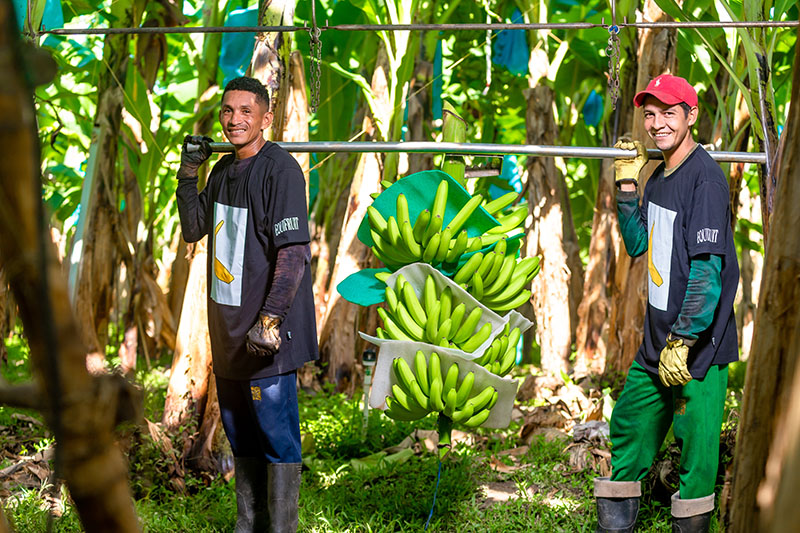
Equifruit imports the majority of its 100% Fairtrade International-certified bananas (most of which are also organic) from Ecuador, which was impacted twice by tariffs in 2025: first in April at 10% and then in August when those tariffs increased to 15%. The tariffs were finally lifted in November, clearing the way for a more promising year ahead.
“Thank goodness, as we were finalizing contracts or submitting bids for 2026, the tariffs finally lifted, and that was just no longer part of the conversation,” Chackal says.
The even better news for fair trade products, Chackal adds, is consumers are craving meaningful brands.
“We're on the other side of tariffs, and we're in this landscape now where I feel like there's this even greater desire, not just for Gen Z and millennials, but there really is a pull towards brands that are solving the world's problems, and a real interest in wanting to do the right thing,” she says.
Chackal sees other certifications resonating with today's consumer as well.
“In the case of Equifruit being 100% Fairtrade [International]-certified since Day 1, being a women-owned brand, being a [Certified] B Corp, these are all parts of our value add that we are putting forward in this year's communication in a really significant way, as we celebrate 20 years in business,” she says.
Chackal says the company is redesigning its website and packaging to increase customer awareness around what defines Equifruit as a company.
“We think that that's going to pull in a new customer base for us and further drive the connection that we have with our current advocates,” she says.
Rooted in Relationships
Another lesson learned from tariffs goes back to Equifruit's relationship with its fair trade suppliers.
In the thick of the tariff wars or wild weather, Equifruit says its relationships with suppliers remain steady.
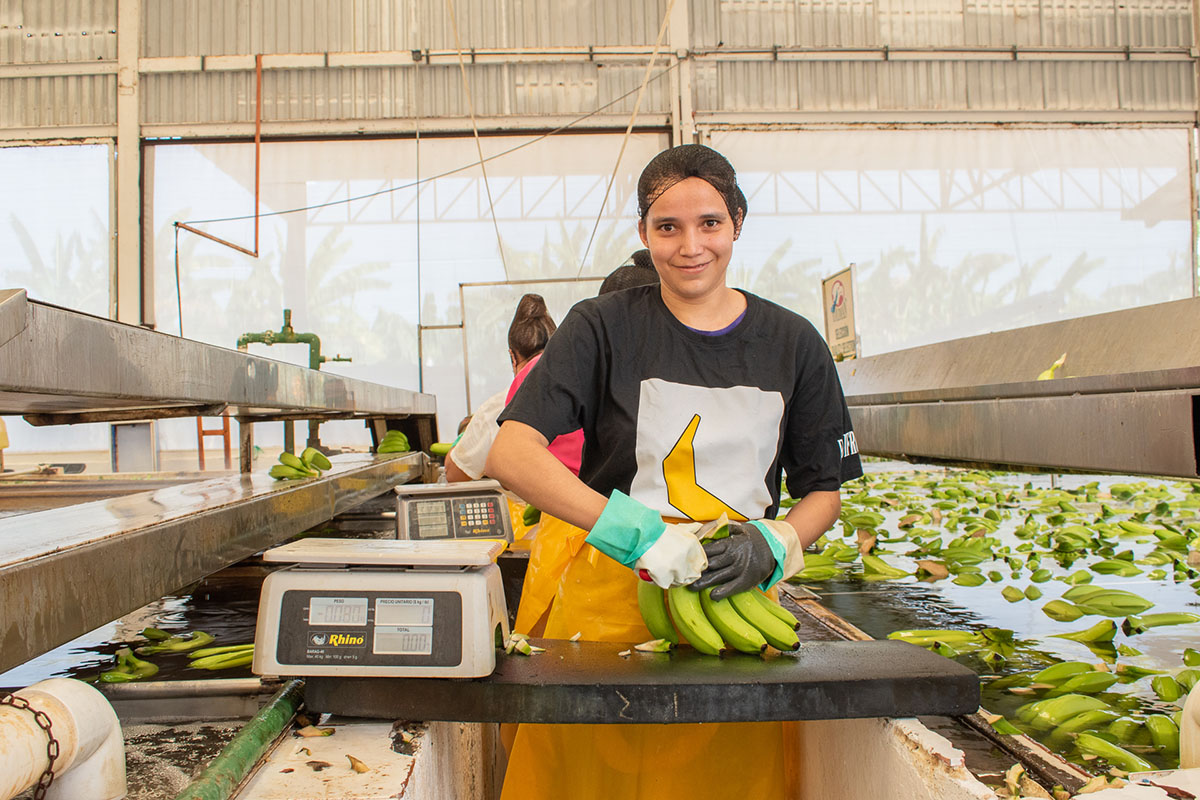
“What is so big to grower-packer-shippers like Equifruit, who are 100% fair trade certified, is we already have long-standing relationships with our growing partners, which helps supply during dramatic events in the banana industry and helped really protect us,” Chackal says.
She says she sees organic banana supplies as one of the biggest challenges facing retailers.
“If we look specifically at organic bananas, and the year-over-year growth of that category, there's really limited supply,” Chackal says. “There's only a handful of countries that can produce organic bananas. I believe it's only five countries that can produce organic bananas, and so with the growing demand and the limited supply, the challenge for retailers is that if they want to stick with this artificially low price structure, at a certain point, they will not have the supply to meet the growing demand.
“And that's where we've found the solution is in partnering with fair trade farms. They prioritize Equifruit as a customer,” she continues. “Our growers stuck with us through all those challenges that the industry faced as a whole, and we're channeling that experience into producing more content from a sales perspective that really frames fair trade bananas as a risk mitigation strategy for long-term scalability of a key item in the produce department.“
Expansion on the Horizon
Equifruit, which is now in 80% of Costco Canada warehouses as the organic, fair trade banana, says it experienced a lot of growth in Canada last year. It's growth that is continuing in 2026.
This week Equifruit is launching with the Pattison Food Group, a Canadian grocer with 11 retail banners and more than 300 locations, and with Calgary Co-op, one of the largest retail cooperatives in North America.
“Our team has been coordinating marketing and communication strategies with all these stores, and it'll really widen our footprint in western Canada,” Chackal says.
Equifruit has made the Globe and Mail annual report that ranks Canada's Top Growing Companies for four years in a row. It's also made Globe and Mail's list of Canada's Top Growing Women-Led Companies for two consecutive years.
In terms of its U.S. presence, Equifruit has an organic, fair trade banana program in the New York area with Costco and hopes to expand further.
“There's been so much momentum around Equifruit as a brand,” Chackal says. “And so, yes, although we had the bummer of the tariff last year, at the same time, we are seeing an explosion around brand awareness, and I think that has been the fruit of our labor from a marketing perspective.”