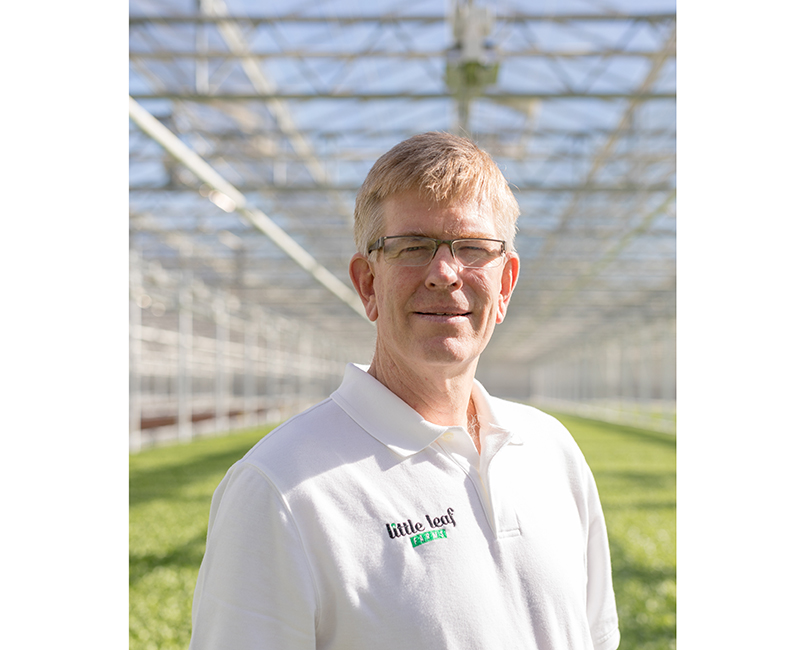
For Paul Sellew, founder and CEO of Little Leaf Farms, innovation isn't about chasing the next tech play. It's about something far more grounded: building a better system. While some in the indoor farming space have prioritized rapid growth, Sellew has steered Little Leaf toward a more disciplined model, proving the key to a sustainable food future lies in perfecting the fundamentals of how we grow, harvest and distribute every little leaf.
Discipline is critical in the indoor ag space, which has grappled with challenges from high energy costs to difficulty scaling to pests to intense market competition. All the while, Little Leaf Farms has quietly built a revolution to become North America's top producer of indoor-grown lettuce.
The Devens, Mass.-based greenhouse grower seems to have cracked the code on scaling sustainability — earning a spot on Fast Company's 2026 World's Most Innovative Companies list and capturing over 50% of the indoor leafy green market in the process.
“We believe that innovation isn't about chasing technology for its own sake,” Sellew says. “Rather, it's about building a better system for growing and delivering fresh food. From the beginning, we've focused on fulfilling the original promise of controlled environment agriculture: fresher, more sustainable greens produced with consistency and strong unit economics.
“That means integrating advanced greenhouse technology with a disciplined operating model,” Sellew continues. “We've taken a continuous improvement approach to the fundamentals — how we grow, harvest and distribute — and have been constantly refining the system as we scale. In a category where others prioritized speed, we've stayed focused on building a model that works and keeps getting better over time.”
Sellew says the approach has enabled Little Leaf to expand into new markets, introduce new products and grow its footprint in a way that's both sustainable and profitable.
Doing More With Less
Indoor ag operates in a dynamic macroeconomic environment, where cost pressures and efficiency matter more than ever.
“That's reinforced our focus on disciplined execution — continuing to improve yields, reduce waste and optimize our supply chain so we can deliver high-quality greens at a competitive price,” Sellew says.
Through its controlled environment model, Little Leaf Farms says it uses 90% less water than traditional farming, eliminates chemical runoff and produces up to 30 times the yield of field-grown lettuce.
And given the fresh produce industry's highly competitive fight for share of stomach, product innovation is another important driver of growth for Little Leaf Farms.
“Our introduction of teen leaf romaine, something that hadn't been commercially grown in a greenhouse before, is a good example of how we're expanding what's possible in CEA,” he says.
Extending an Empire of Fresh
Since its founding in 2015, Little Leaf Farms has set out to redefine the packaged salad category through its year-round greenhouse model that harvests daily and delivers to grocers in as little as 24 hours.
It's a business model that has Little Leaf Farms driving change versus adapting to it.
“We're fundamentally changing expectations around fresh produce. For decades, leafy greens have been impacted by weather, long transit times and food safety concerns — all of which can lead to inconsistent quality and shelf life,” Sellew says. “By growing year-round in a controlled environment and delivering to stores within 24 hours of harvest, we've shown there's a better way, where freshness, safety and reliability become the standard, not the exception.”
At the same time, Sellew says Little Leaf is laser focused on adapting to how the market is evolving.
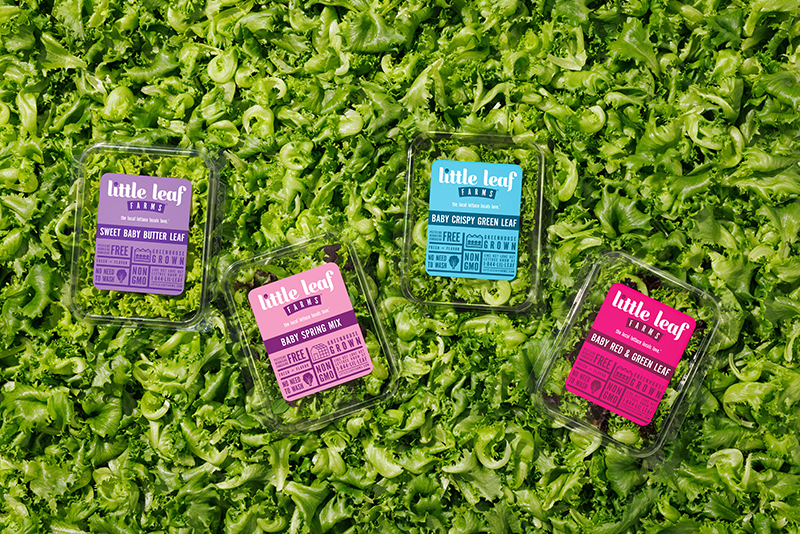
“Consumer expectations are shifting toward fresher, longer-lasting products and increasingly toward online grocery shopping, where consistency and shelf life matter even more,” he says. “Our model is well-suited to meet those needs, and we continue to refine how we package, distribute and position our products to align with those behaviors.”
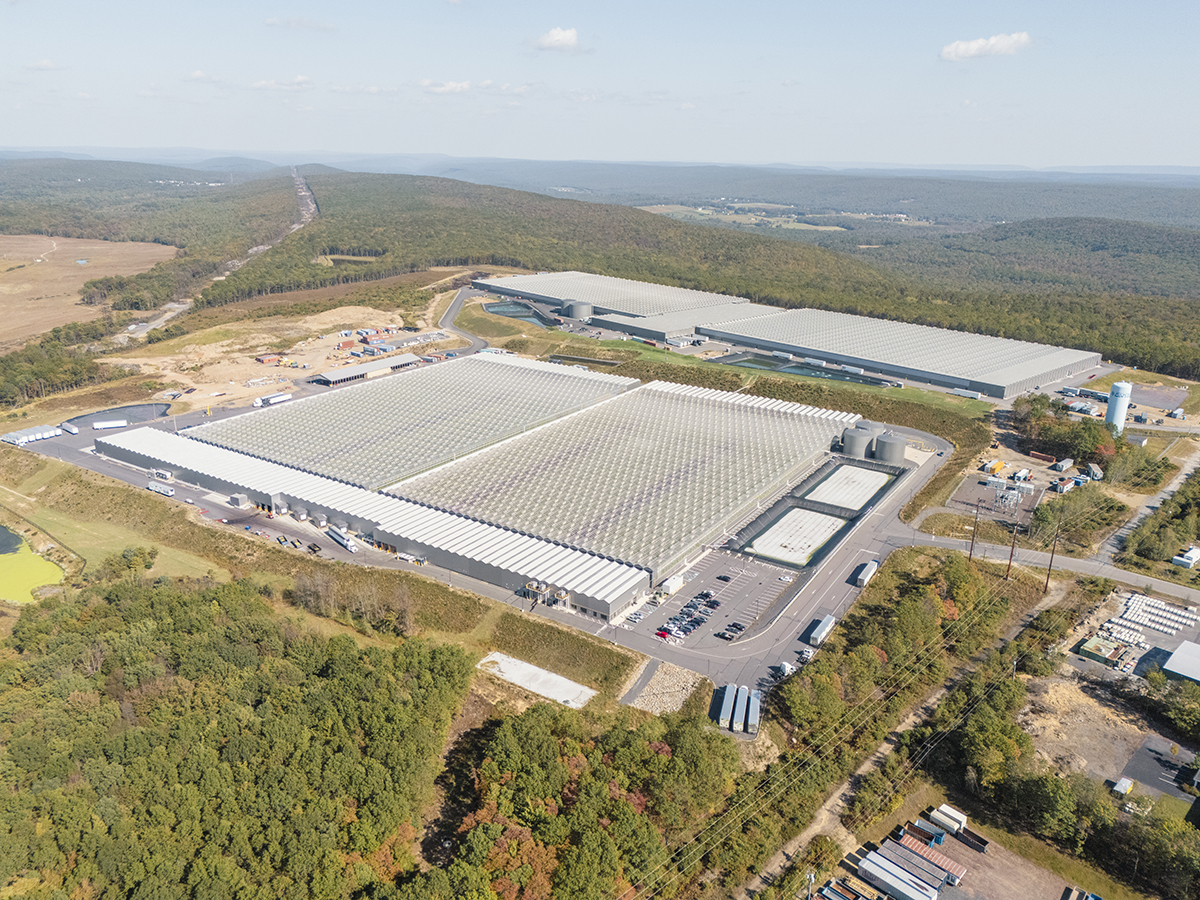
To support this business strategy, the greenhouse grower has advanced its expansion plans in the past year with a new 215-acre site in Manchester, Tenn., initially slated for 40 acres of greenhouse space with an option to grow to 80 acres. The company also broadened its footprint with an additional greenhouse at its McAdoo, Pa., campus and introduced a new product innovation: Romaine Leaf Lettuce.
Expanding operations to additional sites has helped Little Leaf Farms bring fresh greens closer to more consumers across the Midwest, Southeast and Southwest, while further flexing its scalability muscles.
“One of the biggest lessons from McAdoo is the importance of building systems that scale without sacrificing consistency,” Sellew says. “Our experience successfully designing and operating four 10-acre greenhouses in Pennsylvania has given us both the confidence and the operational foundation to take the next step with our first 20-acre facility in Tennessee. We're applying those learnings from day one, from greenhouse design and automation to workflow optimization.
“Just as important is our approach to building teams,” he continues. “With each new greenhouse, we carry forward key learnings by transferring experienced leaders from existing facilities while also hiring and developing local talent. That combination helps us maintain our standards while building strong, regionally rooted teams.”
Sellew says the goal is to replicate what works and continue to improve it, so the company scales in a way that stays true to the model it has built.
Expansion also helps Little Leaf deliver on its 24- to 36-hour harvest-to-shelf promise.
“Proximity is a big part of our strategy,” Sellew says. “By building greenhouses closer to the regions we serve, we're able to maintain that freshness standard even as we grow.
“We continue to invest in logistics, forecasting and supply chain coordination to ensure we're moving product as efficiently as possible,” he continues. “It's less about any single breakthrough and more about tightly integrating operations from greenhouse to shelf so the system works seamlessly at scale.”
An Eye to Future Growth
Sellew says making Fast Company's list of the World's Most Innovative Companies of 2026 underscores what innovation in agriculture can achieve. But how does a company like Little Leaf sustain the No. 1 spot as the largest indoor leafy greens producer in North America, while continuing to innovate and expand?
“Growing remains at the core of everything we do,” Sellew says. “If we continue to improve how we grow, I believe that market leadership follows from that.
“Innovation for us is continuous,” he adds. “It shows up in new varieties, operational improvements and how we scale into new regions without compromising quality. We're also exploring new product offerings that feature our leafy greens, creating more ways for consumers to experience the brand. The goal isn't just to grow bigger — it's to raise the bar as we grow.”
Moving forward, Sellew sees significant opportunity to expand both geographically and within households.
“Over the next several years, our focus is on thoughtful scaling — adding capacity, strengthening retail partnerships and continuing to grow the category overall,” he says. “We're always working toward our long-term ambition: to become the No. 1 lettuce brand in the country. We believe controlled environment agriculture will play a much larger role in the U.S. food system, and we intend to lead that shift.”