At the start of 2025, fair trade was eyeing growth, eager to build on hard-won momentum. While tariffs threatened to disrupt this trajectory, the year was still a win, says Rob Desson, senior business partnerships manager for fresh produce at Washington, D.C.-based Fairtrade America, the U.S. branch of Fairtrade International.
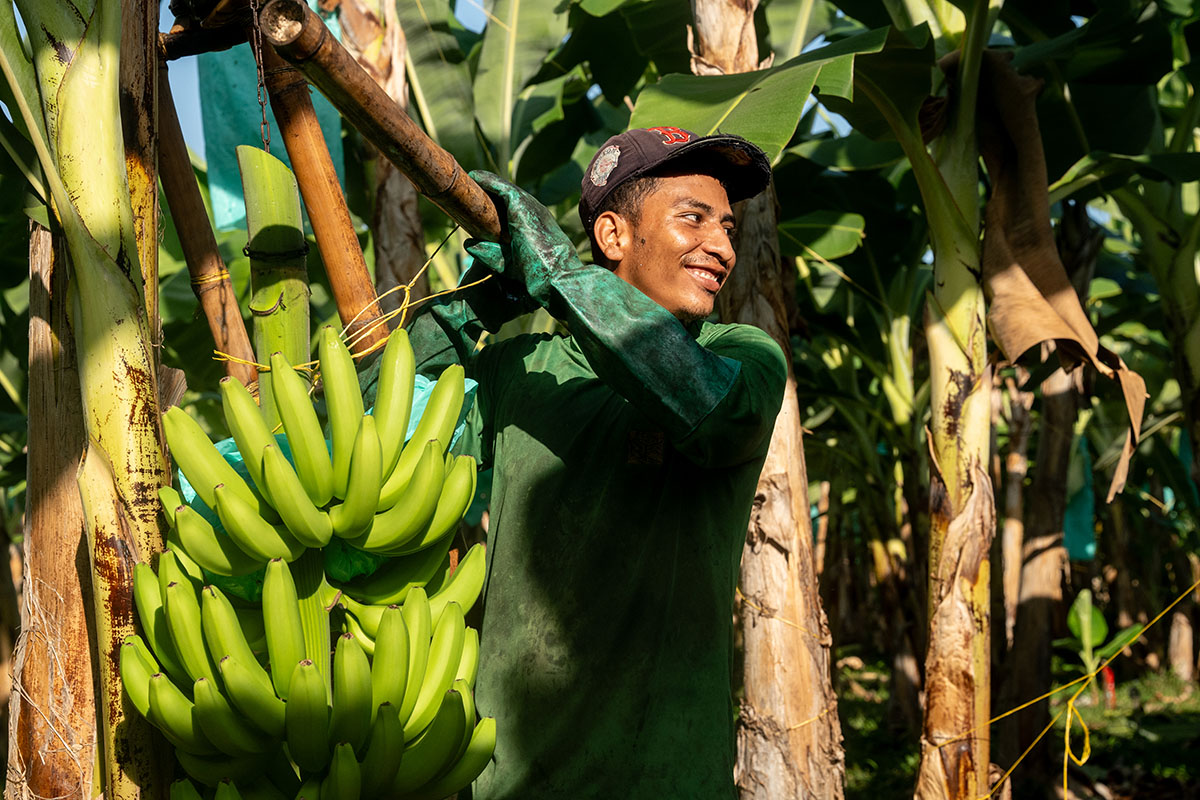
“2025 was a challenging, yet successful year for us,” Desson says. “Volumes of Fairtrade bananas imported into the U.S. market increased by an impressive 20.4% despite tariffs imposed on major banana-exporting countries and resulting market uncertainty. Our growth figures demonstrate Americans are still committed to supporting ethical sourcing that benefits farmers' livelihoods despite a higher-cost environment and economic instability.”
While some fair trade produce companies — including Equifruit, a Montreal-based importer of Fairtrade International-certified bananas — say the additional cost of tariffs in 2025 put fair trade banana conversations on hold with some retailers, the future of fair trade in 2026 and beyond looks bright now that tariffs are in the rearview mirror.
“Tariffs may have slowed some retail conversations regarding Fairtrade programs, but we remain confident we will see future market growth in the years to come,” Desson says. “More American retailers are recognizing the long-term value and importance of supporting growers' ability to invest in their businesses and make changes that increase resilience. Conversations with those mission-aligned partners are continuing.
“Fairtrade sourcing allows retailers to play a key role in shared responsibility throughout their supply chains and is a proven approach that's been around for more than 30 years with high levels of consumer trust across Europe,” he adds. “We're actively raising awareness of Fairtrade in the U.S., and consumers are pushing retailers in the right direction.”
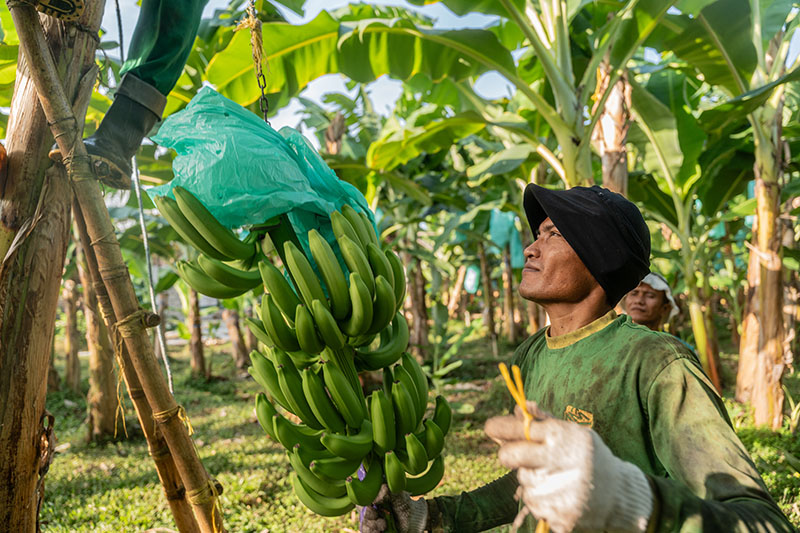
Desson says the 20% boost to Fairtrade banana imports into the U.S. last year is part of a longer-term growth of 38% from 2022-25.
“We expect this trajectory to continue in years to come as U.S. retailers strive to meet growing demand from their customers,” he says.
Room to Grow
Fairtrade-certified fresh fruit currently accounts for less than 1% of the total market, says Desson, who sees this as a huge opportunity for more sustainable sourcing across the category.
“As the impact of tariffs (and later their lifting on banana imports in November 2025) stabilizes and retailers, vendors and consumers adjust to the current economic climate, we expect to continue building on the momentum we have already seen in the U.S.,” he says. “We are forecasting volume growth in 2026 and expect to achieve this through fostering new and existing partnerships built upon shared responsibility in supply chains and long-term value.”
But there remain challenges to overcome.
“The biggest hurdle is the industry's perception that banana pricing is highly elastic,” Desson says. “Our latest consumer insights show American shoppers are willing to pay more for Fairtrade bananas, yet retailers are hesitant to introduce small price increases in fear of losing market share.”
In reality, says Desson, switching to Fairtrade bananas would only cost the average American a total of $5 a year, making the fruit one of the most accessible entry points for shoppers interested in making more sustainable purchases.
“This small cost to the consumer now could have a huge impact on farmer livelihoods and help stabilize the banana industry in the face of climate shocks, like crop disease, floods and droughts,” he says.
Consumer Awareness Key to Furthering Fair Trade
While fair trade produce continues to gain ground, consumer enlightenment and education remain key to continued growth, industry insiders say.
“We have seen continued program growth and adoption across categories,” says Leslie Simmons, senior director of business development, fresh goods for the Oakland, Calif.-based Fair Trade USA.
In addition to increased certification and a rise in purchasing across retail partners, Simmons says the program itself continues to see growth.
“We've experienced 20% year-over-year program growth in 2024 and another 17% year-over-year (first through third quarters) in 2025,” Simmons says. “We have had 17 new brands join the Fair Trade Certified Produce program and 26 new farms launch programs across multiple major retailers.
“Even with tariffs and other economic headwinds, we have experienced overall growth,” she continues. “People are realizing that protecting people and our planet isn't just a nice-to-have attribute: It's the future of business.”
British Columbia-based greenhouse grower Windset Farms began partnering with fair trade-certified farms as part of its commitment to responsible sourcing, growing and ethical labor practices. It's a partnership that supports transparency, worker well-being and long-term sustainability across the supply chain, says Marketing Manager Randi Church.
“Fair trade produce is grown with respect for workers, communities and the environment. For farmworkers, this means fair wages, safe working conditions and opportunities to have a voice in workplace and community decisions,” Church says.
Windset also says that practices like integrated pest management in its facilities reduce chemical use and create safer working environments.
“These methods help protect worker health while supporting environmental sustainability,” Church says.
But at the end of the day, one of the biggest challenges facing fair trade companies hoping to engage consumers is awareness and understanding, Church says.
“By including a fair trade logo on produce grown at certified farms, Windset works to increase transparency and education by sharing how fair-trade partnerships support both people and high-quality produce,” Church says.
Sharing the fair trade story is also a way to communicate with shoppers directly about the issues they care about. But collaboration is key, says Simmons, who adds that retailers and suppliers face many of the same challenges from labor to climate to quality and safety issues.
“Like any important and complex topic, we must tackle it together with storytelling and data,” she says. “We must leverage resources to support education, and we need to establish a common desire to talk about these issues within our associations, trade media and boardrooms.”
Desson agrees that clear consumer communication is crucial to continued growth for Fairtrade.
“What is crucial is retailers' communications to their shoppers,” he says. “A switch to Fairtrade should be accompanied by in-store messaging and other marketing efforts to meet consumers where they are in terms of awareness and demonstrate the value and positive impact Fairtrade sourcing has amongst banana-growing communities.
“More Fairtrade options in the fresh produce aisle is something everyone will feel good about if the social and environmental standards required by our certification are communicated clearly,” he says.
Your next read: How Tariffs Grounded Fair Trade Produce in 2025, Just as It Was Poised for Takeoff