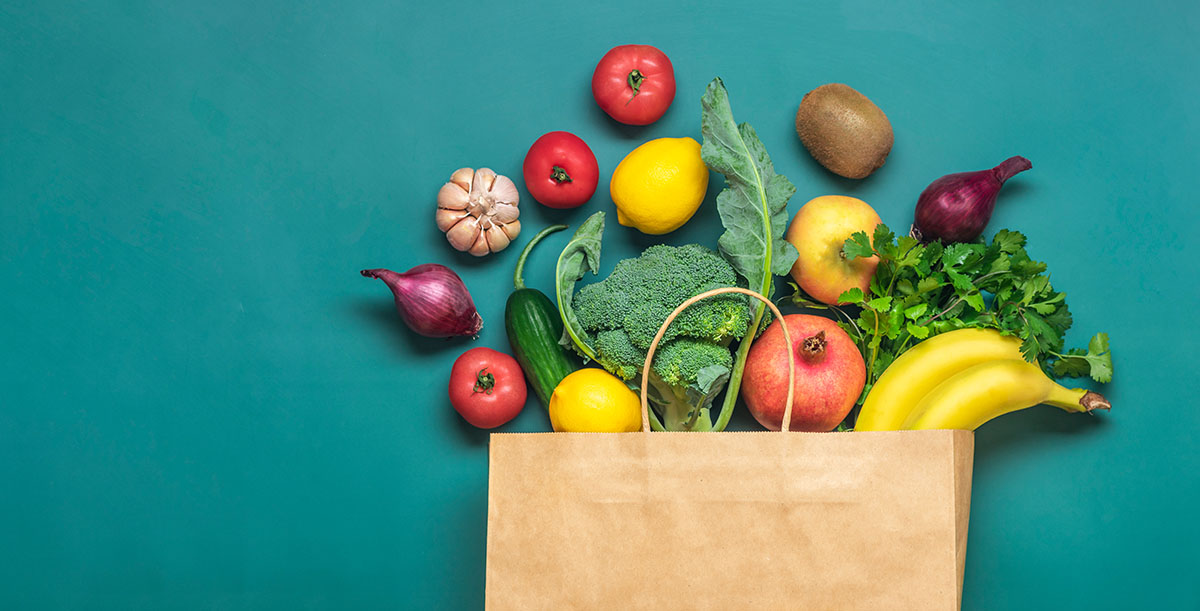
“Sustainable packaging” can have various meanings to different people. Though this offers a challenge, packaging companies are trying to meet consumer and retailer demands while also looking forward to the fruits of innovation.
To be clear: Sustainable produce packaging is important to consumers and retailers. Really, really important.
For example, 79% of consumer respondents to The Packer’s Sustainability Insights 2025 survey said sustainable packaging in fresh produce was important, very important or extremely important to them. Purchasing produce with eco-friendly packaging was also the most commonly selected answer among respondents to the question, “What are you personally doing, or would you like to do, to pursue a sustainable lifestyle?”
Similarly, 93% of retail respondents ranked recyclable packaging as the most important item to their business in terms of its ability to impact the sustainability of the supply chain. Biodegradable packaging came in at No. 2, with 92% of respondents ranking it at some level of importance. Compostable packaging was No. 4, with 86% of respondents indicating importance.
So, the value placed on sustainable packaging is clear. What isn’t is what sustainable packaging even means.
For example, when asked what sustainable packaging in fresh produce means to them, 29% of consumer respondents said it needs to be recyclable, 28% said bio-based, 26% said made from recycled materials and 14% said compostable. However, almost half of respondents (49%) said sustainable packaging needs to include all of those traits.
This all-of-the-above answer would only practically be met today by specific types of uncoated molded fiber and paperboard packaging. While this packaging segment is growing, it is not (yet) suitable for all types of produce and applications.
Meeting Today’s Sustainability Demands
Despite the uncertainty over definitions, companies are trying to deliver on what consumers want and what the companies themselves see as sustainable produce packaging.
“‘Sustainable’ gets thrown around so much that it has come close to signifying nothing,” says Kevin Kelly, CEO of Emerald Packaging. In his perspective, many companies focus on mono-material packaging in pursuit of sustainable since such packaging can, theoretically, be recycled. For him, however, sustainable packaging means packaging that is compostable or uses post-consumer recycled, or PCR, materials.
“That’s why we’ve joined the U.S. Flexible Film Initiative,” he adds, explaining that the effort seeks to make recycling flexible plastic packaging — widely used in fresh produce — economically viable and part of the circular economy just like other forms of plastic.
“Essentially, we’re subsidizing recyclers to reclaim plastics and make a profit,” he continues. “If we succeed, we hope the groups running extended producer responsibility programs like the Circular Action Alliance will step in and, with the funds they’ve collected, take the project over and expand it.”
Kelly also says Emerald Packaging is also experimenting with paper-based packaging that can be recycled or composted. There are challenges there, since work must be done around maintaining oxygen transmission rate and moisture vapor transmission, but he says the company is “teaming with folks we think can help us.”
For Orbis Corp., a reusable packaging products subsidiary of the North American supply-chain packaging company Menasha Corp., the best definition of sustainable packaging in fresh produce is “packaging that minimizes environmental impact across its entire life cycle,” says James Riegleman, senior product manager. When it comes to fresh produce, the company is answering this definition with a focus on reusable plastic totes and pallets that are eventually collected and recycled.
“According to the Reusable Packaging Association, the long service life of reusable packaging reduces environmental impact by enabling circularity, keeping packaging assets in active use for many years and ultimately recycling them into new products rather than sending them to the solid waste stream,” Riegleman says.
The company has its own recycling program to try to ensure this last element in the circular sustainability cycle happens.
“When our reusable totes and pallets reach the end of their service life, Orbis offers our Recycle with Orbis program where we recover, recycle and reprocess totes and bins into other useful products,” Riegleman says. “These programs offer our customers financial credit when recycling end-of-life products.”
TIPA Compostable Packaging is also focusing on the end of life of plastic packaging from a composting perspective.
Gary Tee, vice president of global converting for TIPA, notes the growth of consumer-level food composting services is a positive for sustainability. However, produce stickers were among the three most common contaminants for compost facilities.
“Because composting plants cannot remove them from their operations, these plastic-based stickers will eventually be spread on farmland,” he says. TIPA is trying to answer this problem with compostable produce stickers. It’s an easy solution, according to Tee.
“When consumers discard leftovers from their fresh produce, the PLU sticker adhered to the skin of the fruit or vegetable can be easily overlooked,” he explains. “If this sticker is made from certified compostable materials rather than non-compostable plastic, the plastic contamination challenge that compost operators face is removed at once.”
Future Fruits of Innovation
There is much to be excited about in the sustainable produce packaging space, according to sources. For example, while Kelly calls PCR materials a sustainable solution companies can lean into today, he looks forward to the results of ongoing materials innovation.
“I’m super excited about the technology developing in the compostable space, including the enthusiasm and commitment of the people driving the sector, who trend young and smart,” he says. “There are real interesting projects out there, like the seaweed-based material developed by Sway, and some companies with a bit more scale that can absorb demand right away.”
Kelly isn’t alone in eagerly anticipating new materials. Rebecca Marquez, director of custom research for the Association for Packaging and Processing Technologies (PMMI), says that is one of three major developments the group finds encouraging.
“We are keeping an eye on the breadth of materials and active-packaging innovation, particularly solutions focused on extending shelf life and reducing food waste, as demonstrated by [USDA’s Assisting Specialty Crop Exports]-funded projects,” she says.
Both Marquez and Riegleman are also excited about what the growth of automation upstream in the supply chain might mean for expanded use of reusable packaging. Marquez describes what amounts to a positive feedback loop between reusable packaging systems and automation, saying reusable packaging systems “open the door to integrated sensors and data collection because the packaging asset is used repeatedly.”
Marquez adds that the “significant momentum around data and software tools” is encouraging to PMMI.
“As supply chains become more connected, the challenge is no longer data availability, but instead, making that data actionable — something we believe will be transformational for sustainability decision-making, among other important decisions,” she says.