In a world of erratic climates and geopolitical volatility, data is becoming as essential as soil to our food supply. That data, specifically new predictive modeling, suggests a catastrophe is looming.
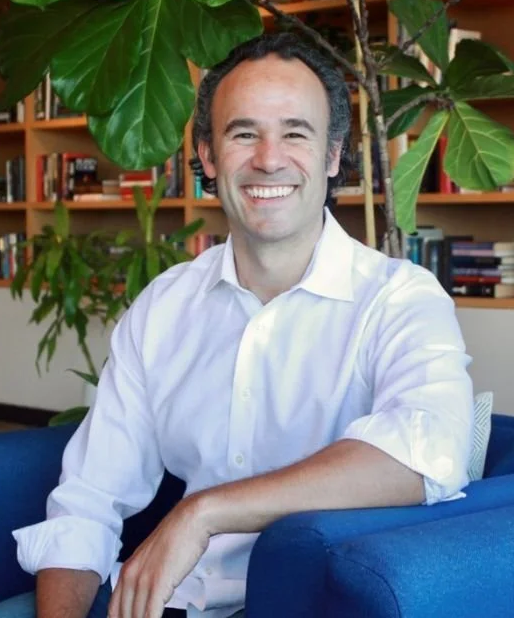
Are we on the verge of a global food crisis? Yes, says Francisco Martin-Rayo, whose Helios AI platform aggregates billions of data points to provide a real-time view of the climate and economic risks affecting commodities around the globe.
“We're at the beginning of the worst food crisis we've ever seen, with global food prices heading 12% to 18% higher by the end of the year,” says the Helios AI CEO and co-founder.
The cause? Martin-Rayo says 50% of globally traded urea transits through the now-closed Strait of Hormuz; Qatar Fertiliser Company (QAFCO), the world's largest urea production site, is currently offline; and spring planting is underway in the Northern Hemisphere without full access to fertilizer.
The exec detailed the crisis in an op-ed piece, “The Iran War's Other Energy Shortage — Food,” published in The Wall Street Journal on Wednesday.
Helios' AI platform aggregates billions of data points to provide a real-time view of the climate and economic risks affecting commodities around the globe, so it can equip customers with the market intelligence they need to get ahead of price movements and supply disruptions.
“We cover 90% of all the places in the world that are growing commodities for export. We cover 77 commodities across 90 countries,” says Martin-Rayo. “We're always showing you what's the total percent of production, what's the total percentage of export. And that allows our folks to say, ‘Hey, we don't think you're going to get your tomatoes from Spain or Mexico or California or your mangoes from Peru or your blueberries from Chile. Here are the other places you really need to start looking at.'”
Predicting Specialty Crops in Crisis
Aggregating these billions of data points across the world's key growing regions allows Helios to predict everything from bumps in the supply chain road to major disruptions like the ongoing Brazilian citrus crisis, which intensified in 2024 with record-low production and all-time high orange juice prices, driven by citrus greening disease (also known as huanglongbing or HLB), severe droughts and heatwaves.
Months ahead, the data told Helios that heat and drought levels were high in Brazilian citrus groves, and a forecast for a crisis was likely.
“We predicted the Brazilian citrus [crisis] eight months before Reuters and Expana, and 12 months before the USDA,” says Martin-Rayo. “When you had that level of heat and drought during the flowering period, it's just not going to happen, right? Those are not the right conditions for the citrus trees to develop flowers. So, we basically told our customers, ‘You're going to have to find an alternative [supply].'”
More recently, unexpected freezes impacted cherries in Michigan and Turkey simultaneously.
“Cherries is one of the most interesting items in produce, because it's not really fungible like raspberries, blackberries and blueberries, which are somewhat from a consumer perspective. Cherries are not [interchangeable with other fruit],” Martin-Rayo says. “These are the types of insights we bring in: If you think you're going to have a really bad cherry harvest, here's what it means and what supply levers you can pull.”
At present, Helios is working with California peaches, as it expects “a pretty bad drought this summer,” he says.
Global Supply Chain Disruption
Citrus, cherries and peaches are three examples, but Martin-Rayo says Helios is tracking agricultural commodities around the globe to help procurement teams leverage AI to get ahead of supply chain interruption.
“When I say we cover 90% of all the places in the world that are growing these commodities for export, it's almost at the farm level,” he says. “Every 24 hours, we're constantly updating actual temperatures, precipitation, speed — all these different weather metrics, and we reforecast it out for the next 10 years, but the core forecast is really the next two years, so it gives us an unrivaled look at what any crop looks like globally overall.”
With weather increasingly wild, Martin-Rayo says the Helios value proposition is resonating like never before.
“We work with one of the largest retailers in the U.K. They buy a couple billion dollars' worth of produce a year,” says Martin-Rayo. “Our main contact there has been in the field 30 years. We were talking recently — though before the war — and he said, ‘The last two months have been the hardest two months of my professional career because of climate.'”
Every major retailer is sourcing globally, which means every retailer is impacted not just by the weather in their own backyard but also around the world.
“It is such a different environment and ecosystem than it was even two or three years ago when we first started,” says Martin-Rayo. When he and Eden Canlilar, Helios co-founder and chief technology officer, launched in 2022, they had to convince potential customers there was a need for their AI platform.
“We don't have to do that anymore,” he says. “Now, we just have to convince them that we're the best company out there.”
From Fertilizer to Food Crisis
As to fertilizer shortages and soaring input costs impacting food supplies, Martin-Rayo says he spoke with an Australian grain grower last week who has access to just 15% of the urea he needs for planting, with no viable source to fill the gap.
“That conversation is being replicated from the Punjab to the Po Valley to the Cerrado,” says Martin-Rayo. “Fertilizer not applied in April cannot be retroactively applied in July.” For the Australian wheat grower, if he only has 15% of the fertilizer he needs, it means lower production and lower yields in the future, he says.
And as the global supply chain awaits the Strait of Hormuz reopening, a recovery won't be instantaneous, Martin-Rayo warns.
“The strait will reopen, but the food system clock doesn't reset when it does,” he says. “The fuse was lit in February. The harvest damage is already locked in.”
As a result, Helios predicts global food prices rising by as much as 18% by the end of 2026.
“Unfortunately, that's what we expect,” he says. “We work with procurement managers that are sourcing agricultural commodities globally, and there were these dual shocks that happened. Your strait closes, and the Gulf isn't necessarily important in terms of a lot of agricultural commodities, but it's so crucial in terms of fertilizer.”
The combined impact of the Strait of Hormuz closure and QAFCO shutting down had significant repercussions on fertilizer supplies, says Martin-Rayo, who estimates QAFCO makes up 14% of total urea production globally.
“And the hard part about growing conditions right now is, when are we going to have a ceasefire? When are we going to have oil transport, etc. Even if you had a ceasefire tomorrow, you still have to demine. You have to get insurance rates to the level where it makes sense to transport goods. You have to get captains who are comfortable transporting — and then the first thing you're going to transport is going to be oil … You're going to export the thing that gives you the highest profit margin.”
The Domino Effect
Australia produces a high-protein type of wheat, says Martin-Rayo. The lack of fertilizer now will result in lower harvests for the Australian wheat grower, which means grain stocks go down, he says. Then the market looks for the product elsewhere, like the U.S., another supplier of high-protein wheat.
“Then you have a price issue, but eventually it becomes an availability issue, and you start to look at export restrictions, and that's when it gets really difficult, because when we look at the futures markets, what they're pricing right now is a price shock, but they're not pricing availability or an export restriction shock, and that is a huge difference,” says Martin-Rayo.
He says while the U.S. is in a somewhat different situation than the Australian wheat grower, the interconnectedness of the global food supply means everyone must brace for impact.
“We're incredibly lucky in the United States,” he says. “We are geographically blessed. I think we make domestically 75% of the nitrogen fertilizer we need to use, but we're still impacted by global prices, and so we're not going to have an availability shock, but we're already seeing the price shock.
“Farming is probably the most difficult business in the world,” he continues. “If everything is perfect, you make a few points. If anything goes wrong, you lose money.”
Martin-Rayo estimates urea prices last year were in the $400s per metric ton and they're now in the $600s.
“It's a huge input differential,” he says. “And so that's also going to impact the amount of fertilizer you're putting in.
“The agricultural supply chain is so tightly integrated at the global level, and once certain problems kick off, like the ones we're seeing now around price and availability of fertilizer, it really starts to cascade, which is what we worry about,” he adds.
While Martin-Rayo says row crops will more immediately feel the impact of soaring fertilizer costs, specialty crops are part of the same global food supply ecosystem.
“Within the specialty crop market, we need to do a deeper dive in terms of what are the different inputs across the different specialty crops? What are the different margins that exist there? How will this impact them?” he says.
And rising fuel prices will also contribute to the cost of produce, whether it's coming from California, Mexico or overseas, says Martin-Rayo.
“This is after you grow it, you've already paid more for your input costs,” he says. “Then that second part of it is it's actually a lot more expensive to transport.”
Mark Your Calendars
For additional insights on demand forecasting and how AI is helping to protect and grow retail margins, join us at West Coast Produce Expo, May 27-29, where Helios AI CEO Francisco Martin-Rayo is one of our esteemed speakers.